News

Working together for warmer, fairer communities: African Challenge Scotland and Home Energy Scotland

December 18, 2025

Blog by Mandy Wright, Partnerships Officer, Home Energy Scotland


Strong partnerships are at the heart of community-led change – and the collaboration between African Challenge Scotland and Home Energy Scotland is a shining example of what’s possible when organisations come together with a shared purpose.

African Challenge Scotland, founded in 2013, is a voluntary organisation committed to building stronger, more inclusive communities. Its work centres on tackling poverty – including fuel poverty – while promoting educational, cultural, and sporting links between African communities and the wider Scottish population. Their approach is proactive, flexible, and deeply rooted in the needs and strengths of the communities they serve.

Since 2017, Home Energy Scotland has partnered with African Challenge Scotland to support minority ethnic communities in Glasgow with free, impartial advice on energy use, saving money, and reducing carbon emissions. Through workshops, advice stands, and community events, this partnership is helping families take control of their energy bills and build resilience in the face of rising costs.

An example of a recent event was a vibrant community fun day in Springburn, where African Challenge Scotland brought together a range of third sector and public organisations to offer support and celebrate local connections. Home Energy Scotland was there, providing practical guidance and friendly advice to attendees – many of whom are navigating complex challenges around energy use and affordability.

African Challenge Scotland places a strong emphasis on partnership working, recognising that collaboration is key to overcoming barriers and reaching those who are often excluded from mainstream services. By working with organisations like Home Energy Scotland, the community group can extend its impact and offer tailored support to minority ethnic groups, including those who are harder to reach and may be experiencing isolation.

Ronier Deumeni, African Challenge Scotland Founder, reflects:

“Our ongoing partnership with Home Energy Scotland is a real success and greatly benefits black and minority ethnic families in Glasgow. The activities and workshops that participants experienced through our programme helped them to learn about themselves and gain the skills and confidence to realise their dreams and improve their life. The specialist frameworks and practical guidance collected together here helped leaders and volunteers to provide participants with a programme that supports their development.

We paid attention to what each participant enjoyed doing and what they struggled with. We asked them to list their strengths and weaknesses during the one-on-one meetings held to support their household carbon footprint reduction. We evaluated their performance in the project, based on the tasks assigned to them. Through our project, participants are better able to identify ways to take control over their lives and build resilience. They learned new skills that will enable them to reduce their carbon emission and energy bills, and to manage their money and set a budget. This will help them to understand their spending habits, monthly income and overall financial position.

We will continue to work with Home Energy Scotland to enhance energy efficiency and zero-emissions heating solutions for Black and ethnic minority communities across Glasgow. This engagement aims to improve digital resources, offer in-depth support for home upgrades, and expand Green Homes Networks so that people can learn from others’ experiences.”

Scott Driver, senior partnership officer for Home Energy Scotland’s Strathclyde and Central advice centre, summarises that:

“Working in Partnership with African Challenge and other organisations really does help our customers reach a positive and sustainable future. Successful collaboration with key stakeholders extends the reach of our service and the support available to those within our communities that need our help the most.”

Together, African Challenge Scotland and Home Energy Scotland are helping to shape a future where communities are empowered, informed, and supported to thrive – no matter their background. Through partnership, shared purpose, and practical action, they are building bridges between services and people, creating spaces where everyone can live well, feel heard, and contribute to a more inclusive and sustainable Scotland.

Home Energy Scotland welcomes opportunities to collaborate with organisations that share its commitment to tackling fuel poverty and supporting inclusive, sustainable communities. To explore partnership opportunities and find out how to work together, organisations are encouraged to get in touch.

Case Studies

Maryburgh Men’s Shed- Cromarty Firth Men’s Shed

Sustainability through reuse & repair for local impacts and partnership development

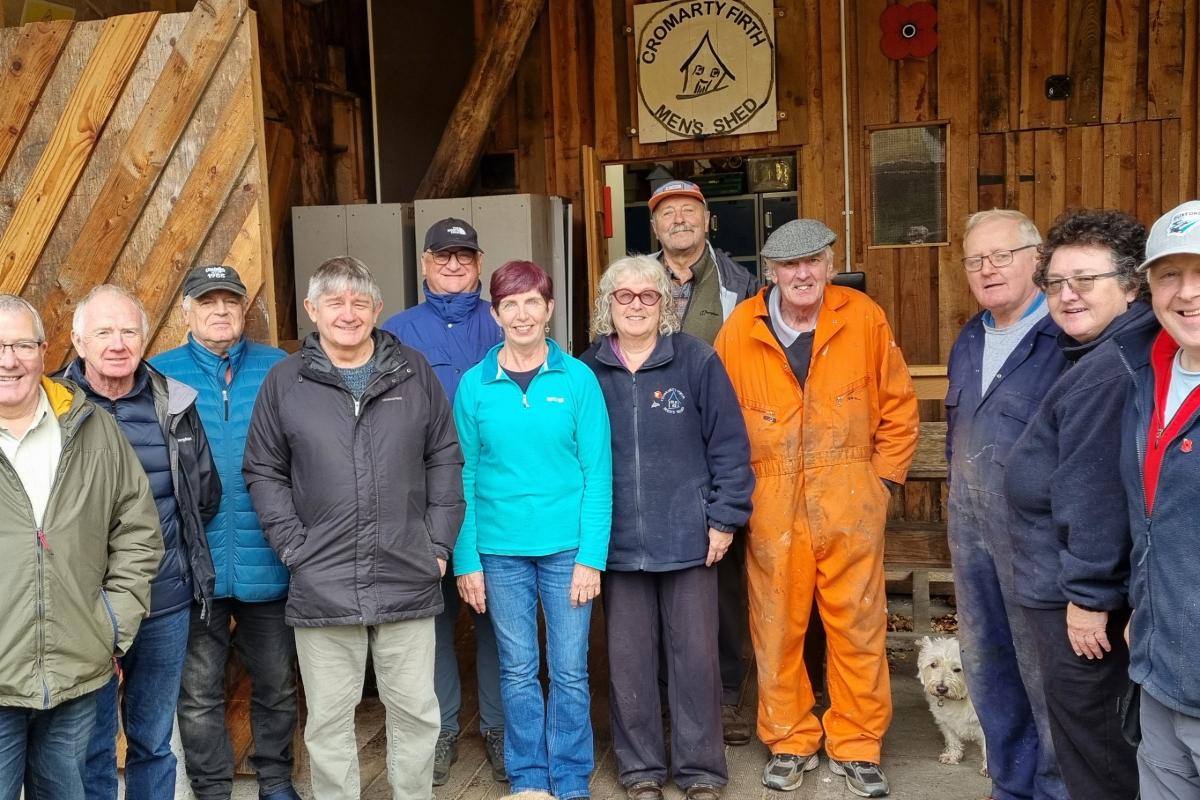
A group of people standing outside a large wooden cabin with a sign for Cromarty Firth men's Shed

The exchange fostered stronger ties between our group and Cromarty Firth Men’s Shed members. It created opportunities for intergenerational and cross-community dialogue, ensuring inclusivity and reducing social isolation. Shed members demonstrated practical skills (woodworking, repair, crafting, ) and shared knowledge with our group. The exchange encouraged peer-to-peer learning, enhancing confidence and competence in hands-on activities, which aligned with our application’s outcome of increasing participants’ skills and furthering their ability to share this knowledge with others.

Learning Outcomes

  •  Community Engagement & Inclusion.
  • Skills Sharing & Capacity Building.
  • Health & Wellbeing

"The Shed’s ethos of reusing materials and repairing items resonated with our project’s sustainability goals. Our exchange highlighted shared local resourcefulness and reduced waste, meeting environmental outcomes in our application. Overall we were able strengthen relationships between Maryburgh Men’s Shed and Cromarty Firth Men’s Shed, opening doors for future joint initiatives to support emphasis on building long-term partnerships and networks."

Case Studies

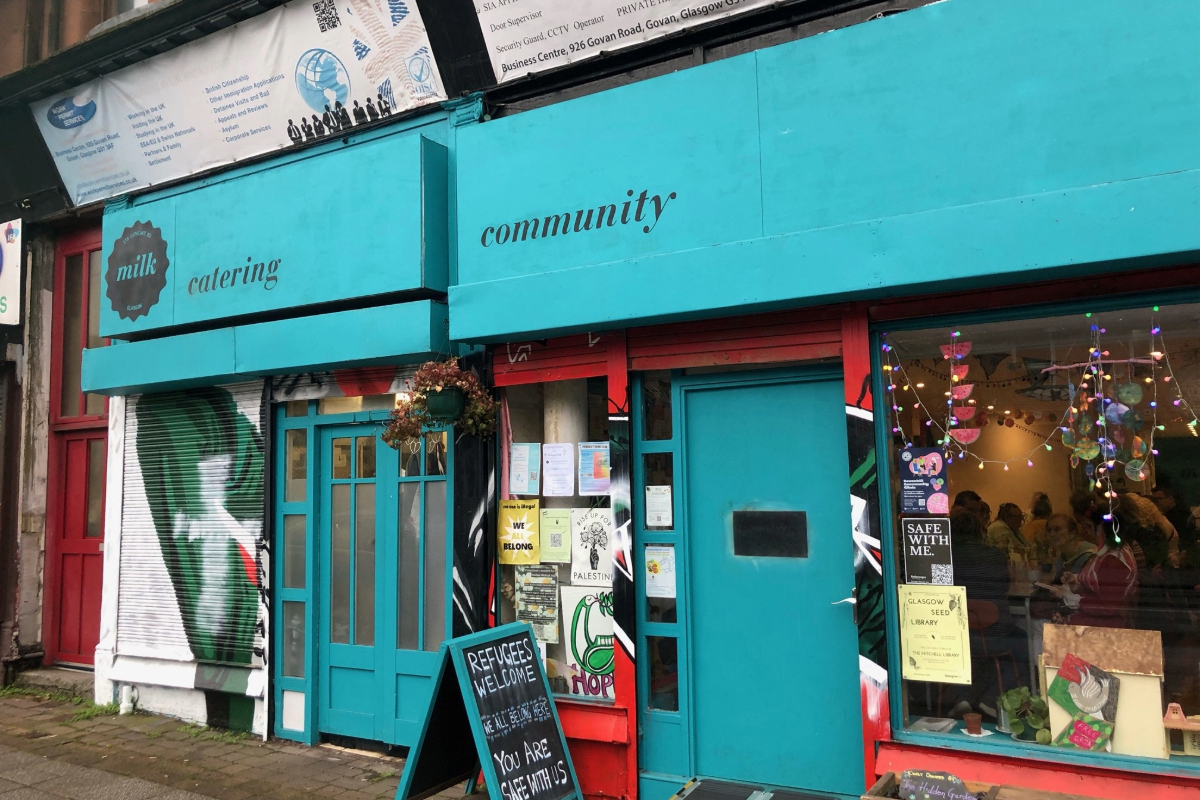
North Glasgow Community Food Initiative visit to MILK Cafe

Dignity in practice and how to deliver it.

MILK cafe shop front in Govanhill with a sign reading 'Refugees Welcome'

The services Milk Cafe provide to women, refugees and asylum seekers include a social space, a peer support service, Child legal Clinic, employment housing and civil support. There are also art and craft activities and of course food related activities. Food is the link that brings everyone together and is always at the heart of the space. The local area is extremely diverse and historically has been the first locale for New Scots. These New Scots bring with them a rich heritage of food culture and sharing this is encouraged. Many food cultures are shared amongst the service users and we were told that this is the key to building resilient cohesive communities. Encouraging community members from diverse backgrounds add such value to social inclusion through food.

It was interesting to hear that they moved to a fully staffed catering service. Milk Cafe now fully match funds its services through he Catering service so that one service feeds the other. We operate a donations based food provision that is fully funded separately. We have discussed offering catering services in the past (to 3rd sector partners predominantly) and the learning is to do this with dedicated paid staff, and allow the volunteers to continue to flourish on the community setting.

Learning Outcomes

  • Gain practical understanding of how a women-led community café and meal service is organised and delivered, including approaches to catering, volunteer involvement, and creating a welcoming environment for diverse groups such as refugees and asylum seekers.
  • Develop insight into how community cafés can be used as safe and supportive spaces for women, refugees, and asylum seekers, and explore ways of addressing social isolation, building confidence, and fostering inclusion through food and shared activities.
  • Explore how catering and community café models can be made sustainable, including approaches to funding, partnership working, and program design, and identify ideas that can be adapted to strengthen our own community meals and café development

"It was extremely interesting to see how our volunteers in particular responded to the challenges faced by Milk cafe, how they assessed and linked up the similarities between their activities and Milk Cafes despite both projects presenting differently. The similar themes were: Inclusion, Isolated Communities, Vulnerable individuals, Facing difficult situations."

Case Studies

Stow Community Trust

Experiencing how communities use different buildings to enable creative, social and practical activities.

Stow visit to Edinburgh Arts

Although the visits were planned primarily to inform and inspire thinking around the Royal Hotel site project, they generated a number of wider benefits for the community that extended beyond that single development. One of the strongest outcomes was the way that the visits encouraged local people to take practical steps to improve community life right away, rather than waiting forthe Royal Hotel site project to progress. The visits to both North Edinburgh Arts and the Duns Repair Cafe gave participants not only ideas, but also the motivation and confidence to start local activities. As a result, we now have community arts sessions taking place in the village, and there is active work under way to develop a community shed and tool library. These new initiatives were not part of the original project plan but have emerged directly from the inspiration of the visits. And while they are not currently directly contributing to the Royal Hotel Site Project, they are helping create that foundation of local involvement, awareness and confidence, so that when the site eventually opens, the community is already active and ready to connect with it.

Learning Outcomes

  • INSPIRATION – Identify innovative ideas and successful approaches that could be adapted to support people in our community.
  • UNDERSTANDING – Develop a clear understanding of the key steps, challenges, and resources needed to establish and sustain a community-led project.
  • PRIORITISING – Determine the most relevant and feasible actions we should take to apply our learning and drive meaningful change in our community.

"The exchange created benefits that were wider and more immediate than expected. It helped spark real community activity, strengthened local collaboration, encouraged belief in the collective impact of local action, and laid early foundations for longer term success. The visits offered personal learning for those who attended. People gained insights into how other communities build momentum, how to create a welcoming culture where people feel able to participate, and how projects grow through small early steps rather than through fully formed plans. We also built useful external contacts who have since offered advice and are open to continued support. "

Case Studies

Meetings Centres Scotland exchange

Dementia Friendly peer learning and support

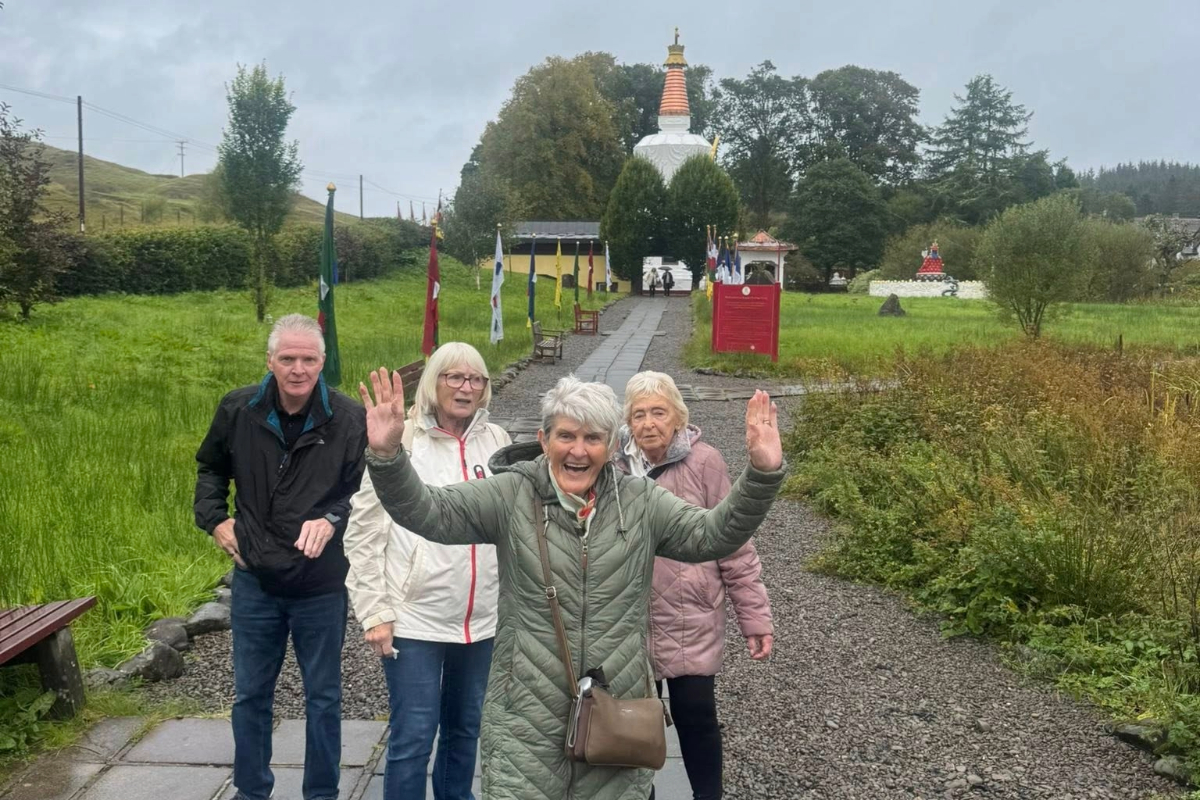
A group from dementia friendly meeting centres visiting Samye Ling

Beyond its planned outcomes, the Learning Exchange generated a wide range of additional learning and benefits. The shared activities inspired new ideas that could take place in their own Centres. Activities including fairground fun, planetarium visits, gin or soda tasting, sound baths, and trips to Samye Ling Buddhist Temple highlighted the diversity of programming possible and reinforced that activities can be engaging, locally relevant, and member-led. Members said that seeing these creative approaches in action encouraged them to adapt similar activities for their own communities, Since attending, members from Dementia Friendly Dunblane have introduced their Meeting Centre to the therapeutic experience of Sound Baths whilst others learned that for some people the experience felt uncomfortable and reinforced as a learning point how options are critical to developing sessions and activities in a Meeting Centre and quiet spaces to relax is feeling a sensory overload.

Learning Outcomes

  • Peer to Peer Learning, support and strengthened network
  • Practice based insights and Inspiration
  • Operational and Strategic Development

"Visiting other Centres and meeting peers highlighted both the diversity and shared ethos of our Meeting Centres, reinforcing that the movement is community-led and shaped by our own voices."

Case Studies

Women’s Aid Orkney visit to Shetland Women’s Aid

Building collaboration opportunities

A group of 13 people smiling at the camera

The exchange allowed Women’s Aid Orkney team members to sit back and reflect on the breadth and depth or service they provide on a daily basis. It allowed them to feel proud of what they are achieving and the difference they are making. Spending time with some of the Shetland Women’s Aid team brought a real sense of solidarity. Relationships have been forged that will be beneficial on a personal level but also to the services more widely. There were enthusiastic conversations about future collaboration and finding ways to meet annually. At WAO we have been approached by numerous people who want to volunteer with us and we have been considering how best to start a volunteer program. Hearing from Shetland Women’s Aid about the ways in which they work with volunteers and also facilitate continued engagement from service users was inspiring and gave us lots of ideas.

Learning Outcomes

  • Share learning around tools and approaches like Own My Life that can help promote culture change and engage local communities in efforts to prevent GBV.
  • Learn how to work better to meet the needs of survivors of GBV across island areas, especially those on outer isles and in smaller communities. Gain an understanding of what support local groups are providing in their communities and how WAO can work with them to support them and their service users.
  • Sharing knowledge on staff wellbeing, learning from other organisations how they champion the wellbeing of their staff.

"The best part of the day for me was meeting some of Shetlands Women's Aid. This was beneficial for learning more about them and some of the differences, but also similarities in what we offer. This was also great to give us ideas on how to continue to grow and develop our service"

Case Studies

SES member group visit

Environmental stewardship for health & wellbeing

A group photo in Eat, Sleep, Ride stables

The team and facilitators at Eat Sleep Ride taught us all about Herd Dynamics and how the interpersonal relationships between horses can effectively mirror how we relate with others through our work in the Third Sector. Attendees were encouraged to approach the horses as their own true selves as horses can sense inauthenticity. Horses use a shared leadership model which is often seen within the Third Sector and attendees discussed the benefits of this. We also had a number of discussions about how these practices can be put into use in both the attendee’s professional and personal lives.

Learning Outcomes

  • Attendees will learn about Biomimicry and how Eat Sleep Ride are using this process in order to develop their projects and support development.
  • Attendees will also learn about how Eat Sleep Ride operate as a female-led social enterprise and their experience with collective leadership models.
  • Finally, attendees will learn about how Eat Sleep Ride take responsibility for looking after the natural environment in order to protect it for future generations.

"We took part in a guided meditation in both the stables and the gardens which helped to ground us and connect us to the emotions that we were coming into the space with. We also learnt a little about how Eat Sleep Ride use horse waste as a sustainable fuel source and about the importance of environmental stewardship."

Case Studies

Community Woodland members group visit

Exploring diverse woodland management practices and the impacts for community engagement

Group community woodland visit

These exchanges allowed our members to visit sites of  interest, to learn from the sites and the people who care for them, and to be able to learn from others on the visit. The rich conversations, the connections built between groups and the sharing of ideas is always incredible on these exchange days. Members were able to share knowledge on woodland management and community engagement. Knowledge of how to carry out ecological surveying, including the importance of invertebrate surveying for fresh water health in woodlands that have ponds was something participants were able to inform each other on.

Learning Outcomes

Learning for Cambusbarron Exchange:

  • Our recovery and replanting from compulsory larch removal in part of the woodland
  • Our attempts to engage the community and bring the walled garden back into use
  • The difficulties of operating a safe path network as a volunteer organisation
  • The development of our woodland work base to support future woodland activities

Learning for Doune Ponds Nature Reserve:

  • How we have engaged with the community and carry out our fundraising activities
  • How we have created and update our management plan
  • How we have used and developed the skills of our volunteers

Learning for Kippen Community Woodland Group:

  • Maintenance and repair of the former curling pond, including new infrastructure to maintain the level in the pond and to lower it when clearing out vegetation
  • Problems maintaining boardwalks and what we have done to replace them
  • The challenges presented by the Old Coup


"It is always inspiring to see what other interesting and innovative things people are doing with their local wood. "

Case Studies

Spirit of Springburn exchange with Cranhill Development Trust

Opportunities for locally owned food in community employed shops

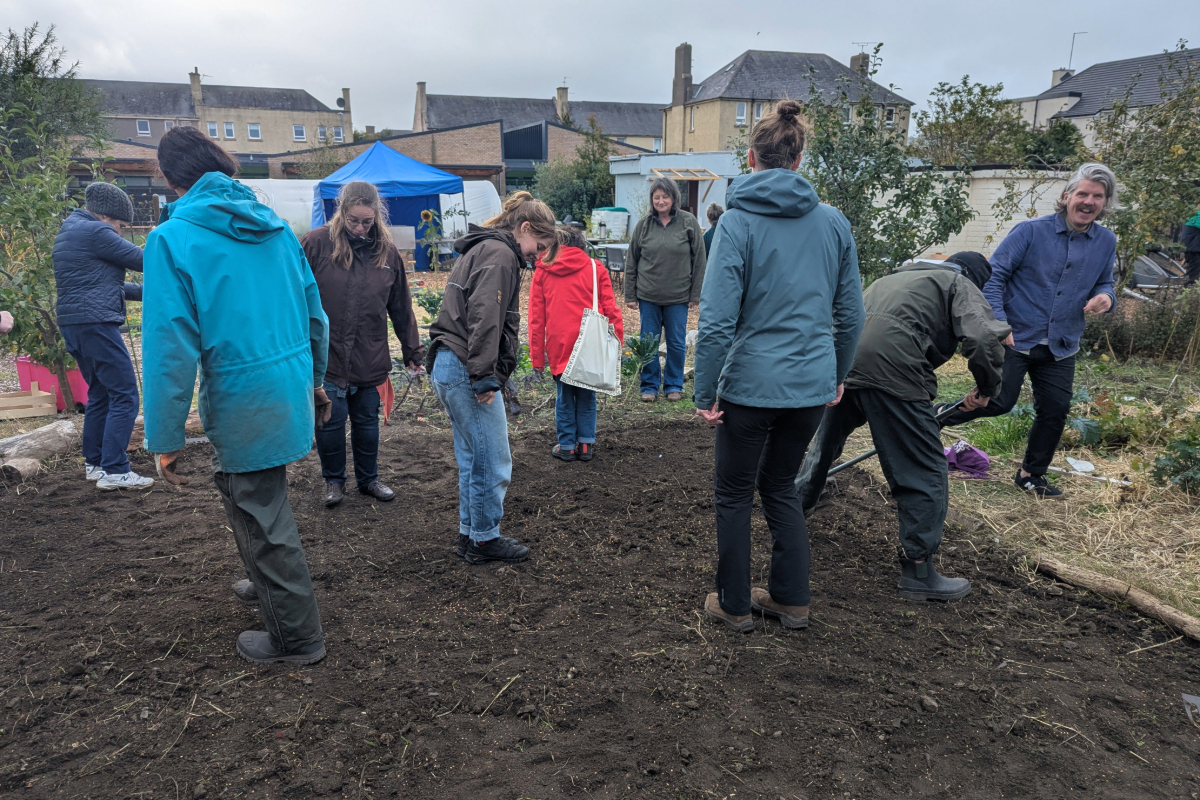
Food growing planters in Cranhill DT Community Garden

A fantastic visit and came away with brilliant ideas on moving forward. Their community shop is up and running and of great value to local folk. Very professionally run, with a post office in place too. A ‘village shop’ idea, the wee shop is a labour of love and provides a lot of items very cheaply. Also gave us ideas of type of products to provide and how to supply (many products come in multiple packs and can be very expense – or just not needed in that amount – they provide one or two of each which saves a lot of money and is achievable). Provision of food bags with small recipes that are tried, tested and popular. We’re taking this idea on board too.

We run a community fridge however we were looking at becoming a stand-alone pantry however, after discussion with the team at CDT, we’ve decided to go with the shop idea. There’s a more dignity in practice involved here which clients having a basket and deciding their own shopping needs, with a ‘checkout’ at the end. At this stage there’s an opportunity to share information, to find out a bit more about the family/individual needs and create an ongoing relationship through time,


Learning Outcomes

  • The first is to see how CDT set up their shop at the beginning and the support and management involved, and to compare and discuss similarities with what we’re doing already (one of our volunteers will lead on this.
  • To discuss similarities between our communities and how they identified the need for a shop (and why a shop?). This will be an open discussion. To learn from each other, discuss stories etc.
  • How they started and the process to follow – also to plan a support strategy. Here we will also look at getting feedback from each of the volunteers from each group.

"We discussed our journeys with start-up and becoming a development trust. She shared a lot of really relevant information and our stories are very similar, right down to the pressure involved! CDT are way ahead of us in development. They provide such a lot of support right in the middle of the community and a lot of activities take place in their own building. Made me realise how 'hemmed' in we are in the shopping centre unit. Also encouraged me to initiate progress to our next steps. Prioritising how we go forward as a charity/DT and what our priorities should be according to Springburn Local Place Plan. A brilliant visit and we left feeling very positive and motivated. Lastly, what really helped overall was to hear Carnhill's journey. It's a high stress environment and the needs are great. We were reassured that we are doing the 'right things' and following the right paths. Knowing that helped a lot. Issues we face are common ones. Support and suggestions to move forward helped a lot as there wasn't anything that we've faced, that the CDT team haven't already come across. Reassuring."

Case Studies

Glasgow Eco Hub exchange

Empowering volunteers and connecting city wide projects

A group of cyclists visiting a community bike shed

During our 4 visits we saw a range of workshop practices, learning different ways to deal with bookings, customer backlog and time management. A key learning was to close or delay bookings to allow us time to work through the backlog. We also gained knowledge on processes for Bike Libraries, something we are developing, including booking systems, storage and pricing.

Through spending time and exchanging knowledge with 4 local cycling organisations, we strengthened our community networks. A key outcome was new organisations joining the Aye Cycle Glasgow network, and material goods being exchanged e.g. bike parts and frames.

The planning for the exchange meant setting up a Whatsapp group, which has a continuing benefit after the visits. The group is now used to post ideas and plans by volunteers and staff, contributing to the community ownership of the refurbishment project.

The exchange offered a great opportunity to spend time with volunteers outside of the usual workshop environment. This meant exploring cycle routes, including cycling along the new Renfrew Bridge, offering the chance to discuss cycling infrastructure. Further, the exchange helped foster an environment where everyone’s views were valued, and could feed directly into plans for refurbishing our workshop. This also meant staff and volunteers could take ownership of the project, contributing ideas, time and research.

Finally, since the study visits, two members of our team have enrolled on SPT funded Bike Reuse Training from the Social Enterprise Academy to learn ways to enhance our workshop offer further.

Learning Outcomes

  • Understand a range of community cycling and recycling workshop practices, from customer bike bookings, repair and delivery.
  • Explore a range of community cycling and recycling workshop designs, including layout, storage and processes.
  • Strengthen existing and create new community networks and relationships within the cycling and recycling sector in the Strathclyde region.

"The exchange allowed us to explore a range of layouts. Three of the workshops visited were a similar size, and it was reassuring to learn they experienced similar storage issues to us. One of the organisations was in a different council area, Renfrewshire, meaning we learnt different processes in terms of bike recycling through the council waste centres. A key learning point for us in terms of layout was segregating repairs, sales and fleet bikes, as well as being stricter on our second hand parts stock."