Case Studies

Girvan Tourist Information and Craft Shop visit to Culzean Castle and Country Park

Updating local knowledge in support of community led tourism.

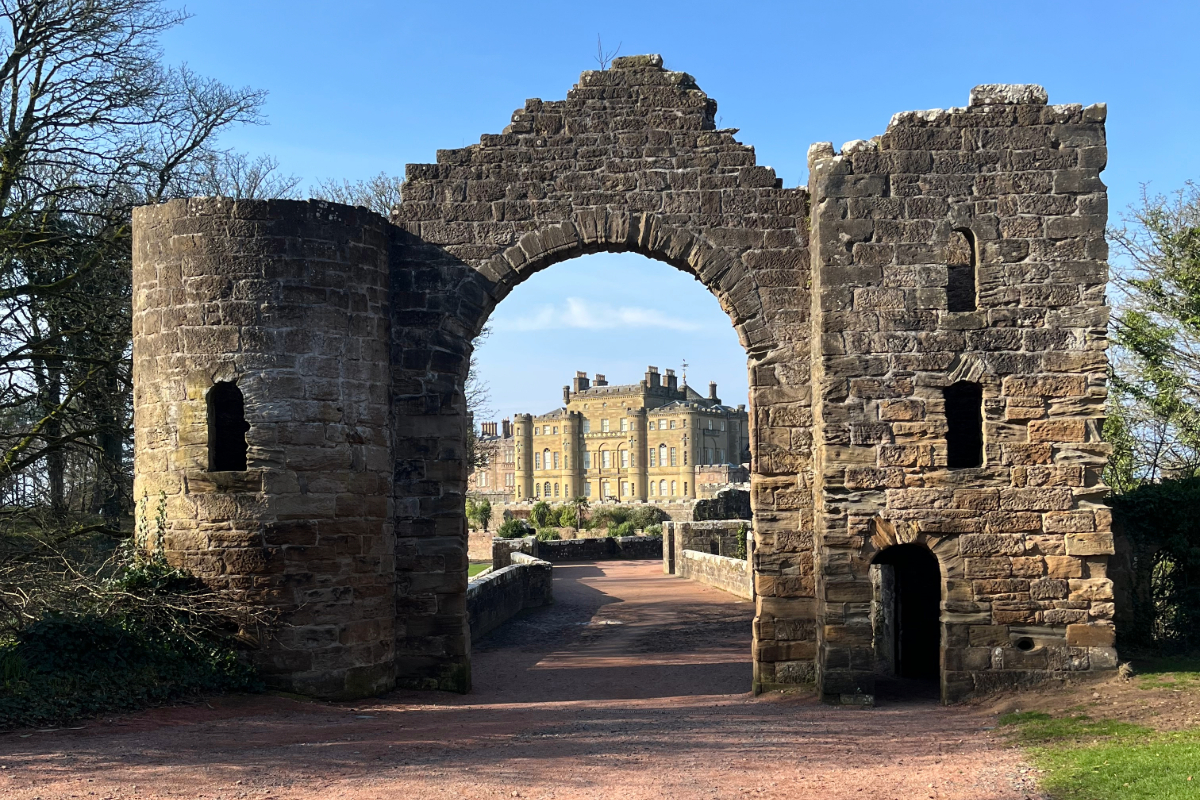
Image of Culzean Castle centred through the frame of an old wall with trees and shrubs on each side

Our volunteers developed their approach to customer service with inspiration from professionals and gained up to date information about the range of current services available at Culzean. We already distribute leaflets about Culzean in our Tourist Information as well as promoting them on social media. We were able to strengthen this link through meeting the Visitor Services Supervisor.

Tourist Information volunteers’ personal knowledge and enthusiasm are vital in our face-to-face service, so this visit helped to ensure volunteers become genuine ambassadors for this exceptional local attraction. NTS staff appreciated the role played by Girvan Tourist Information in promoting Culzean Castle and Country Park.

Learning Outcomes

  • Through face-to-face discussions with experts, Tourist Information volunteers will be better placed to advise visitors about the wide range including history, architecture, horticulture, retail and catering offered at Culzean Castle and Country Park.
  • Volunteers will find out more about the role and impact of tourism on Culzean’s green environment; the changing nature of expectations for tourists in the 21st century; become aware of inclusivity and local integration in the National Trust.
  • Tourist Information Volunteers and Culzean staff hope to strengthen professional collaboration.

"One great benefit was for our volunteers, new and old, to meet and get to know each other. We work in pairs at Girvan Tourist Information, so this was a great team-building opportunity to meet everyone."

Case Studies

Glenbarr Community Development association – Craignish & Ardrishaig Village Hall

Business planning, governance structuring and delivery for a future Community Hub.

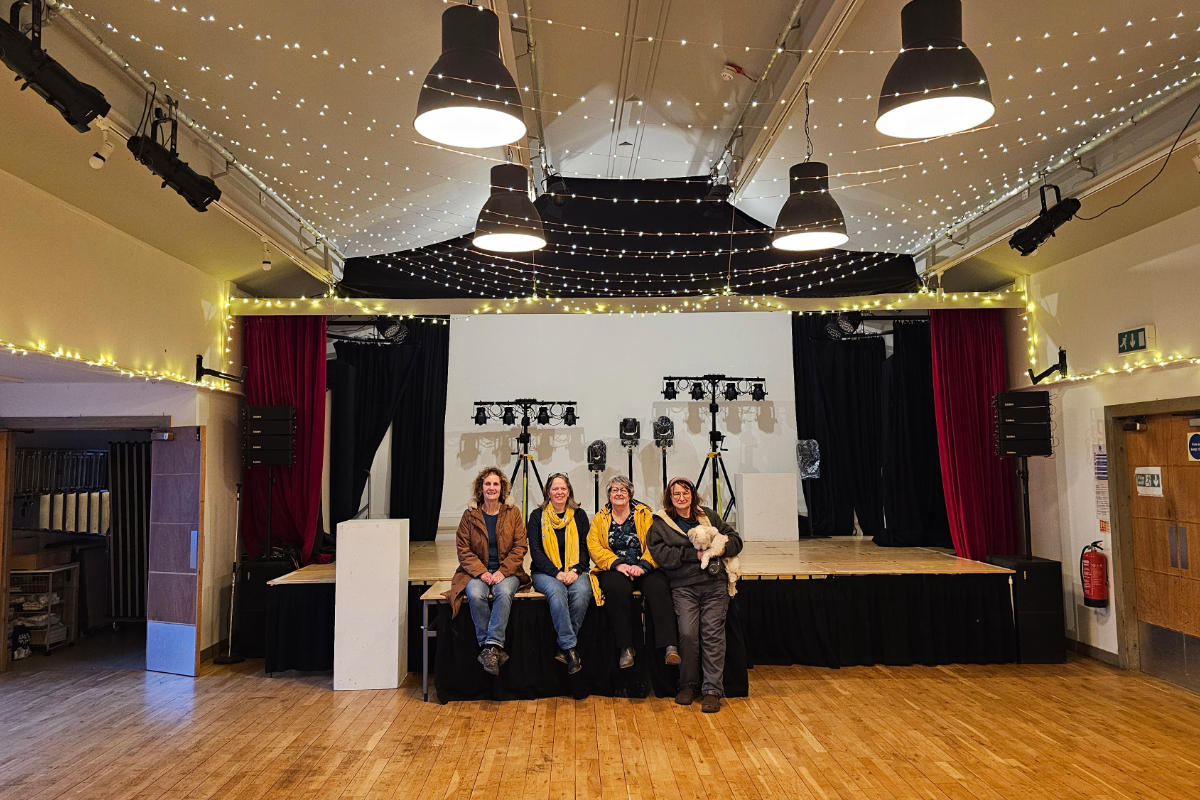
4 people sitting on a stage, one holding a small dog in a community hall with fairy lights suspended from the ceiling

The exchange met its intended outcomes by giving our group first-hand, evidence-based learning from two highly active rural halls operating at different scales and under different financial structures. At both locations we were able to interrogate what successful looks like after refurbishment or years of operation, and understand the practical realities that sit behind headline utilisation.

At Ardrishaig, the visit confirmed what happens when a hall becomes genuinely busy: professionalisation becomes unavoidable. We explored how booking systems help but do not remove workload, why cleaning and changeover must be priced and recovered, and how event packaging protects capacity. The hosts were open about energy pressures and the importance of active energy system management. Crucially, we were able to understand the structural role that renewables-linked income plays in underpinning staffing and capital investment, giving a clear benchmark of what a financial cushion can enable.

At Craignish, the visit provided a mature example of high utilisation supported by strong procedures, paid management, and diversified income. The evidence from the hall’s latest accounts reinforced what was stated in discussion: grant-backed programming, particularly arts funding, is structurally significant and would be difficult to replace through hall hire alone. This helped us stress-test assumptions about sustainability and confirm that even well-used halls can remain reliant on grant relationships in the absence of a separate revenue anchor beyond hall operations.

In both visits we gathered learning that will directly inform our next-stage work: Phase 1 brief refinement, options appraisal focused on real operational use, and business planning assumptions around staffing, income mix, cost recovery and energy management.

Learning Outcomes

  • To gain a clear understanding of how mainland rural community hubs structure governance, staffing, and operational responsibilities as they transition from volunteer-led initiatives into more complex multi-use facilities. This includes learning how responsibilities are divided between boards, staff, contractors, and partner organisations, and how governance models evolve as hubs grow in scale and activity.
  • To understand how established hubs balance community access with commercial activity, including cafés, room hire, events, and shared workspace, without undermining local businesses or community cohesion. This learning will directly inform GCDA’s business planning, particularly around appropriate scale, pricing, opening hours, and programming for a hub serving a small rural population with seasonal demand.
  • To understand how established hubs balance community access with commercial activity, including cafés, room hire, events, and shared workspace, without undermining local businesses or community cohesion. This learning will directly inform GCDA’s business planning, particularly around appropriate scale, pricing, opening hours, and programming for a hub serving a small rural population with seasonal demand.

"The visits created useful peer relationships. Both hosts were candid and solutions-focused, and we have a clearer basis for targeted follow-up questions where additional detail would be valuable. This peer connection is a real asset as our project moves into a more technical stage."

News

Community Owned Scotland

May 28, 2026

Making community ownership visible


In response to the incredibly positive Local People Leading event at the Scottish Parliament in February, SCA member SCOTO CIC were inspired to revisit their idea of a visual aid to highlight a community tourism enterprise – for the benefit of visitors and locals. Following a positive exploratory session with the SCOTO network in April, the May SCA member thematic session introduced the idea to the wider network and with a broader focus on community owned assets.

Russell Fraser, Chair of SCOTO and colleague Carron Tobin explained why this concept is becoming increasingly important for community tourism enterprises and their belief that this is about the community sector as a whole.

Carron highlighted how so many communities across Scotland are stepping in where the public sector have stepped back – taking over toilets and setting up visitor information points – and also providing much needed motorhome air stop overs, hostels, shops, pubs and cafes on or in community owned assets. Although these are visitor facing many are primarily for the benefit of the community.

Russell shared insights into the moment when visitors finally realise they’re experiencing a community-owned asset and how it changes their attitude and propensity to spend money and actively support the community.  The same applies to general public awareness of community owned assets.  A pilot would help define community and community owned.

Below is an extract of Russell’s thoughts.

A SINGLE NATIONAL SYMBOL TO MAKE COMMUNITY OWNERSHIP VISIBLE

“Just as people recognise an accommodation accreditation, a recycling symbol, a net zero symbol, whatever it may be, there should be a symbol that says;

“This place belongs to the community.”

The symbol becomes a public declaration that:

  •      Local people own this asset.
  •      Wealth generated here stays locally.
  •      Decisions are made locally.
  •      The asset exists for community benefit, not private profit.

Most people can identify NHS facilities, council facilities and National Trust properties.  But very few can identify community owned-assets, or understand what that means.

This creates practical problems:

  • people don’t realise what has been achieved 
  • they underestimate the scale of the movement across Scotland
  • they don’t choose to support community-owned enterprises
  • policy makers don’t see the collective impact
  • communities feel isolated rather than part of a national movement

The Opportunity: Scotland has facilitated the acquisition of hundreds of community-owned assets – each representing local people choosing hope over decline. A common symbol would turn these separate projects into one visible Scottish movement, making Scotland’s quiet success story finally visible.

Why Now? Scotland is a leading light in community ownership, but it isn’t obvious. With communities increasingly opting to own assets, deliver what were previously public services, and build local wealth, community ownership deserves visible national recognition.  This is community wealth building in action and needs greater profile.

Through my work with Loch Ness Hub & Travel, we’ve hosted visitors from Japan, Canada, Sweden, and Malta – all aspiring to achieve what Scotland is already delivering. It’s time Scotland shouted louder about our communities and what they are achieving.  

Hundreds of community owned assets already exist.  The movement already exists as we witnessed at the Local People Leading event.  What we need now is collaboration across the community sector – and visibility.”

The response from those attending the thematic session was resoundingly positive, recognising this needs to be kept simple and non-bureaucratic to administer. There was strong agreement that this should be fully scoped out and a short-life working group would be created – if you would like to be part of this group or share any thoughts please email: info@scoto.co.uk.

An overview of the proposal will soon be circulated with a survey to gauge support from each of the SCA members and their network members.

To read the full-length version of Russell’s initial thoughts, click here >: https://www.scoto.co.uk/blog/a-symbol-for-community-ownership/

Case Studies

SCOTO member cross sector exchange

Exploring the urban dimension of community tourism

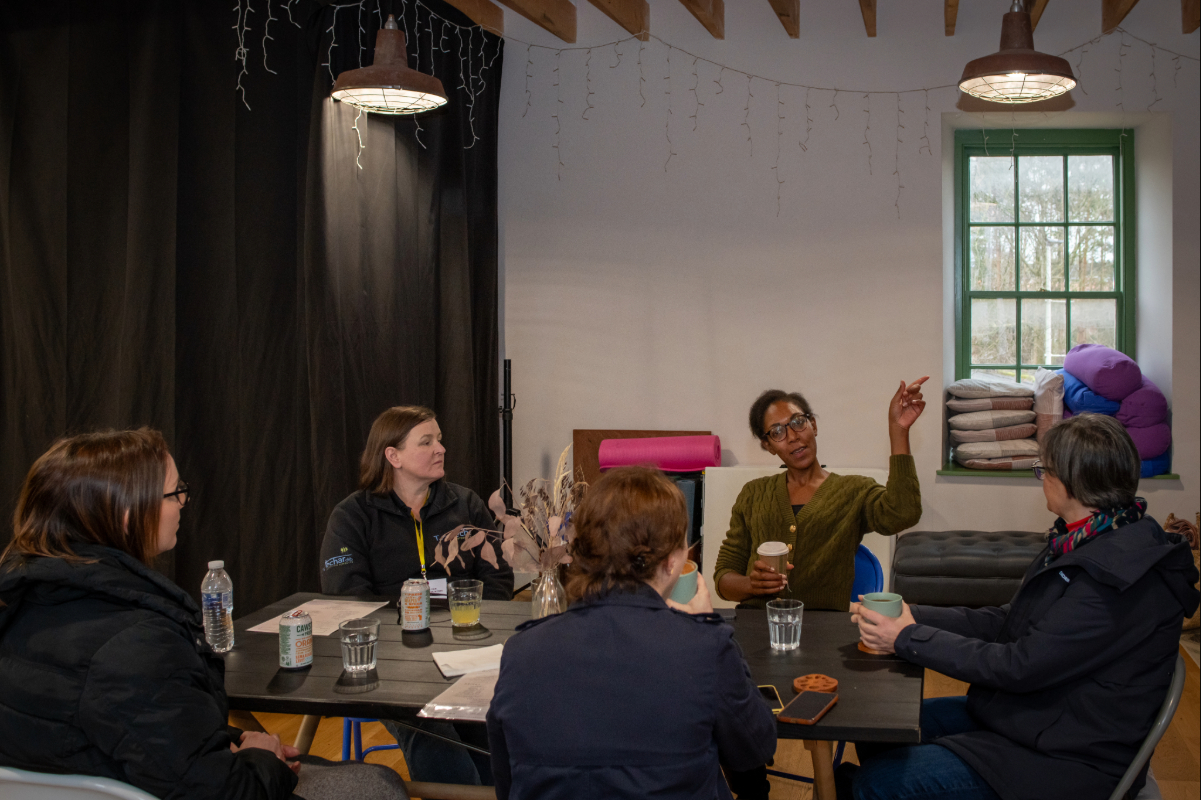
A group of 5 people sitting round a table chatting

We held five different ‘tours’ to different parts of the city of Glasgow and visiting three social enterprises, charities and community groups for learning exchanges, and a sixth walking experience considering Pilgrim Ways and communities which joined two of the other tours at Glasgow Cathedral and the Govan Stones, and also visited other sites on the Whithorn Way which runs from Glasgow Cathedral to Paisley Abbey (and then south).

The exchanges had an urban focus and a very valuable aspect was rural players exchanging with them. It was very useful to see the less seasonal aspect of urban operations that can operate all year and also how they tackle local day trippers as well as more mainstream tourists from further afield

The exchanges helped everyone better understand the charity and social enterprise models that had been adopted by each and how they had decided what was the best option for them given their overall purpose and community. There were learnings from organisations that had changed their governance to allow them to do things differently and also approaches to donations vs ticket sales.

A key learning for many of the hosts is recognising the role of tourism in bringing much needed revenue and putting effort into reaching out to them and also working with other tourism facing enterprises in their area

Learning Outcomes

  • Better understanding of the governance of community led tourism initiatives.
  • Better awareness of the operational challenges and opportunities in running community led tourism initiatives.
  • Inspiration of what is possible through community led tourism initiatives in terms of community cohesion and resilience.

"We were delighted to announce at our Day 2 event that the learning exchanges we undertook in Montrose last year as part of the 2025 SCOTO Gathering had been the inspiration for the Glasgow Convention Bureau launching their 'In Glasgow - Meetings Mean More' initiative where they showcase local social enterprises and charities to event organisers and their delegates for places to eat, gifts to buy, experiences knowing that their spend is helping that organisation help their community. This is now being profiled at an international conference in Helsinki as part of the City DNA conference in April 2026 with SCOTO and Glasgow Convention Bureau jointly hosting a workshop on this theme."

Case Studies

Kelly Academy of Irish dance visit

Using dance as a medium for wider, inclusive community benefits

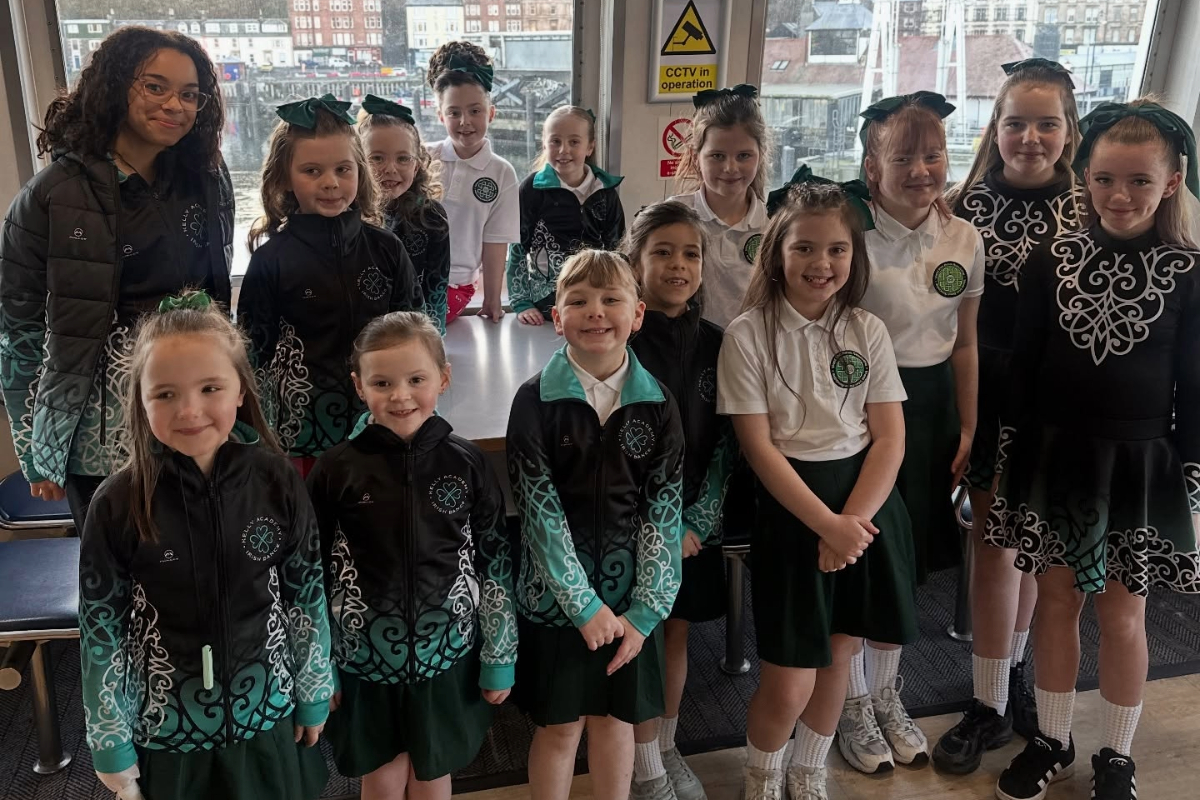
A group of children from Kelly Academy of Irish Dance

The exchange provided children, young people, and teachers with a valuable opportunity to experience how Irish dance is taught and celebrated in another community. Through shared workshops and informal cultural exchange with the Rothesay group, participants were introduced to new dances, styles, and traditions. Many dancers were able to describe specific steps, dances, and stories they had learned, demonstrating clear engagement with the cultural aspects of the visit.

Teachers recorded reflections on both similarities and differences between the two communities, particularly in teaching approaches, class structures, and community engagement. This has already begun to inform ideas for future collaboration and programme development. Overall, the exchange strengthened cultural connection, fostering a shared sense of identity and belonging within a wider Irish dance community.

The exchange created dedicated space for teachers and organisers to share knowledge and discuss approaches to delivering accessible, community-focused dance programmes. Through conversations and observation, both groups identified practical ideas around affordability, inclusivity, and sustaining engagement with local families.

Learning Outcomes

  • Strengthen cultural connection between communities: The Children & Young People will gain a deeper understanding of Irish dance as it is taught and celebrated in another place, building shared cultural identity and long-term links between local community groups.
  • Build confidence, teamwork and wellbeing through shared dance activities.
  • Strengthen collaboration and practice between community dance organisations.

"One of the most significant impacts was the opportunity it gave children from disadvantaged backgrounds to travel and take part in an experience they would simply not have had otherwise. For many, this was their first time visiting another community in this way. Meeting and dancing alongside new peers, experiencing different community norms, and seeing how Irish dance is celebrated elsewhere opened their eyes to new possibilities. It expanded their understanding of the world beyond their immediate environment in a way that felt exciting, positive, and empowering."

Case Studies

Tullibody Community Garden- Rosyth Eats

Growing food for broader community benefits

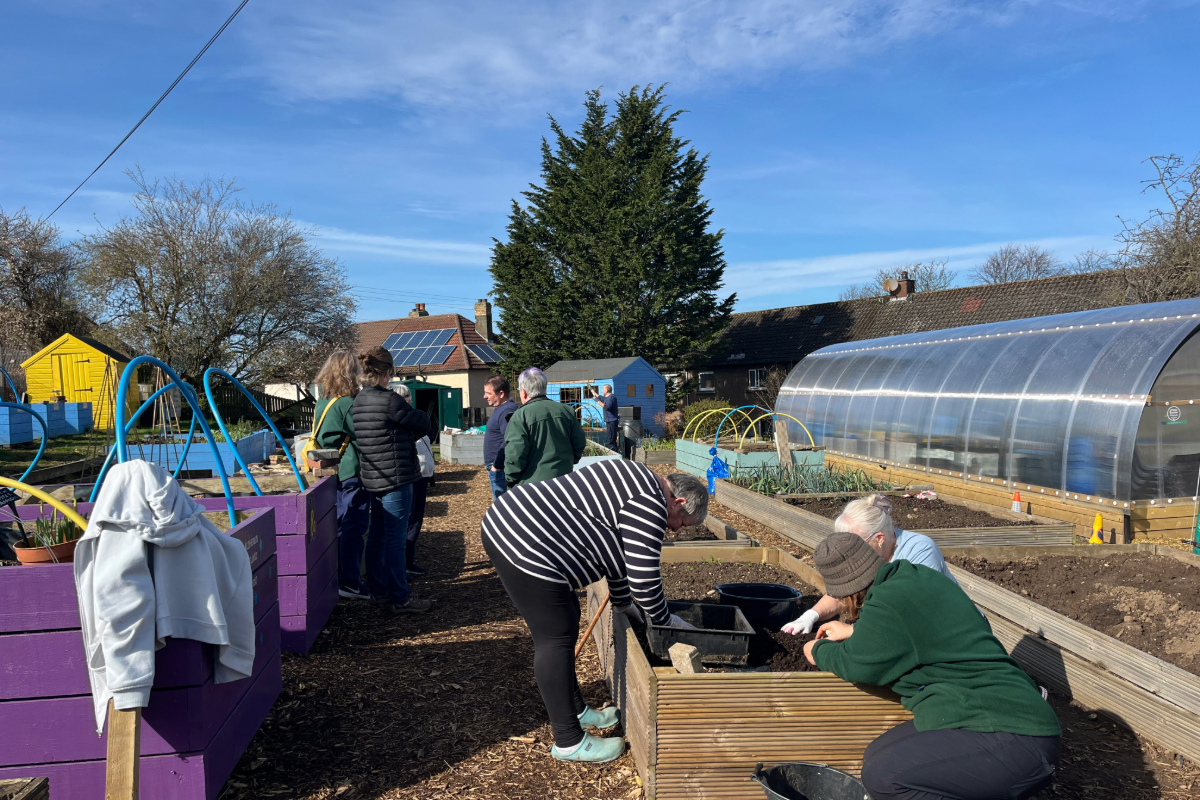
People outside gardening around raised beds with a polytunnel to the right

We wanted to explore (ie more efficiently and effectively) transition from a 100% volunteer run community garden to one with a staff team. So enabling us to expand and develop the number and range of community services that we provide.

Make best use of Trustee time eg avoiding pitfalls. Thereby freeing up time for them to get on and deliver the changes. Broaden and strengthen our current planning, funding and marketing/publicity efforts. So allowing us to better deliver on our Mission and reach out to more community members, especially disadvantaged folks.

The exchange helped to highlight the importance of taking volunteers with you, sustaining their interest/commitment/support when loads of new activities and groups happening. Avoid a feeling of being “left behind”, and that the new work means the garden feels “busy” and maybe doesn’t benefit them so much. Monthly volunteer/staff meetings, quarterly newsletter, annual review meeting.

Tackling inequalities: engagement with the Poverty Action Group is  important; ‘Pay It Forward’ scheme in Hub cafe that allows those with more income to support those with less whilst avoiding any stigma; Ticket Taylor for event bookings and Malechimp on marketing – allow subsidised/free offerings and standard prices overpay; run a Food Bank

Gardening: Sustainability measures eg water collection and distribution system for garden – solar portable water pump and mobile bowser; composting.

Communications: links with funders eg give certificates for corporate activity participants; good quality publications

Publicity: taking part in award/recognition schemes brings recognition and good evidence for funders; social media doesn’t tend to cut through all the ‘paid for’ rubbish


Learning Outcomes

  • Analyse the key learnings and best ways to smoothly transition from a purely voluntary organisation to one that successfully employs a staff team, working alongside volunteers, including Trustees.
  • Re-assess and improve our Business & Strategic planning, funding and marketing/awareness-raising provision.
  • Understand how their gardening, cooking activities and facilities fit in with their Vision, Mission and Objectives.

"We were able to establish a good relationship and personal connections between our organisations that will be mutually helpful. We made a firm plan for Eats Rosyth to visit us later in the year."

Case Studies

Cross sector exchange

Safeguarding the future of community work

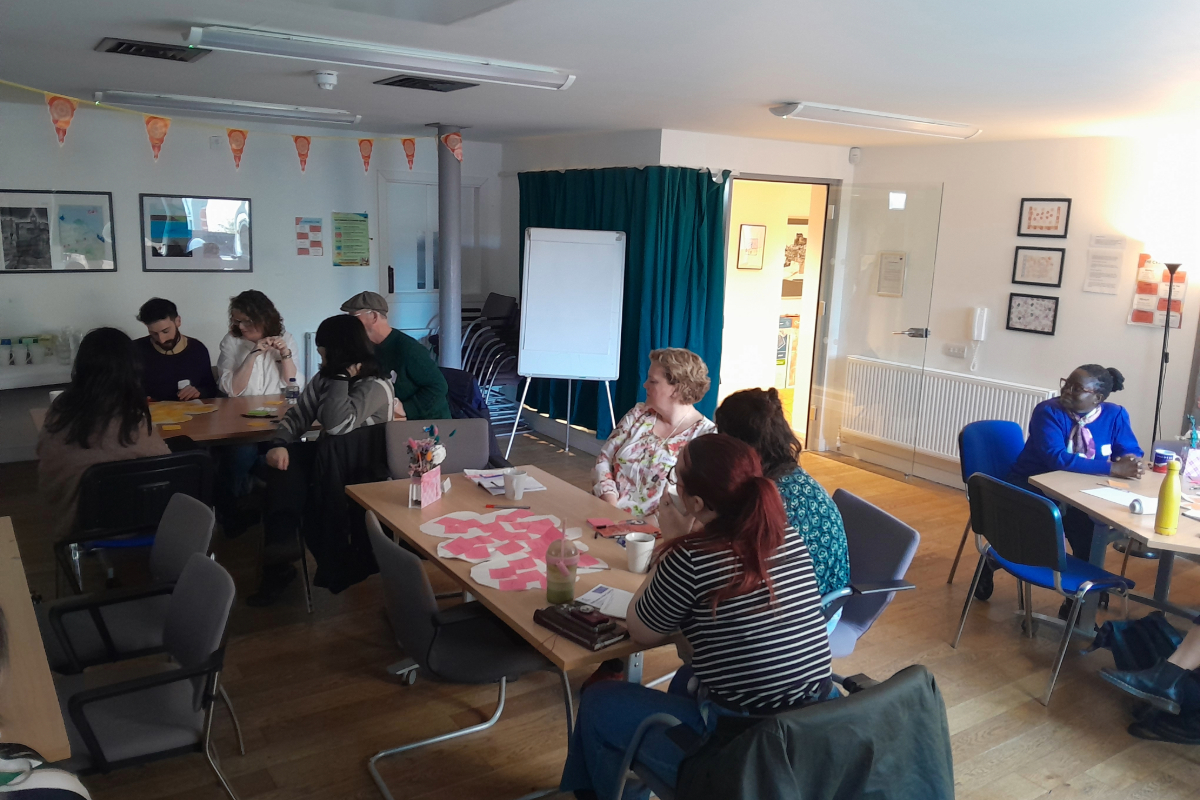
3 tables in a room with group of people sitting at each

This exchange provided the opportunity to learn how to work with, develop, and utilise the skills of the next generation of community workers. The exchange provided insight and advice into placements, courses, and different approaches to learning, as well as the challenges facing future community work.  The Crannie Community Hub has a relaxed and informal setting, where we got to hear from input from a community work student, which really got people connecting with their own stories. Always time for conversations and connections which is critical when you get folk in one place (and not online). Shared experiences, was good to hear from others and find same positives and negatives. We were as able to think about the role of the CLD Standards Council as well in supporting practitioners in a way which was meaningful and relevant to the learning exchange.

Learning Outcomes

  • Thinking about different ways that community development workers/projects can support people to get involved in the profession.
  • Navigating potential issues and challenges that present a threat to the future of community development.
  • Considering the future and adopting different ideas and approaches to create a stronger CLD network.

"Feeling inspired and will be looking into the CLD Standards Council further. Will be sharing back to our board the identified challenges and opportunities from the day. Helped me realise the importance for networking and hearing others experiences so will seek to network more with others doing this work esp. in similar settings to ours."

News

New environmental journalism network and magazine launched to tell better stories of Scotland’s energy boom

April 29, 2026

Journalists, campaigners, researchers and activists gathered in Glasgow to discuss how communities could better benefit from Scotland’s renewables boom.


“We’re here because we want to tell better, richer stories about our communities; not ignoring the difficulties and challenges, but leaning into those complexities.”

These were the words of Rhiannon J Davies, founder of the Scottish Beacon, on Friday last week when journalists, campaigners and experts from across Scotland gathered in The Byres Community Hub in Glasgow. The event celebrated the launch of a special one-off magazine, The Power Shift – the result of a collaborative reporting project co-edited by Davies and Mike Small.

The Power Shift project explores Scotland’s green energy boom and what it means for communities. It has been supported by the Tenacious Journalism Awards and campaign group Uplift.

It also marked the launch of a new environmental journalism network for Scotland, made up not only of reporters and editors but experts, campaigners and researchers like those at Friday’s event.

Over a series of panel discussions, presentations, and roundtable conversations, attendees highlighted the importance of community involvement in decisions about green energy developments; the need to confront misinformation and climate denialism; how communities can get their fair share of the benefits of renewable developments; and lots more.

“If it’s going to be done to us, we should gain some community legacy”

The event kicked off with a panel of journalists who each contributed stories to the Power Shift magazine. Jane Cruickshank from the Bellman in Stonehaven reported on wind farm substation developments in local forests. Hans Marter from Shetland News spoke about the piece he co-wrote with Erin Rizatto Devlin which compared the constitutional set-up of the Shetland Islands and the Åland archipelago, an autonomous region of Finland in the Baltic Sea, comparable to Shetland in size, population, and exposure to renewable energy projects.

Silvia Muras from the Kyle Chronicle shared her reporting on a surge of new windfarm proposals in the North Central Highlands, and Paul Dobson from The Ferret discussed an investigation which found that more than 20 wind farms in Scotland are failing to pay recommended dividends to local communities, potentially costing communities over £50m.

The panel highlighted how communities can both appreciate the need for renewable energy, while still being concerned about the impact of developments on their own doorsteps – especially when it feels like the wealth they generate does not always benefit the local community.

“If it’s going to be done to us, which is how it feels at least, we should gain some community legacy,” said Cruickshank. “You have your own personal environment as well as the global environment. It’s perfectly feasible to have concerns for one and also the other – and they can be in conflict.”

Speakers also shared the difficulty of accessing clear and transparent information about new developments in their communities, with Cruickshank comparing her reporting experience to “putting a jigsaw together” and Muras highlighting the practice of ‘salami slicing’, where developments are systematically split into several parts for approval, obscuring the overall picture.

In this context it can be easy for climate denialism to creep in, most panelists agreed, again highlighting the need for communities to be informed, involved and empowered about developments in their areas.

“One of the big things allowing it to creep in is the feeling in lots of communities that people are disempowered,” said Dobson. “[They don’t feel they can] register opposition in a way that’s impactful or meaningful; they don’t feel they have any stake in the political system… community wealth building is a bulwark against this kind of thinking.”

“The same wind stripping heat from your home is the thing delivering record profits to shareholders”

Next, attendees heard from a panel of campaigners, each working on different aspects of community energy, wealth and empowerment.

Flick Monk from Platform shared clips from a new documentary film “highlighting different voices of the energy transition, with the aim of reinvigorating discussion around these complex issues.” Nat Gorodnitski from Uplift introduced the‘Our Power’ campaign, a set of demands for the next Scottish Government aimed at ensuring people in Scotland get a fair share of their energy wealth.

Josh Doble from Community Land Scotland highlighted the organisation’s current priorities, including increasing community energy and shared ownership, improving community benefit payments and establishing a wealth fund managed by communities which would enable community organisations to acquire or develop their own revenue-generating assets.

Daniel Gear from Voar in Shetland provided a powerful insight into the experience of communities affected by renewable developments, telling attendees: “If you live in the central mainland of Shetland, you get up in the morning, open your curtains, and see the largest onshore windfarm in the UK.

“At the same time, a letter comes through the door; it’s your electricity bill and it’s higher than it’s ever been before, and you realise you’re almost certainly going to need help to pay it. You’re in poverty.

“The newspaper is delivered, you see that the people who own the wind farm are reporting record profits, and you realise that the same wind stripping heat from your home is the thing delivering the record profit to these shareholders, who built something you didn’t really want in the first place.”

The panel discussed the need for local authorities to have greater powers and funding around planning and renewables developments, and once again highlighted the importance of community and public ownership and control.

“Ultimately it gives the government and communities more options,” said Monk. “The crucial question is about this new industry that’s emerging: how are we going to set it up in a way that learns the lessons of the past – privatised oil and gas industries that saw profits go to very few people, pockets of the country very dependent on industries now facing job losses and economic uncertainty?”

“Creating that safe space where people can find nuance”

The afternoon saw Clare Harris from the Local Storytelling Exchange introduce a new film focusing on communities along the east coast, on the line of the Great Grid Upgrade – the UK’s largest energy upgrade in generations and one which has been divisive for the communities most affected.

The film aims to “try and find middle ground and space we can inhabit together,” Harris said. Tackling polarisation is about making space for people to have challenging but constructive conversations, she told attendees. While the energy transition is widely discussed, far less attention is given to what might come afterwards. “[It’s about creating] that safe space where people can find nuance and say: what next?”

Harris’ primer on polarisation led into a series of roundtable discussions, where attendees discussed how to effectively tackle it, as well as a range of other questions including how to tell better stories; how to amplify community voices; how to build our ‘democratic muscle’; and how to strengthen our information ecosystems.

Discussions were rich and wide-ranging while also highlighting some common themes: attendees highlighted the importance of getting people physically into the room together, as well as using arts and creativity to explore these issues and move beyond polarisation. Others emphasised how the planning system needs to be improved to give communities as much power as developers.

Communities need to be given agency and power, rather than being “beaten over the head with what’s not working,” attendees suggested, and people need to see tangible blueprints about what local democracy and a “collective people’s movement” can look like in practice.

“Great, rich nuanced discussion”

In closing, Rhiannon J Davies explained that copies of the Power Shift magazine would be sent to every incoming MSP and to libraries around the country, as well as being distributed in local communities across Scotland by members of the network – from Shetland and the Western Isles to Argyll, Midlothian and Sutherland.

The wider Environmental Journalism Network will continue to meet regularly, creating a space for complex and nuanced discussions with Scotland’s communities at their core.

“I’ve really enjoyed today; there’s been absolutely great, rich, nuanced discussion,” said Daniel Gear from Voar in the Shetland Islands. “There’s something about the ability to have this kind of discussion with no agenda other than to examine these complex issues in as nuanced a way as possible… I can’t think of any other space that exists to do that.”

If you would like to receive a copy of The Power Shift magazine, you can order online here. 

If you are interested in joining the new Environmental Journalism Network that is open to journalists, campaigners, researchers and experts, sign up here.

Case Studies

Linlithgow Shed- Armadale Shed visit

Expanding community reach and engagement

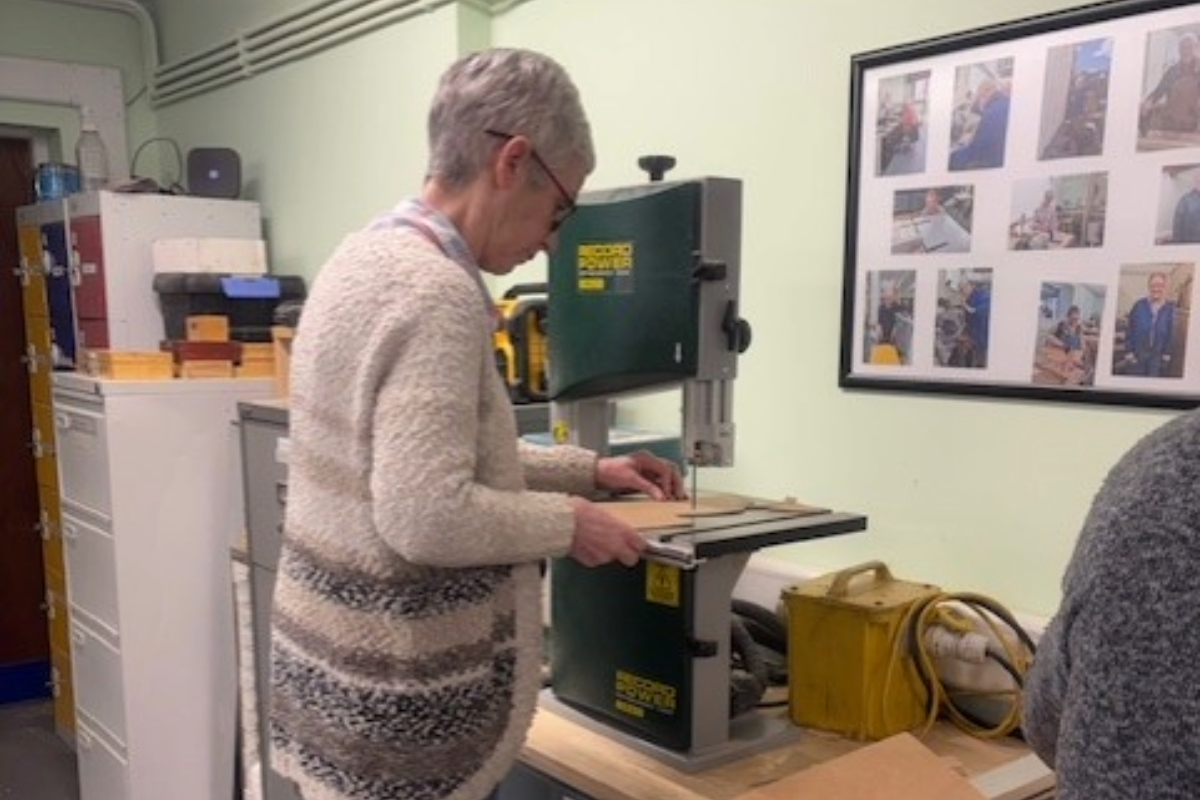
A person using an angle cutter to shape wood

Linlithgow Shed are at a stage where they would like to expand and reach new groups within the community, and also offer different activities. At present they need some ideas and inspiration about how other Sheds achieve this.

The structure of the Armadale Shed gave us food for thought – they have a comprehensive handbook for their members which outlines responsibilities – we have now started to draft our own. In Armadale there is a good deal of effort expended on making items for sale to the local community – this boosts their funds but also raises their local profile and can attract new members. Finally, as a result of a devastating fire at their Shed some years ago, Armadale have now installed ventilation, dust extraction and other safety measure all in line with best practise. There was a lot in terms of their physical workshop setup that we have learnt from, and are now working on upgrading our ventilation systems to better protect our space and our members.

Learning Outcomes

  • Structure of the Shed in terms of roles and responsibilities – how formal are these? How is monitoring achieved?
  • Engaging with local communities – which audiences are catered to and which are hard to reach? What are the most successful ways of engaging local people?
  • Practical and health and safety examples of layout, equipment etc. Linlithgow Shed has grown gradually and organically, mostly using donated tools. We’re excited to learn from an example of a Shed that has built itself up intentionally.

"We were able to see their Shed members at work, join them for their tea-break and get a lot of stories and advice/tips from them. As they were forced to completely rebuild their Shed following their fire, they had obviously given a lot of thought to layout and how to optimise their space for the work that they do. We'd love to have the well ordered and designed space they have!"

Case Studies

SCOTO members exchange

Aspirations for community led museums and heritage centres

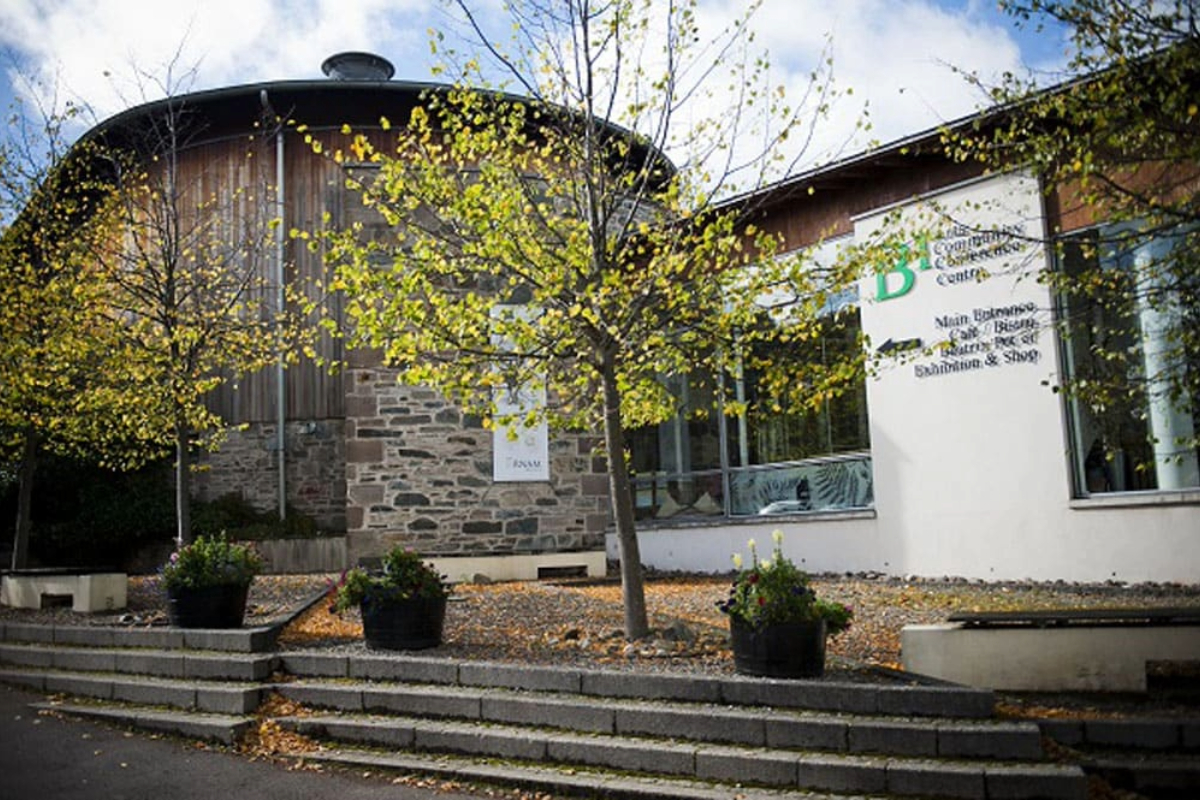
Image of Dunkeld & Birnam Arts Centre behind a row of trees

The Curated Conversation proved to be a really valuable approach. This was face to face with the five independent museums coming together. This included the host – Dunkeld Archive – plus Trimontium Museum, Ullapool Museum, The Scottish Crannog Centre and Abernethy Museum. They came together in Dunkeld & Birnam to hear where Dunkeld Archive is at and what their ambition is to then share their stories and give advice. This was made accessible to a bigger group face to face and online by forming a panel to firstly each present their story and then explore several topics. They each shared their experiences in relation to operational challenges and opportunities to overcome these, and also described recent project activity which had made a big difference. Each presenter also shared their current ‘headaches’ and had a group discussion on how to tackle these. This then allowed Dunkeld Archive as the host to pose various questions and then open this up to the floor (for face to face and online participants).


Learning Outcomes

  • Shared learning on operational challenges and opportunities connected with community run heritage centres and museums.
  • Shared learnings on the development of community run heritage centres and museums.
  • Community engagement from locals in the Dunkeld and Birnam area to hear the stories from elsewhere and be involved in the Dunkeld Archive project development

"The model we adopted worked - bringing other community heritage groups together who have recent experience of tourism facing project activity and/or are similarly considering an aspirational project and providing a forum for them to share their experiences together and quiz each other. Everyone got a lot out of it and the resounding comment is we all can learn so much from each other and just need time to be together to do that."