SURF’s Manifesto for Regeneration – Empowering People, Places, and Policy sets out a suite of key regeneration priorities for the next Scottish Parliament.
SURF’s Manifesto for Regeneration – Empowering People, Places, and Policy sets out a suite of key regeneration priorities for the next Scottish Parliament.
Their manifesto is centred around four core themes, which emerged during engagement and consultation phase. They are:
Resource Local Democracy
Deliver Affordable Housing
Commit to Fair Funding
Invest in Public Transport
These themes cut across all aspects of community led regeneration. That’s why, from 2026 to 2031, SURF will be asking Members of the Scottish Parliament how they are delivering on these priorities to create a more equal and prosperous Scotland.
The art of ownership: how North Edinburgh Arts is building community wealth
A landmark community-owned arts centre in the north of Edinburgh is using culture to build community wealth.
Reporting by Charlie Ellis
Edited by Lucas Batt, Greater Community Media
Edinburgh is known as a global capital of culture. But three miles north of the city centre in Muirhouse, the story has often been one of exclusion. Until now.
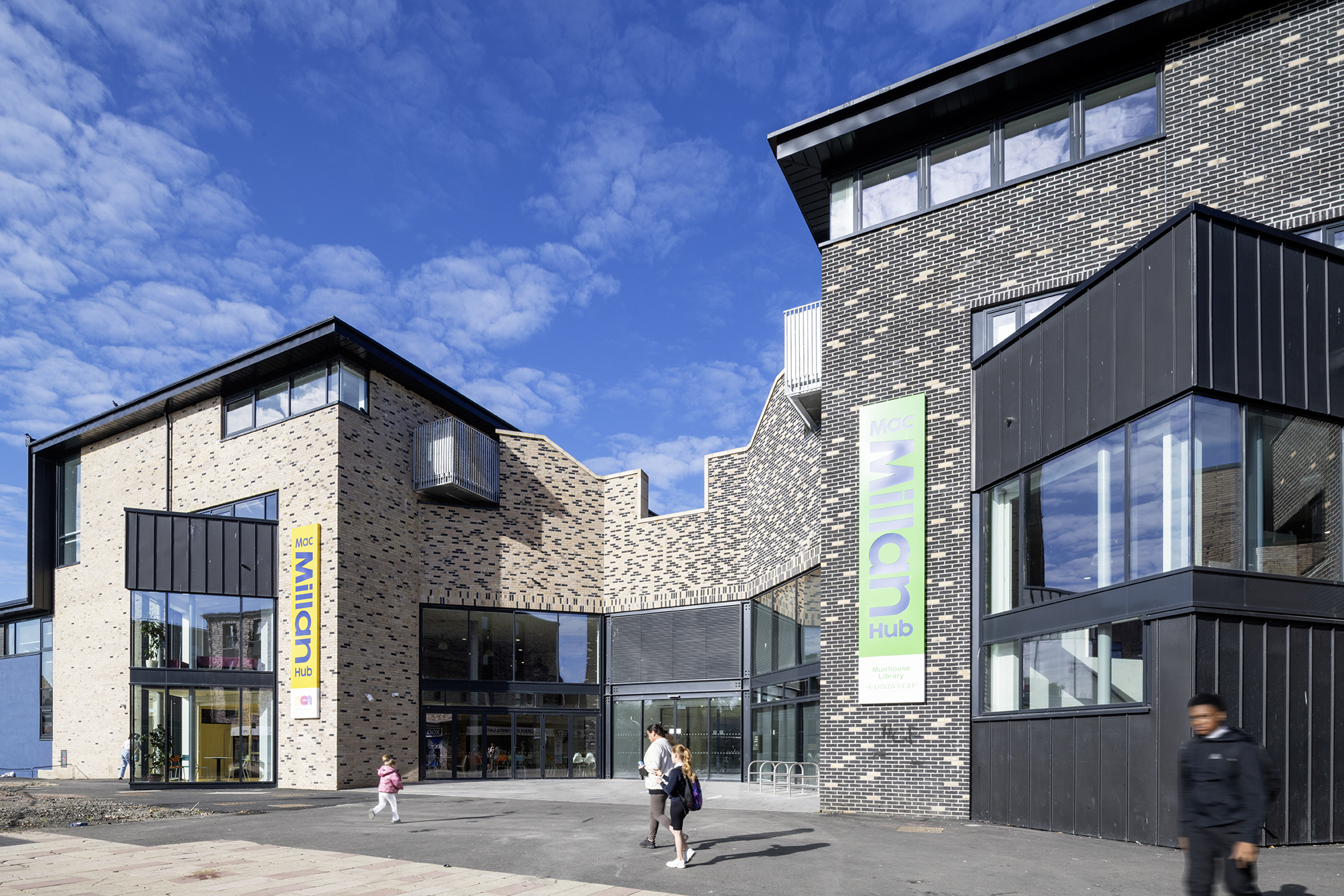
Walk into the brand new MacMillan Hub in the heart of Muirhouse and you will sense the ambitious cultural revolution taking root. There, North Edinburgh Arts (NEA) is providing far more than a community centre. Operating a third of this £15m civic landmark they unite everything from art, dance, and music to textiles, woodwork, and yoga.
The facility houses a 96-seat theatre, a busy 72-seat café, and a wealth of creative spaces – including artist studios, wood workshops, and a music studio. The building also features a hot-desk mezzanine and a third-floor greenhouse, seeding stock for half-acre community garden.
The hub is a testament to community ambition. The beating heart of this complex is owned and operated by the community. NEA, a locally-led charity, has operated here for 20 years, but their move into this purpose-built facility represents a seismic shift. It is a transition from tenants to landlords; from recipients of regeneration to the architects of it.
The community vision
In 2017, North Edinburgh Arts was at a crossroads. They had served the communities of Muirhouse, Granton and Pilton for 20 years, attracting 40,000 visits a year to their creative workshops and theatre. But they were tenants on Council-owned land in a building that was bursting at the seams.
For a community organisation, this was a moment of acute vulnerability. A regeneration plan for the area had been under development since 2008. The risk was real: their arts centre could be squeezed into a smaller space, or lost entirely, if not integrated into the new development.
NEA saw this vulnerability as an opportunity. They proposed a radical integration, putting the community at the centre of the new plans. They launched a Community Asset Transfer to buy their building and the supporting land, and gained overwhelming local support.
Then, they challenged the design itself. NEA appointed their own visionary architects to reimagine their future. Determined to put the community at the heart of the new plans, they worked with the council to develop a proposal that integrated the arts centre into a new town square, alongside a new library, learning and skills hub, and early years centre.
In a validation of their local ambition, the Council bought into this vision, selecting NEA’s architects to design the entire public hub. This was a quiet revolution in urban planning, with a community-led approach resulting in a joined up approach, building in a shared town square, with library and theatre sharing a single, light-filled entrance.
Building community wealth
To make it happen NEA successfully raised over £5 million in capital funding, including £1.7m from the Community Ownership Fund.
Crucially, the NEA third of the Hub is now owned by the community it serves, with 500 members from the local community signed up. This gives a sense of permanence, in an area undergoing new development: whatever other changes happen around them, “we will be here”, as well as integrating accountability and responsiveness into the local community.
NEA is proving that a community arts centre can be a potent economic engine. Recent analysis reveals the sheer scale of their multiplier effect: for every £1 of revenue the organisation receives, it generates £2.37 for the local economy, with approximately 44% going to local freelancers. They also make direct grants to local creative projects, having established an R&D fund, supported by Creative Scotland.
NEA is serious about Community Wealth Building, having hosted a “Community Wealth Builder in Residence” with local partner organisations to embed Community Wealth Building in their work, creating a dense network of local organisations all pulling in the same direction.
The organisation is also serious about reshaping what employment looks like in the sector. With a staff team of 24 and a robust Fair Work policy, NEA provides secure, high-quality jobs in an industry often defined by precarity.
Unlocking opportunities
Inside the Hub, the Community Shed provides tools and training for woodworking and repair, while enterprise units offer affordable space for local makers. It is an environment that nurtures skills of local people, answering NEA’s Director Kate Wimpress’s question: “Where does the next generation of working-class artists come from?”.
They come from here.
Kate underlines that there is a great amount of untapped potential in the area, and by providing cultural opportunities for less typically privileged communities, they can unlock a huge wellspring of talent that might otherwise be lost.
Edinburgh is often noted for the ways its geography segregates different groups and social classes. Breaking down the divide of this “stratified city” is central to NEA’s mission. Having a “quality building” is critical, says NEA’s Director Kate Wimpress. It is their first tool to overcome negative preconceptions about this historically stigmatised area of the city. It should “look like an art gallery”, she says, and the work conducted there should be judged on those same standards of excellence.
There is a tangible sense that working-class communities are marginalised within the cultural sphere. Arguments persist that the Edinburgh Festivals are dominated by a small slice of society – those with the financial security to invest the significant sums often required to put on a show. As Wimpress puts it, living in Edinburgh is expensive, so following a creative path “without a safety net” is very hard. So NEA is creating those support structures for people in Muirhouse.
“Culture is ordinary,” says Kate, citing cultural theorist Raymond Williams. It shouldn’t be a luxury reserved for the city centre festivals; it must be woven into the fabric of daily life.
The support net
Reaching this point required navigating a big imbalance of power. While the vision for the MacMillan Hub was shared, the legal reality involved a small local charity negotiating complex contracts with a major City Council and private housing developers.
This is where Community Land Scotland (CLS) became essential.
CLS is the representative body for Scotland’s aspiring and established community landowners. They offer a unique mix of on-the-ground technical support and national advocacy, translating the abstract rights of the Land Reform Acts into concrete reality for local groups.
For NEA, CLS acted as a bridge between the pioneering rural buyouts of the past and the new wave of urban land reform.
“Our movement has definitely been a rural to urban movement,” explains Josh Doble, Director of Policy and Advocacy at Community Land Scotland. “All the early work and the big thinking was done by the rural groups. Now, we are battling to get the urban groups to have the same level of respect and access to economic opportunities. There are clear lines from the inspiration of what has been achieved in rural areas flowing through to what is now happening in our cities.”
This support was vital in challenging the risk-averse culture often found in the public sector regarding community ownership.
“There is a huge section of very important, influential public bodies that have little concept of what the community sector already does,” notes Josh. “Ths community sector is a credible alternative to the public and private sector, generating a much better use of money, because wealth is kept and circulated locally.”
CLS helps to support and spread the work of organisations like NEA, proving that communities are competent developers capable of delivering and operating multi-million-pound infrastructure.
Things can change
Underpinning Kates’s optimism is her experience growing up in Northern Ireland during the Troubles – a time when change felt impossible. But change did happen. For peace to happen, it required people – including senior politicians – to “take big risks”. They demonstrated that politics was capable of achieving lasting change.
Similarly, the social and economic problems in Muirhouse are not insurmountable. Kate knows “things can change”. Things are changing in North Edinburgh, with NEA at the heart of that, and more change is on the way.
In a city often defined by its expensive festivals and historic divides, NEA stands as a beacon of a different kind of culture – one that is rooted locally, grown right here, and driven by the people who call this place home. By taking ownership of their land and asserting a new vision for their community, and for culture, North Edinburgh Arts is ensuring that as the skyline of North Edinburgh changes, the community remains central to the story. They drew the blueprints.
The Community Transport Movement’s Manifesto for the 2026 Scottish Parliament Elections
January 7, 2026
Community Transport is all about community solutions to unmet transport needs. Local charities, community groups and social enterprises across Scotland have stepped up to deliver accessible, affordable and sustainable transport services which plug gaps in our transport system. From buses in Glasgow and dial-a-ride in Orkney to car clubs in Ayrshire and patient transport in the Borders, Community Transport serves …
Community Transport is all about community solutions to unmet transport needs. Local charities, community groups and social enterprises across Scotland have stepped up to deliver accessible, affordable and sustainable transport services which plug gaps in our transport system.
From buses in Glasgow and dial-a-ride in Orkney to car clubs in Ayrshire and patient transport in the Borders, Community Transport serves all kinds of communities, from our biggest cities to our most remote villages, and every part of society, from older people and disabled people to children and young people. Community Transport utilises all kinds of modes, from coaches, buses and minibuses to bikes, cars and MPVs, and enables all kinds of journeys, from commuting to work and attending healthcare appointments to visiting family and friends.
Working together for warmer, fairer communities: African Challenge Scotland and Home Energy Scotland
December 18, 2025
Blog by Mandy Wright, Partnerships Officer, Home Energy Scotland
Strong partnerships are at the heart of community-led change – and the collaboration between African Challenge Scotland and Home Energy Scotland is a shining example of what’s possible when organisations come together with a shared purpose.
African Challenge Scotland, founded in 2013, is a voluntary organisation committed to building stronger, more inclusive communities. Its work centres on tackling poverty – including fuel poverty – while promoting educational, cultural, and sporting links between African communities and the wider Scottish population. Their approach is proactive, flexible, and deeply rooted in the needs and strengths of the communities they serve.
Since 2017, Home Energy Scotland has partnered with African Challenge Scotland to support minority ethnic communities in Glasgow with free, impartial advice on energy use, saving money, and reducing carbon emissions. Through workshops, advice stands, and community events, this partnership is helping families take control of their energy bills and build resilience in the face of rising costs.
An example of a recent event was a vibrant community fun day in Springburn, where African Challenge Scotland brought together a range of third sector and public organisations to offer support and celebrate local connections. Home Energy Scotland was there, providing practical guidance and friendly advice to attendees – many of whom are navigating complex challenges around energy use and affordability.
African Challenge Scotland places a strong emphasis on partnership working, recognising that collaboration is key to overcoming barriers and reaching those who are often excluded from mainstream services. By working with organisations like Home Energy Scotland, the community group can extend its impact and offer tailored support to minority ethnic groups, including those who are harder to reach and may be experiencing isolation.
“Our ongoing partnership with Home Energy Scotland is a real success and greatly benefits black and minority ethnic families in Glasgow. The activities and workshops that participants experienced through our programme helped them to learn about themselves and gain the skills and confidence to realise their dreams and improve their life. The specialist frameworks and practical guidance collected together here helped leaders and volunteers to provide participants with a programme that supports their development.
We paid attention to what each participant enjoyed doing and what they struggled with. We asked them to list their strengths and weaknesses during the one-on-one meetings held to support their household carbon footprint reduction. We evaluated their performance in the project, based on the tasks assigned to them. Through our project, participants are better able to identify ways to take control over their lives and build resilience. They learned new skills that will enable them to reduce their carbon emission and energy bills, and to manage their money and set a budget. This will help them to understand their spending habits, monthly income and overall financial position.
We will continue to work with Home Energy Scotland to enhance energy efficiency and zero-emissions heating solutions for Black and ethnic minority communities across Glasgow. This engagement aims to improve digital resources, offer in-depth support for home upgrades, and expand Green Homes Networks so that people can learn from others’ experiences.”
Scott Driver, senior partnership officer for Home Energy Scotland’s Strathclyde and Central advice centre, summarises that:
“Working in Partnership with African Challenge and other organisations really does help our customers reach a positive and sustainable future. Successful collaboration with key stakeholders extends the reach of our service and the support available to those within our communities that need our help the most.”
Together, African Challenge Scotland and Home Energy Scotland are helping to shape a future where communities are empowered, informed, and supported to thrive – no matter their background. Through partnership, shared purpose, and practical action, they are building bridges between services and people, creating spaces where everyone can live well, feel heard, and contribute to a more inclusive and sustainable Scotland.
Home Energy Scotland welcomes opportunities to collaborate with organisations that share its commitment to tackling fuel poverty and supporting inclusive, sustainable communities. To explore partnership opportunities and find out how to work together, organisations are encouraged to get in touch.
DTAS launched their Manifesto based around five pillars for change
DTAS launched their Manifesto based around five pillars for change.
The full manifesto sets out practical, systemic reforms and actions that can be embraced by any political party or government committed to stronger communities and a healthy and wealthy Scotland.
The roof over Lochaber: Community Wealth Building in Fort William
December 16, 2025
The Nevis Centre is Fort William’s village hall and economic engine under one roof. Run by a community charity, it uses commercial revenue from hosting big events to fund community activities and spaces, and is a powerful example of Community Wealth Building in action.
By Lucas Batt & Rhiannon Davies, Greater Community Media
Additional footage: Nevis Centre / Linnhe Leisure
It rains in Fort William. It rains a lot. Sitting in the shadow of Ben Nevis, Fort William might be the Outdoor Capital of the UK, but when the West Highland rain sets in, the 12,000 people who live here need a roof over their head, and a warm place to come together.
For nearly thirty years, that place has been the Nevis Centre.
“Most people don’t live here because of what’s inside – there’s so much that goes on outside,” says Katie, a local mum and board member. “But we also don’t have the weather for that all year round. So it’s fantastic to have a space inside when we don’t have the sunshine.”
On those days – and there are many – the Nevis Centre glows like a beacon. Step inside on a wet Tuesday and you realise you aren’t entering a leisure centre, but the living room of Lochaber.
Inside the rain is drowned out by the tiny clatter and giggles in a tap dance class, the crash of bowling pins, and chaotic laughter of children chasing each other with toy lasers in the soft play, while their mums catch their breath over a cup of tea in the café.
With the nearest comparable facility 90 miles away, the Nevis Centre is a lifeline.
“We don’t have a town hall in Fort William,” says Chris Heardman, Chair of Linnhe Leisure, the charity that runs the Centre. “This is our town hall. This is our village hall.”
Everything for everyone
Hiding inside this cosy community space is a vast 700-capacity hall – home to the biggest stage in Scotland outside Edinburgh – and several large studios. These spaces are hired out for a vast array of activities and events, with commercial hires subsidising affordable community rates.
The Centre wasn’t always run this way. The charity took over from a private company. “Instead of putting the money back into the centre, they were putting it into their pockets” says Chris, leaving the community with a building in need of some love. That is when the community stepped in, taking on a 127-year repairing lease, replacing a model of extraction with one of investing in the community.
Today, there are no shareholders. “Every penny we make goes back into the centre,” says Chris.
There’s an incredible variety of activities happening in the Nevis Centre, and demand for the space is enormous. They host concerts, conferences, and national festivals like the Royal National Mòd. “We could literally sell this room out probably ten times over because the demand is so high,” says General Manager Mark Ewen. “The challenge is trying to make everything fit.”
The revenue from a sold-out concert or a packed trade show subsidises the weekday evening Glee Club, youth drop-in sessions, community sport, art clubs, and the warm, welcoming space for the Montrose Group – a lifeline for adults with learning disabilities who come for meals, bowling, and silent yoga.
Getting the balance right between income generating commercial bookings and subsidised community bookings is an ongoing challenge for the Centre. “We work really, really hard with people to try to make sure that things are affordable,” says Mark. “What we generate as a company we put back in to support these things.”
More than bricks and mortar
The economic impact is staggering. Chris estimates that events like the Mòd can “bring about £15 million into the area,” filling every hotel and B&B in town.
But the community impact is just as big. Around 29% of the local community uses the centre every week, and for nearly 75% of them they have no alternative, with other options too far away.
“It’s like a gigantic town hall,” says Chris. “It’s a place where everyone can come together.”
Sitting in the café, Katie agrees. She’s been taking her children to the Centre since they were babies. “Space to come together in community and actually see how much we have in common is so essential.”
In an area facing genuine challenges with social deprivation and rural isolation, the Centre is an essential shared space. “It’s a large community, but it’s a very small community because everybody knows everybody,” Chris says. That means when something happens, that can affect everybody, meaning a space to come together is vital.
“I have made friends here, I’ve kept friends here, we’ve kept each other sane here,” says Katie. For her daughter Lana, 12, the Centre is a social anchor: “After lockdown people were unconnected, this place brought people back together. I’ve made so many new friends during the clubs. If I didn’t have the centre I’d feel quite isolated.”
Mark and his team step up to the need not just to provide spaces, but to fill them with connection and care. In the games room, young people who might otherwise be at home gaming alone, or sitting in McDonald’s, have a dry, safe space where they can hang out together. “We try to kind of use it as a chance to talk to them, as well and give them an opportunity for them to talk to us,” says Mark.
These spaces are essential. Chris puts it plainly: “If you take away all our clubs and classes, there is nowhere else for them to go.”
The power of the network
Running a facility of this scale in a rural area comes with a unique set of challenges. Scottish Rural Action (SRA) makes sure they are never alone.
SRA acts as a bridge between rural and island communities across Scotland, and national policymakers, ensuring the needs and challenges of these grassroots organisations are heard and supported. “Our job is to shine a light on them,” says Artemis Pana, SRA’s National Coordinator. “To help them get the resources they need to take control of their own futures.”
In 2023 SRA hosted the Scottish Rural and Islands Parliament at the Nevis Centre, bringing 400 people who live and work in rural and island Scotland to discuss the issues that matter to them. This was a unique opportunity to share experiences, knowledge and ideas with people running similar organisations and buildings, realising their struggles weren’t unique.
For Mark, it was eye-opening: “Regardless of the size of the building, we all had the same issues and concerns.”
The value of solidarity through these connections is not to be underestimated. “The benefits of being part of Scottish Rural Action is that we are all singing from the same hymn sheet,” says Chris. “You can go to a tiny place on Raasay with a tiny community hall, and they are having the same problems. It’s a morale boost. You don’t feel isolated, you don’t feel as if you’re the only person that’s struggling.”
SRA connects and amplifies these rural voices, turning individual challenges into a collective call for policy change. “Bringing everyone together allows you to share knowledge,” Mark says, “and have a bigger voice.”
The cliff edge
Despite their huge impact, the Nevis Centre walks a financial tightrope. The cost of living crisis has hit hard, and the current funding model is broken.
“The electricity is just one example,” Chris says. “It’s gone from £33,000 a year to £76,000 in three years. And that extra £40,000, where do you get it from?”
“We can’t simply transfer our increased costs for utilities onto all the local groups,” Mark says. “It’s not sustainable for them.”
Meanwhile, funding from Highland Council has dropped from £230,000 to £91,000, while their costs have doubled. Meanwhile funding applications are exhausting the organisation’s precious capacity. Chris describes spending 30 hours on an application for roof repairs.
“We actually live month-to-month on what we’ve got and there is no spare cash anywhere for anything,” says Chris. “The funding that Highland Council gives us every year – we don’t know until the end of March whether we’re actually going to get it for the next year. So we could be looking at another 90-odd thousand pounds that we’ve suddenly got to find from somewhere.”
Then there is the Fort William 2040 Masterplan, a Highland Council vision promising them a new building in fifteen years.But for the team holding the current building together, it feels like a frustrating limbo, and more uncertainty. “I don’t think this centre actually has 15 years,” says Chris, “we would like to have assurances that we are going to get the building that we actually need, and not what they want to give us.”
A model for the future
The story of the Nevis Centre is a story of Community Wealth Building in action: local control, local reinvestment, and economic and social value returned to the community. But for this model to survive, the system needs to evolve.
They need more understanding and recognition of the work they do, and the value it creates for their community. They need long-term, secure funding to give them the certainty they need to invest.
“Listen to us, understand us,” says Mark, “and provide the reassurances that we need so we can continue to grow and strive, and be the vital community asset that is already here.”
Outside, the rain is still falling on Fort William. Inside, the lights are on, and singing soars to the rafters of the hall, the roof over Lochaber.
Read more from our series This is Community Wealth Building and what we’re calling for to support Community Wealth Building across Scotland.
100 Acres of Ambition: Growing Community Wealth at Lauriston Farm
December 12, 2025
How a workers’ cooperative in Edinburgh brought 100 acres back to life, building wealth through food, community, and biodiversity.
Reporting by Charlie Ellis
Edited by Lucas Batt, Greater Community Media
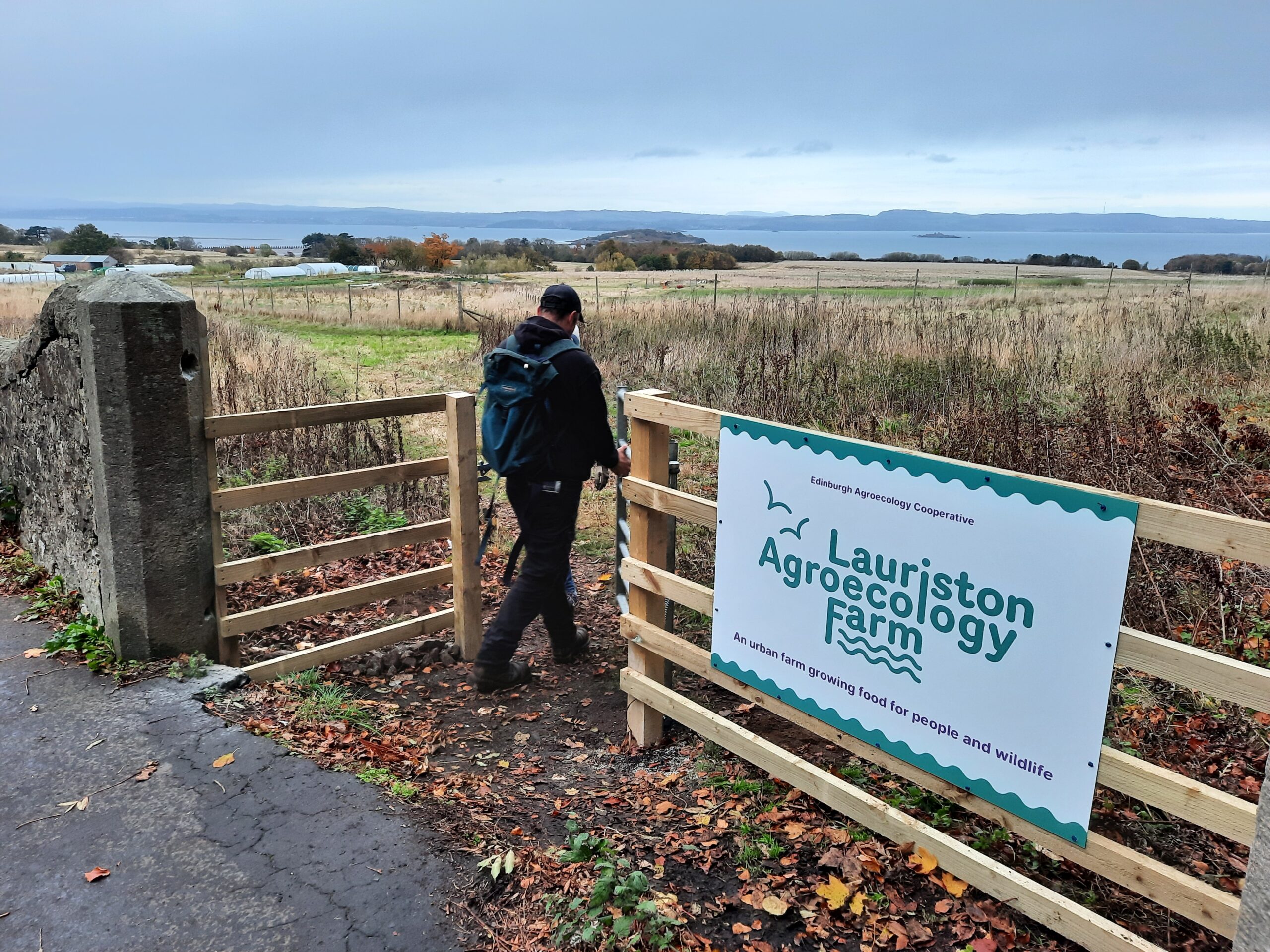
Stand on the highest mound of the Lauriston Agroecology Farm, and the first thing that hits you is the wind. On a blustery day, 45mph gusts sweep in from the Firth of Forth, rattling the hood of your jacket. But look past the weather, and the view is spectacular: a sweeping panorama down to Cramond Island and across the water to Fife.
“The scenery and the variety of weather makes it a fantastic and inspiring place to work,” says Lisa Houston, a co-founder of Lauriston Farm.
For centuries, this view was exclusive. A 16th-century decree forbade building on this land to protect “the Lord’s view” from neighbouring Lauriston Castle. Today, that view – and the 100 acres of soil beneath it – has been reclaimed for the community.
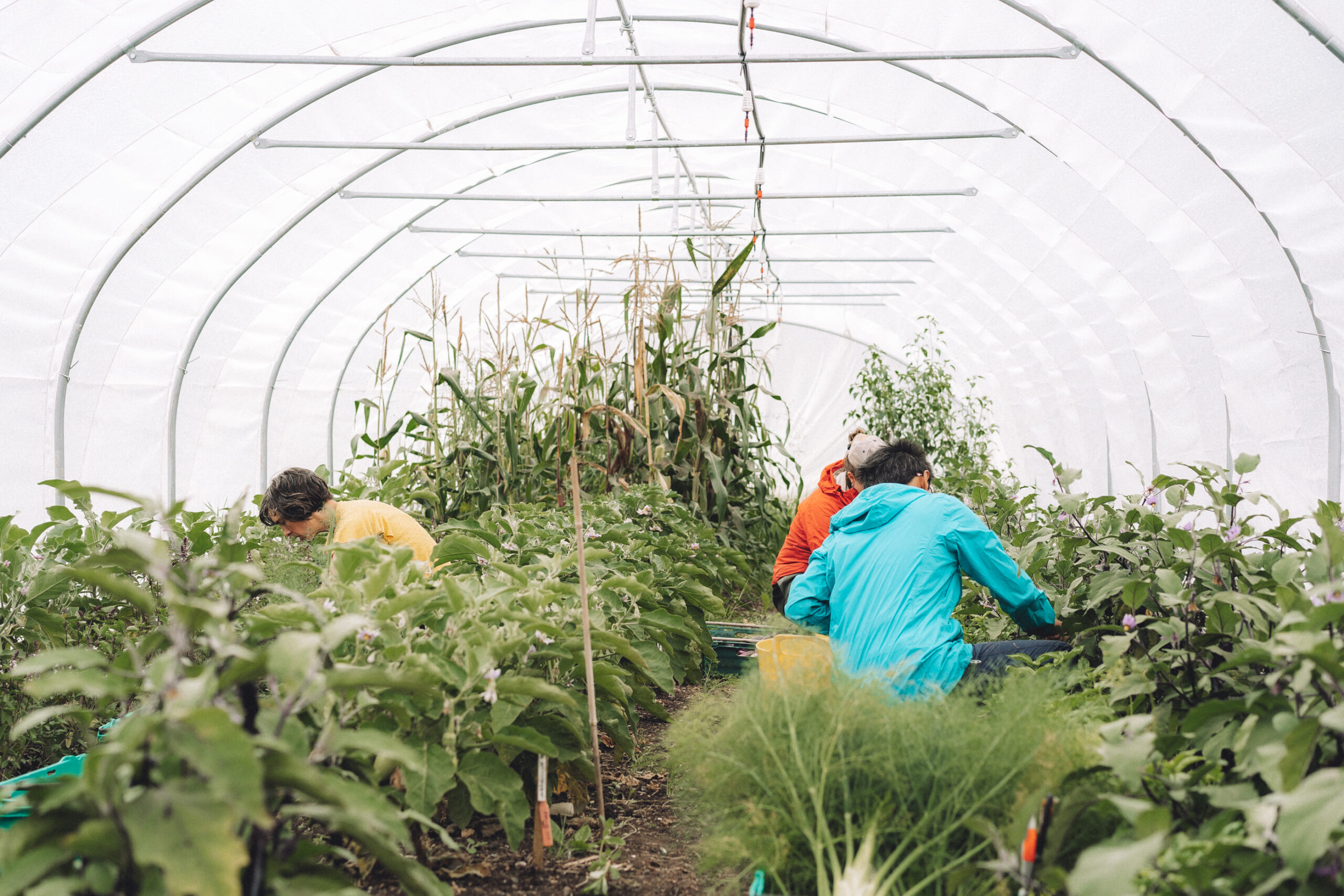
Located between Silverknowes and the Cramond shoreline of northwest Edinburgh, Lauriston Farm might look like a modest allotment project to the uninitiated. Explore the full site, however, and the true scale of the project reveals itself, with a community orchard, market garden, community allotments and forestry. Founded on the values of food, community, and biodiversity, it is a sophisticated, professional enterprise run by an expert team with a clear vision for the land’s future.
Reclaiming the land
The transformation began in 2019, when this massive plot of land was dormant, used only for grazing and occasionally silage. It represented a classic failure of land use. A small group approached the council, urging them to hand the site over for community use. It wasn’t a simple process. It required setting up a workers’ cooperative, securing a positive public consultation with 1,000 local residents, and negotiating a 25-year lease.
Now, the Edinburgh Agroecology Co-operative is unlocking the land’s potential. By securing this asset, they have ensured that the value generated here – social, ecological, and economic – stays here.
A mosaic of habitats
Today, the Farm is bursting with life and activity. It operates with a blend of cutting-edge regenerative farming and ‘lost arts,’ consciously moving away from industrial agricultural norms, building wealth in the soil rather than extracting it.
The scale of ambition here is breathtaking. Since securing the land, the team has planted 12,000 trees and several hundred metres of hedgerow. The bulk of the tree planting is a mix of woodland habitat for wildlife, and an alley crop system. Between the long lines of the alley trees they grow crops, and the trees help to regulate moisture and enrich the soil, add stability, and provide shelter from the wind, as well as future crops of nuts and fruit themselves.
The other trees are part of the Community Orchard; the fruit will be for the community to take and use, and the variety of trees create a ‘mosaic of habitats,’ promoting greater biodiversity, encouraging a rich wildlife community to flourish.
Kate MacDougall, who leads communications for the Farm, is particularly excited about the wheatfields they have started. Using Granton Rouge d’Ecosse, a variety indigenous to Granton, they hope to eventually see bread that is from local wheat and locally baked by Granton Garden Bakery, another community organisation.
Equally vital for biodiversity is seed saving, habitually keeping some crops aside for seeds to ensure organic growth and to maintain less common varieties. Lisa explains that the loss of this habit has resulted in a situation where most commercial seeds are provided by a small number of big players, often agro-chemical firms. By saving seeds like pumpkins, beetroot, and kale, Lauriston Farm is helping to maintain a diversity you won’t find in a supermarket.
The commitment to sustainability extends to the project’s goal of minimal waste and circularity. Lisa points to the “loop system” used with Rhyze Mushroom, one of the organisations involved, where waste products are used for a wormery, which in turn creates compost, ensuring nothing is wasted.
A sanctuary in nature
Lauriston Farm is creating a richer environment, and also providing a place for people to spend time in nature.
An established destination for urban walks, maintaining public access remains an integral part of the project’s identity. Visitors are encouraged to wander along a network of new way-marked routes. The sloping site offers glorious views down towards Cramond Island and across the Firth of Forth to Fife, retaining a uniquely rural feel despite being well-connected by public transport.
Nurturing the community
Lauriston Farm is wedged between two golf courses and a nearby housing scheme. Surrounded by new residential developments, the project is perfectly positioned to tap into a diverse local population.
It has a well-used community allotment, with diverse groups using the space, including a partnership with a homelessness charity. The Farm helps people learn to grow, with a dedicated ‘community navigator,’ Hannah King. “We hold their hands,” Lisa says of new growers, helping them gain knowledge and confidence.
A core goal of the project is to increase access to affordable locally grown food. They recognise that access to green space is an element of inequality, so they prioritise allotment access to those who don’t have gardens of their own.
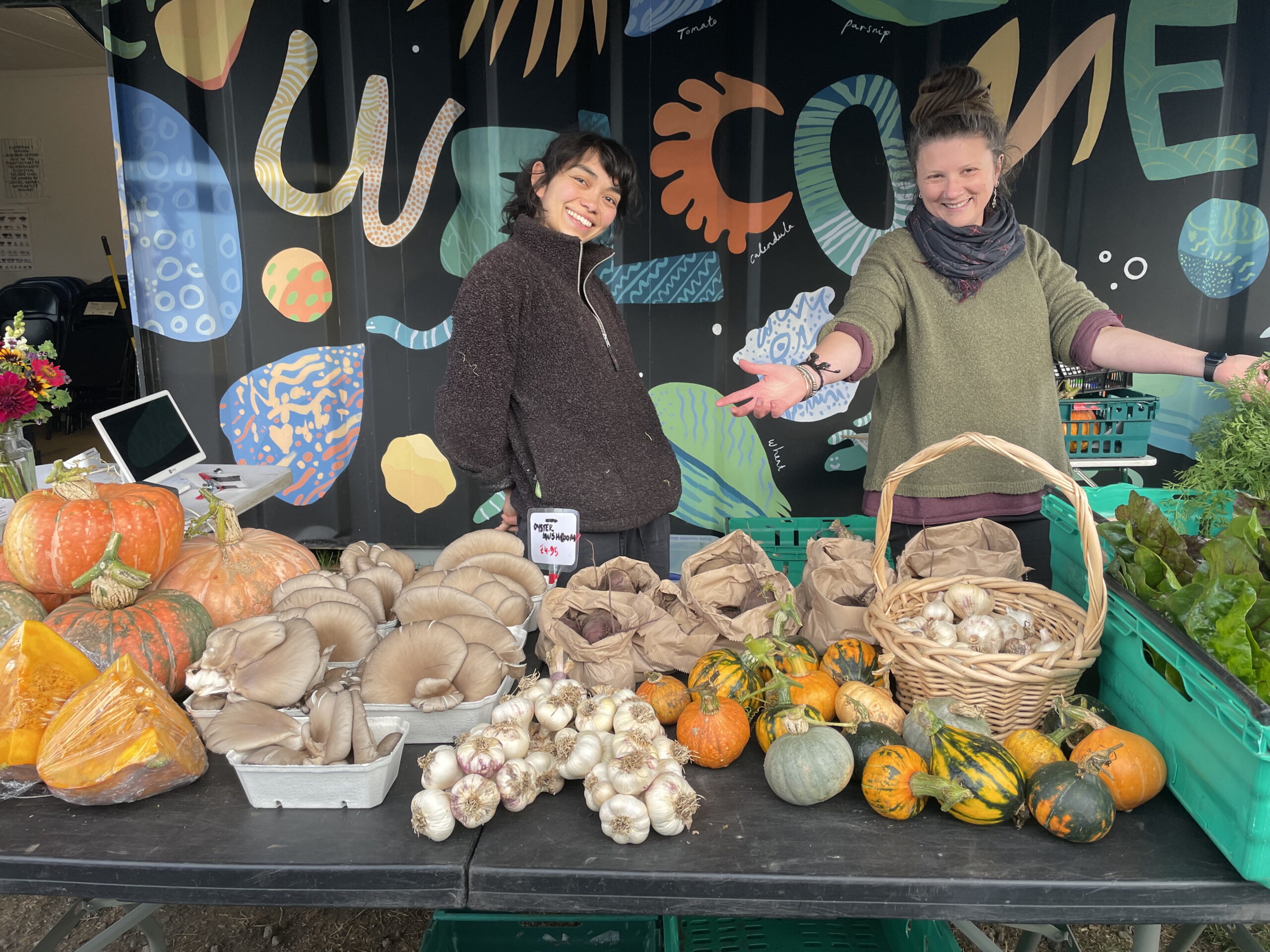
To support accessibility, the Market Garden operates a sliding scale model for its agroecological veg bags. With a base price of £12.50 for a bag, those who can pay more are encouraged to do so, subsidising those who can pay less.
“It must remain a mix,” Lisa emphasises. This isn’t charity; it is community solidarity. It ensures that access to high-quality, local food isn’t reserved for the wealthy, but also helps bring in essential income to keep the project financially sustainable, and paying staff a Real Living Wage. High-quality green jobs like these paying a Real Living Wage are a rarity in the agricultural sector.
The support network
Lauriston Farm is part of a wider movement championed by Nourish Scotland, an NGO working on food policy and practice. Simon Kenton-Lake, who leads on their food partnership work, sees Lauriston as a leading example of what a fairer, healthier and more sustainable food system could look like: “There’s food production, community engagement, there’s allotment sites, there’s commercialisation, and there’s some re-wilding of the land”.
Nourish Scotland works at the food systems level, breaking down the silos between public, private, and third sectors to create a joined-up approach where community food projects like Lauriston Farm can thrive.
Simon describes their role as connecting the dots across the system. “In order to create food system change, you need to have all stakeholders in the room,” he explains, “You can’t think about food insecurity without thinking about workers’ rights, without thinking about climate change or biodiversity.”
Through their coordination of the Sustainable Food Places network, Nourish ensures that grassroots energy from places like Lauriston is channelled upward to influence legislation like the Good Food Nation Act. They provide the strategic context that allows local groups to navigate the complex landscape of procurement and policy.
They are clear that community organisations need more stability and support. “Secure multi-year long-term funding is such a huge stumbling block that prohibits a lot of community organisations from developing long-term strategies” says Simon, “and restrictive funding criteria and specific evidence of impact constrains community organisations from doing what they do best”.
Addressing global challenges, locally
Through acting locally, the work of Lauriston Farm is fundamentally connected to major societal issues: climate change, inequality, social isolation, and a deep disconnection from nature and food production.
As a workers’ cooperative, they are showing how a community-led approach can revitalise land, with sustainable and regenerative practices managed by a democratic organisation. As an example of community wealth building in action, they provide fair work through Real Living Wage employment, creating local jobs, and building the skills and confidence of local people to grow their own food and connect with nature. Their supply chains could hardly be shorter, growing food sold locally and saving seeds.
In just a few short years, the Farm has already made impressive strides in both highlighting and beginning to address these complex, global challenges.
However, the team is candid about the challenges. Kate notes with humility that while they hope to inspire others, theirs isn’t the “only way”. But what they have proven is that with the right expertise, dedicated funding, and secure access to land, success is not just possible, it’s replicable – growing the wealth of Scotland’s communities.
Read more from our series This is Community Wealth Building and what we’re calling for to support Community Wealth Building across Scotland.
Growing community wealth with food and love in Midlothian
December 5, 2025
In Mayfield and Easthouses, the local development trust is using food to feed the soul of the community. With a community pantry, café, and a derelict bowling green transformed into a thriving community garden, they are defining what Community Wealth Building looks like.
By Lucas Batt & Rhiannon Davies, Greater Community Media
Sharon Hill is one of those people who just makes things happen. It’s no coincidence she runs Mayfield and Easthouses Development Trust (MAEDT), which locals pronounce “Made It”. Their slogan is “Making it Happen”, and Sharon and her team have been doing exactly that for the past ten years.
They serve a semi-rural ex-mining community outside Edinburgh, long affected by unemployment, health inequalities and chronic underinvestment. The area remains one of the most deprived in Midlothian. But today, if you walk into MAEDT’s lush and vibrant community garden, the story is one of care, connection and hope.
“Previously this was a bowling green that hadn’t been used for a very long time,” Sharon says, gesturing at the thriving garden. “The grass was waist high, the building was boarded up.”
The green had been disused for decades, and the pavilion, shut after asbestos was found, was used by the council to store broken gym equipment. Back then, MAEDT had no centre for the community. The leisure centre had been flattened with leisure services moved to a newly built school, but there was no physical place for the community to call their own. Despite being in the local development plan, there was no money for it.
Sharon wasn’t going to wait forever. She was going to make it happen. So MAEDT gradually moved into the bowling green and started to bring it back to life, serving teas and coffees around the broken treadmills.
It’s now a bustling village square – a place of safety and abundance.
Food is the key
Sunflowers loom over rows of pumpkins, with deep green kale swathed in netting to save it from the slugs. Raspberry bushes sway beside small fluttering wind turbines set against the polytunnel. Inside it’s bursting with life, rich with the scent of ripening tomatoes, arches of grapevines hang over a cosy seating corner, where people can retreat for a quiet moment amongst the plants.
Outside, a cluster of High School bee-keepers buzz around the hives, while nursery children learn how to grow vegetables. The once derelict pavilion now hosts a busy community café, where an older people’s walking group sits down to hot vegetable soup fresh from the garden. Across the road, MAEDT’s community pantry provides dignified access to good food for hundreds of residents.
“We’re growing food, we’re cooking food, we’re providing food,” says Phil Morris, who manages the pavilion and the garden, balancing jobs tending plants, teaching children, building and mending things, supporting volunteers, and everything in between.
Food is at the core of MAEDT’s philosophy. “When you feed someone, you’re nurturing them,” says Sharon. “Food loosens people’s tongues. If you’re eating soup, you’ll tell me things you wouldn’t mention anywhere else. You find out someone is sleeping on the floor because they don’t have a bed. And because we built that trust, we can help.”
The turning point
The pandemic changed everything. MAEDT stepped up when statutory services struggled to reach those most in need.
“They had to trust community organisations to do stuff. We were the ones on the ground,” recalls Sharon. “We were the ones peeling tatties and delivering food. We were the ones picking up prescriptions.”
Working with the Chair of the local Community Council to lead a team of volunteers on furlough, they cooked and delivered 250 two-course hot meals a day to isolated residents. But they delivered more than food. “I used to say to the volunteers, ‘remember, you’re not delivering mince and tatties. You’re delivering a wee bit of care, a wee bit of love.’”
MAEDT was there in this moment of crisis when people in the community didn’t know who to turn to. Sharon found herself fielding calls from people worried about their elderly parents, and from people who had never engaged with support services before, who suddenly found themselves with nothing to eat. “These people were mortified, ashamed,” she says. “I was getting people phoning me up who had never had to ask for help before.”
By showing up, responding to these calls with food and kindness, MAEDT earned something money can’t buy: absolute community trust and respect.
Dignity, not charity
Speaking with people every day meant MAEDT really understood their needs. They recognised that the need for access to affordable and healthy food wouldn’t end with lockdown. So they created the Community Pantry. Unlike a food bank, where parcels are pre-packed and choice is limited, the pantry operates like a shop. For £3.50 a week, residents can choose £15-£20 worth of food, as well as free fresh fruit and vegetables, sanitary products and bread.
“The difference between us and a food bank is choice,” Sharon explains. “And dignity. It’s a community pantry, not a poverty pantry. If you get a food parcel, you get tins of beans. If you come here, you can choose what you want to eat. You can give your kids a Nando’s on Friday night.”
The pantry has been a runaway success: 1,300 households have signed up in four years in a community of only 2,500 homes. Around 180 people shop there every week – some to help stretch tight budgets, some in crisis using it to survive. But because everyone shops together, there is no stigma.
MAEDT has also become a hub for other support. They host space for Citizens Advice sessions, skills training, career support, a school uniform exchange, and a £1 charity shop. They also step in with emergency funds, helping people with everything from beds and washing machines to electricity bills and nursery fees. These small acts are little miracles for people.
The wealth of belonging
If Community Wealth Building means anything, it means this. It is not about simple economics, but the health and wellbeing of a community. As Sharon puts it beautifully: “The wealth of the community is in the actual community.”
And data backs her up. A recent Social Value Engine analysis found that for every £1 invested in MAEDT, they generate £9.90 in value for the community. “If feelings had a value, we came out being worth £4.5 million to our local economy,” Sharon notes. “If belonging, empowerment, connection and reduced isolation were given a monetary value, we give ten times what people give us.”
Their success comes from the honesty, respect and trust they give their community. And they receive this in return. They don’t have problems with shoplifting or graffiti. Instead they receive a constant stream of donations and volunteers.
MAEDT is theirs. They are not presented with a finished product, but invited to make it better together. “They’ve seen it grow in response to what they’ve wanted,” says Sharon. They know there won’t suddenly be a huge influx of money, so they are building the kind of wealth they can, and that ultimately matters to people: the wealth of belonging.
Networks for growth
MAEDT hasn’t done it alone. Backing this community stand funders, networks and intermediary organisations.
When Sharon first eyed the bowling green, she knew she was out of her depth. “I did not have a clue about gardening or growing food,” she laughs. “I was looking for pals.”
She found them in Get Growing Scotland. They helped to plant the vision for the garden, from ideas for its layout to growing through the pandemic. Drawing on their work with communities across Scotland, they brought a unique set of knowledge that proved invaluable. Today, the garden stands as an exemplar for other communities looking to grow their own spaces.
Karen Moore from Get Growing reflects that every community needs more pioneers like Sharon: “They’re able to look out their window and see a piece of land and realise that’s what Community Wealth Building is, or can be – putting a literal stake in the ground and turning an unused space into a place where people meet, grow food, learn skills and connect.
For organisations like MAEDT, working on the front line of building wealth in their communities, intermediaries like Get Growing and Development Trusts Association Scotland (DTAS) are vital. They advocate for them, provide advice and expertise on everything from business plans to Community Asset Transfers. Or just to lay the foundations of a garden. They enable them to have the confidence and knowledge they need to achieve their visions with their communities.
“We work on the ground, directly supporting communities to secure and develop land, grow food and renew nature,” says Karen, “We harness their experiences and learning from across the country, share inspiration, innovation and practical ways to build community wealth for all.”
Funding the whole alphabet
But no amount of support can fix the broken funding model. Despite MAEDT’s undeniable success, they operate on a knife-edge, suffocated by bureaucracy and insecure funding.
“I need funding that doesn’t leave me in September thinking that in April I have no funding,” Sharon says with frustration. “The longest we’ve had is three years, and three years passes in the blink of an eye.”
Short-term funding doesn’t mean short-term work, but long-term insecurity. MAEDT keeps doing what the community needs long after project funding ends. “We’re funded to do A, B and C. Then A runs out, but we still do A because the community needs it. Before we know it, we’re doing the whole alphabet and we’re only funded for X, Y and Z.”
Spending so much valuable time chasing grants instead of delivering services is exhausting and inefficient, and erodes their capacity to invest long term and build the community wealth they are capable of.
“Treat us the same way we treat our community”
As Scotland debates the Community Wealth Building Bill, MAEDT’s story offers a clear lesson: communities know what they need and they are capable of delivering it. They just need the trust and resources to do it.
Sharon’s vision for the future is ambitious: a regenerated town centre with the pantry as an anchor tenant, a new community hub, a dry bar and an arts centre which would “make us sustainable”.
Sharon is the chair of the town centre regeneration group, but that plan needs £50m. Sharon jokes that she’ll have to be wheeled there with a zimmer frame by the time that happens. Meanwhile she’s getting on and building MAEDT.
What Sharon and her team are doing in Mayfield and Easthouses is how community wealth is actually being built. But it is against the odds, and relying on heroic efforts. To support this credible and viable approach, Sharon says the relationship between government and community needs to change.
“The attitude of the local authority is still very paternal,” she says. “The general attitude is that they’re in charge and they know better.”
Her message to ministers is simple: “Treat us the same way we treat our community. Trust us. We do this work because we truly want the best for people. Respect that expertise and value it. Our destinations are the same. Respect us and support us, but trust us to do what we do.”
In Mayfield and Easthouses, MAEDT is showing what Community Wealth Building looks like. The evidence is in the soil bringing new life, in the buzzing café bringing new friendships, it’s in the pantry shelves, in the bowls of soup, and sunny days in the garden. It’s in the community. They have built something remarkable from the grassroots up. Now, they need a system that supports them to keep growing.
“Why not?” Sharon asks, looking across the flourishing garden. “Why would we not expect this to be here? We should all expect good things, nice things. We’re all worth that.”
Read more from our series This is Community Wealth Building and what we’re calling for to support Community Wealth Building across Scotland.
From market days to hydropower: Community Wealth Building in Balerno
December 4, 2025
On the edge of Edinburgh, a village trust is using a farmers’ market, a hydro scheme and a former police station to stop their community becoming a sleeping suburb.
By Paul Fisher Cockburn
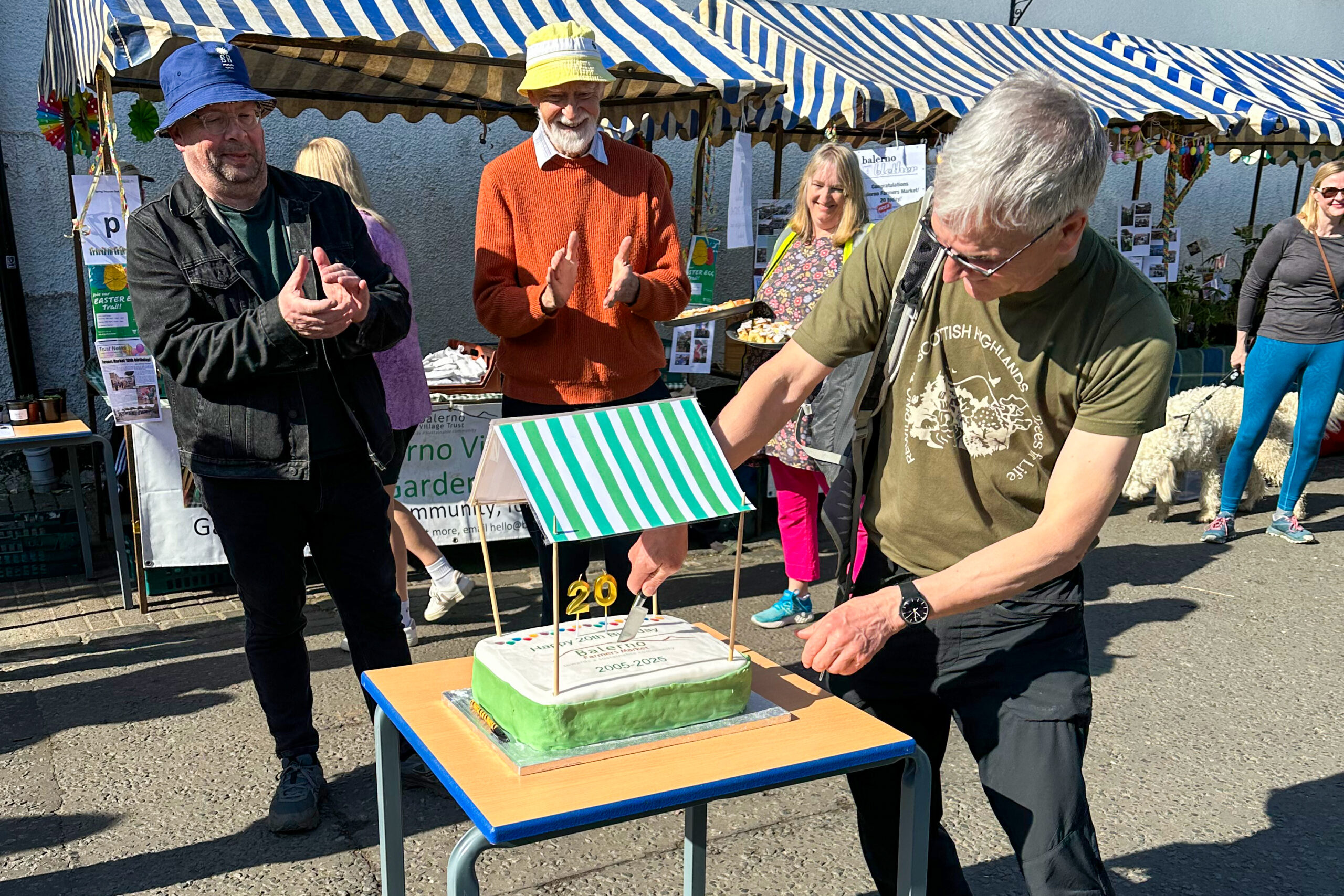
On the second Saturday of April 2025, the main street of Balerno was unrecognisable. Where cars usually rush through to the Pentland Hills, stalls crowded the road. The sun shone, and over the course of four hours, more than a thousand people flooded the street, buying fresh produce, meeting friends, and reclaiming the centre of their village.
It was the 20th anniversary of the Balerno Farmers’ Market. For the Balerno Village Trust (BVT), which runs the market, it was a celebration of two decades of Community Wealth Building. “The whole idea was to revitalise the Main Street,” says Emma Galloway, Chair of BVT. “To me it’s probably the biggest example of community wealth building,” she says.
Balerno sits on the south-western edge of Edinburgh. As a community, it risks becoming a dormitory village – a place where people sleep, but don’t really live.
“The challenge we’ve always had is that, if we’re not careful, Balerno could easily slip into the kind of place where people leave it in the morning, go in to the city to work, come back seven o’clock at night, go into their houses, shut the door, and that’s that. A suburb.” says Emma. “What we want is a thriving community where we know each other.”
The economics of Main Street
The Trust’s strategy to prevent this is simple: make Balerno an even better place to live, work and visit.
The market acts as an economic anchor. On market days, footfall spills over. The local chemist is busy; the hardware store is busy. Money that might have leaked out to supermarkets or city centre chains stays in Balerno, circulating among local suppliers and businesses.
“The whole theory of community wealth building is, if you can support small local businesses then actually the community benefits,” says Emma. “If you spend your money in a big supermarket, the profit goes to shareholders. If you spend it with a local supplier, the profit stays.”
They run special events to provide more reasons for people to come to Balerno and shop locally, with an annual Apple Day (celebrating “everything apple”) and Tattie Day (“about selling seed potatoes”).
The Market is also a well-established meeting place for local groups and organisations, ranging from local community council members to the district schools’ pipe band. “We have a number of organisations that will jump onto the market to raise their profile or to raise funds.”
“Community can talk with community,” says Emma. “If you want to know what’s going on in the community, come to the Market and you’ll get a sense of it.”
From events to assets
The Market may be a regular event on the second Saturday most months of the year but it’s also a temporary one, set up and taken down on the day. Since the Pandemic, however, BVT has become not just a property manager but also a property owner.
In 2021, when the Balerno Community Centre faced an uncertain future, the Trust stepped in, recognising its importance as a community asset and meeting space. The City of Edinburgh Council offered them a decade-long lease for £10, on the condition that BVT upgraded the building.
They didn’t just paint the walls. They installed solar panels and air-sourced heating, transforming an aging liability into an environmentally friendly asset that now hosts a post office on Wednesdays.
But their most ambitious move was the purchase of the former Balerno Police Station, supported by the Scottish Land Fund. “When that went up for sale, we thought this was a real opportunity to try and find out what the village needs,” Emma recalls. “The village came back and said it was really struggling with childcare.”
For families in Balerno, the lack of local childcare is a major challenge. “To live in Balerno you pretty much need two incomes,” Emma explains. “We’re all working in the city as there aren’t that many local jobs. We need childcare, after-school care, nursery care. There simply isn’t enough provision in the village.”
BVT is currently working to select an after-school provider, while preparing to renovate the near-50-year-old building, which will offer several rentable rooms suitable for smaller groups and social gatherings—again, a rarity in Balerno. “Hopefully, it’ll create employment as well, because after-school clubs employ people. So there’ll be a bit more employment in the village.”
Generating their own wealth
A unique aspect of Balerno’s model is its funding. Because the village doesn’t tick many traditional funding boxes, grant funding can be hard to come by. Instead, they generate their own. BVT’s work is primarily funded by money from the local, community-owned Harlaw Hydro Scheme.
“We’re not an area of deprivation,” Emma accepts, “but we do have challenges. We have a higher population of retired people; we have the challenge of being technically urban but very rural – we are the end of the line, right at the edge of the City of Edinburgh. What we experience here – in terms of weather, in terms of bus services – can be vastly different to what people are experiencing in the centre of town.”
Powered by the community
When we spoke with Emma, Balerno Village Trust was about to take on its second employee, thanks to a National Lottery grant. A lot of its work nevertheless remains dependent on volunteers.
“We’ve got really credible volunteers who have worked fairly high up in big international companies, who live in the village, and are willing to help,” says Emma.
“Part of the role of the new member of staff will be to harness that capability, because we recognise that we can’t just employ people. We don’t have the funds, and we won’t get the funding to employ people to run it for us, so we have to look at our own assets, our own strengths. What we have as a community are people nearing or heading for retirement, who have lots of credible skills and can give us a bit of their time.”
A need for recognition
Despite their success – running a market, managing a hydro scheme, renovating public buildings – Emma feels that the relationship with local government remains unbalanced. Community volunteers are often viewed as amateurs rather than partners.
“Sometimes we get a bit of an attitude: ‘Oh, you’re just volunteers, so therefore…’ and the dot-dot-dot is usually a belief that we don’t know what we’re doing,” she says.
“Actually, we do know what we’re doing. Give us the credibility, give us the respect, and work with us, and help us along the way.”
Networks behind the success
Behind success stories like Balerno stands national networks providing the essential scaffolding they need to thrive. Development Trusts Association Scotland (DTAS) is one of those networks.
For community groups making the complex transition from volunteer committees to property owners and employers, DTAS provides specialist support through three core teams. Whether it is the Community Ownership Support Service helping navigate the legalities of asset transfers – like buying an old police station – or the Democratic Finance team advising on citizen investment for renewable energy projects, they ensure communities have the technical expertise to turn ambitious local visions into viable, professional businesses.
Pauline Smith, Chief Executive of DTAS, describes this role as ensuring communities can “do what they need to do, but with the support and advice to do it properly.” This involves asking tough questions about business planning and sustainability to ensure organisations succeed when taking on responsibilities like buildings or staff.
Beyond technical advice, DTAS acts as a crucial voice at a national level, lobbying the Scottish Government to recognise that these local interventions are not just ‘soft’ community projects, but hard economic drivers, creating genuine prosperity across Scotland.
“If you’ve got 400 communities all doing 10,000 activities, it doesn’t matter how small they are, together they make a massive impact,” says Pauline. “From a Community Wealth Building perspective this creates a huge multiplier effect across the country, creating massive economic impacts.”
The wealth of connection
“For us, the sign that it works is simple,” says Emma. “For us, it’s if people are standing there talking to each other, and there’s a sense of community cohesion being created. Life is better when you know other people, and you can walk down the street and have a wee chat with someone.”
By taking control of their energy, their buildings, and their economy, Balerno is ensuring that it remains a place where people don’t just sleep, but truly live.
Rebuilding Community Wealth: The story of Tarras Valley Nature Reserve
November 26, 2025
For the people of Langholm, the Tarras Valley has always been theirs. So when the land came on the market, they rallied to do the impossible and pulled off a 10,000-acre community buy-out. This is Community Wealth Building in action: local people taking ownership of their land and their future, securing Langholm Moor to create the Tarras Valley Nature Reserve for the benefit of generations to come.
By Lucas Batt & Rhiannon Davies, Greater Community Media
Drone footage: Inigo Alcaniz
On the ridge line of Whita Hill, overlooking the River Esk, there are stone cairns that have stood silent witness to centuries of history. Every year, for over 250 years, the people of Langholm have ridden out to these markers to check their boundaries – a tradition known as the Common Riding. Riding in their hundreds through packed streets, over a chorus of flutes and pipes, the din of hooves fade into the distance as they ascend the hills of the Tarras Valley. It is a visceral, proud assertion of belonging.
For generations, the land felt like it belonged to the community, even though the deeds were held by one of Scotland’s largest landowners, the Duke of Buccleuch. In 2019, that changed: the estate put the land up for sale.
“It caused quite a lot of shock, a lot of concern,” recalls Angela Williams, Development Manager at the Langholm Initiative. “For people, this was always theirs. It’s where they ride, swim, walk.. nobody knew what would happen if the community didn’t buy it.” Losing access was unthinkable. “People started asking the Langholm Initiative, as the main development trust in the town, what could be done about it.”
The people of Langholm are no strangers to taking things into their own hands. As Alan Weatherstone, Editor of the 175-year-old, community-owned Eskdale & Liddesdale Advertiser puts it: “There’s always been an element in Langholm of isolation and because of that isolation the psyche here is that we’ve got to do it ourselves, because they’re not going to come and do it for us, so we just have to get on and do it”.
The David and Goliath Buyout
The Langholm Initiative answered the call. For them, it felt like “David and Goliath,” says Chair Mairi Telford-Jammeh, engaging with one of Scotland’s biggest landowners. But Buccleuch listened. “Once Buccleuch realised the level of concern, they did sit down and, in principle, were supportive of the idea of looking at the community buying the land, albeit with timescales put on it,” says Angela.
The Initiative proposed the creation of the Tarras Valley Nature Reserve – regenerating land and strengthening the economy. The challenge was immense: raise £6 million in a little over 12 months, during the pandemic. But the campaign struck a chord. Nearly 4,000 people backed the crowdfunder, raising over £500,000. This, in turn, leveraged major support, including £2 million from the Scottish Land Fund and significant contributions from trusts, charities and private donors.
Against all odds, the community completed the buy-out in two tranches in 2021 and 2022, purchasing 10,500 acres. “This is a moment of history and hope,” said Estate Manager Jenny Barlow upon its completion. “It shows how communities can achieve the remarkable when people work together, even when the odds seem impossible.”
“Good for nature, good for people”
As a nature reserve run by a local community development trust, Tarras Valley is a major opportunity for Community Wealth Building – restoring land while generating long-term benefits for local people. The project is part ecological restoration, part rural regeneration.
“It was going to be good for nature, it was going to be good for climate, but more importantly, it was going to be good for people,” says Angela. “For us, it was looking at the land, seeing how it was valued by the local community and looking at what the ecological potential of it was. You look at it just much more holistically.”
Work is already underway. They are creating ponds, removing culverts, and restoring natural watercourses. Peatlands are being re-wetted: blocking ditches and re-profiling more than 30 miles of peat hags to prevent erosion and store carbon. Teams continue removing non-native Sitka spruce, planning new native woodland, and protecting hen harriers in partnership with local raptor groups. Unlike some rewilding models, they have retained the existing sheep farm whilst plans are developed to move to a regenerative model that will include cattle and ponies
The buyout included nine properties, many of them tenanted. Derelict houses are being renovated into affordable homes, with a commitment to use local contractors wherever possible – investing around £100,000 a year into the Langholm economy.
Visitors now come for walking, wildlife, and education, supporting local hotels, shops and cafes. School projects, volunteering, and biodiversity monitoring bring residents of all ages into the Reserve.
Most importantly, the land is now secured as a community asset in perpetuity. People can continue to roam, swim, walk the boundary at Common Riding, and pass the valley – legally and meaningfully – to future generations. As a membership-based charity with a locally elected board, the Langholm Initiative ensures that decisions stay rooted in the local community..
The Invisible Scaffold
Behind the scenes stands a network of intermediaries, including the Community Woodlands Association (CWA), who supported the Initiative through the process.
“Our role is not only to support our members to achieve their aspirations for their community woodlands, but join the dots up for our members too,” says CWA’s Sharon Smith. “We create a warmer, connected network space where people are happy to reach out to each other.”
For Angela, that support matters. “Knowing the CWA is there is huge. You’ve got someone you can go to. Whether it’s using their information notes or the peer support, finding out what others have done is a huge, cost-effective way of doing training.”
And the solidarity is real. As Mairi says, networks help simply by being there: “feeling that you’ve got a shoulder to cry on, just having that recognition that it’s not just us that are going through these struggles.”
Intermediaries also do crucial work that communities don’t have capacity for – national policy, systems change, and advocacy. “Particularly when it comes to things like policy… as a small organization you don’t have time to input into that or to wave the flag. But organisations like Community Woodlands Association, Development Trust Association Scotland, and Community Land Scotland – they can act as that voice for us,” says Angela.
As Sharon notes, “Our members are often enacting policy in their day-to-day work, but they don’t necessarily recognise that… We’re here to make their lives easier, so they can focus on that delivery.”
Trust the Community
As the Scottish Parliament debates the Community Wealth Building Bill, Langholm offers living proof of what’s possible. It shows how devolving power, backed by strong intermediary networks, enables communities not just to survive but to innovate.
But the team is clear about the challenges.
Long-term core funding is vital. Without it, they cannot employ staff or invest in the infrastructure needed to maximise impact. “Things don’t happen unless you’ve got somebody to make it happen,” Angela says. “But you give a community organisation the resources and they can make a huge change.”
They also argue that community ownership must be recognised as a legitimate economic model, not a nice-to-have. “We need to normalise community ownership as an economic model,” Angela says. “When a private business fails, it’s just business. When a community organisation wobbles, people say, ‘Told you so.’”
As Sharon puts it: “Communities rose to the challenge during Covid. We believe that people will rise to their local challenges.”
For that to happen, capacity constraints and burdensome paperwork must be taken seriously. The potential is enormous – if communities are trusted and properly resourced.
A Forever Project
Standing on the Reserve today, looking out over the recovering peatlands and the new native woodlands growing in the gullies, the narrative of “inevitable decline” feels less inevitable.
“This is a forever project,” says Angela. “We hold this land for the grandchildren, and the great-grandchildren. It’s about creating a landscape that is healthier and a community that is wealthier in the truest sense of the word.”
Langholm shows what Community Wealth Building looks like. It is not an abstract theory. It is happening right now, in the peat and the heather of the Tarras Valley, led by a community that refused to let their land be sold, and supported by networks that ensure they never have to stand alone.
Read more from our series This is Community Wealth Building and what we’re calling for to support Community Wealth Building across Scotland.