Case Studies

Maryburgh Men’s Shed- Cromarty Firth Men’s Shed

Sustainability through reuse & repair for local impacts and partnership development

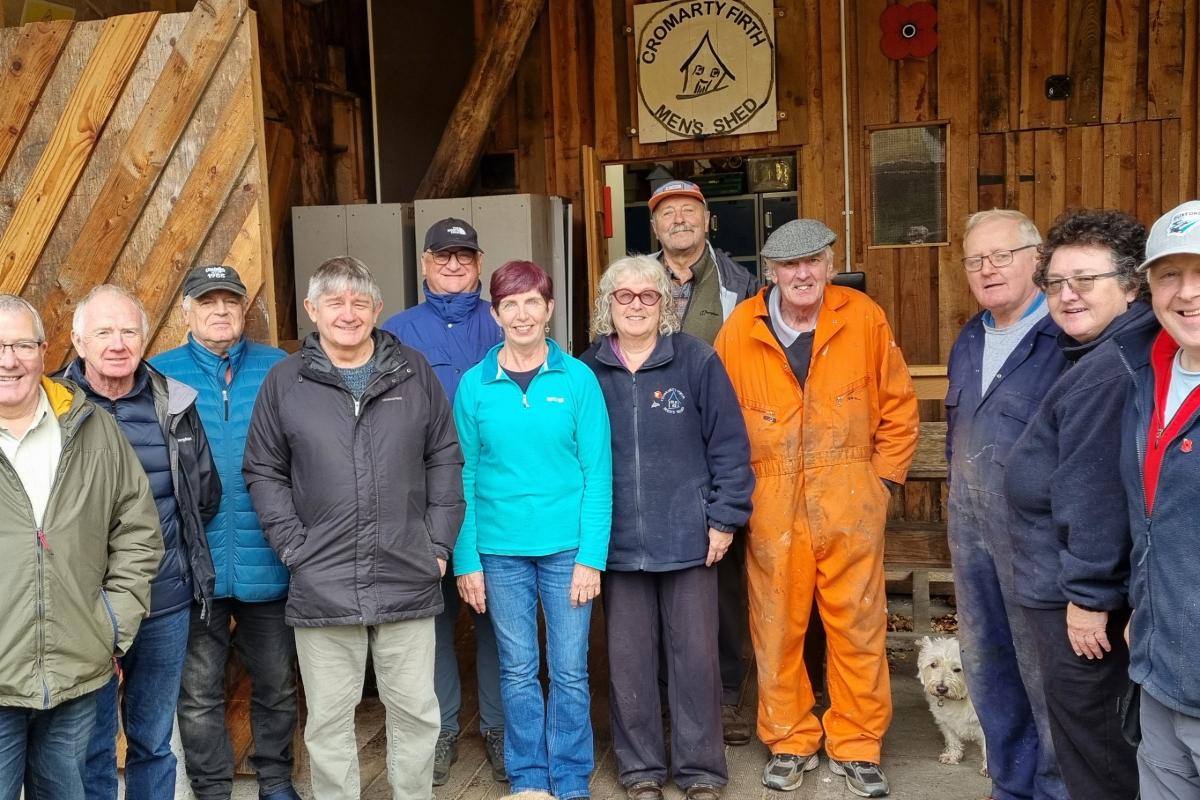
A group of people standing outside a large wooden cabin with a sign for Cromarty Firth men's Shed

The exchange fostered stronger ties between our group and Cromarty Firth Men’s Shed members. It created opportunities for intergenerational and cross-community dialogue, ensuring inclusivity and reducing social isolation. Shed members demonstrated practical skills (woodworking, repair, crafting, ) and shared knowledge with our group. The exchange encouraged peer-to-peer learning, enhancing confidence and competence in hands-on activities, which aligned with our application’s outcome of increasing participants’ skills and furthering their ability to share this knowledge with others.

Learning Outcomes

  •  Community Engagement & Inclusion.
  • Skills Sharing & Capacity Building.
  • Health & Wellbeing

"The Shed’s ethos of reusing materials and repairing items resonated with our project’s sustainability goals. Our exchange highlighted shared local resourcefulness and reduced waste, meeting environmental outcomes in our application. Overall we were able strengthen relationships between Maryburgh Men’s Shed and Cromarty Firth Men’s Shed, opening doors for future joint initiatives to support emphasis on building long-term partnerships and networks."

Case Studies

Meetings Centres Scotland exchange

Dementia Friendly peer learning and support

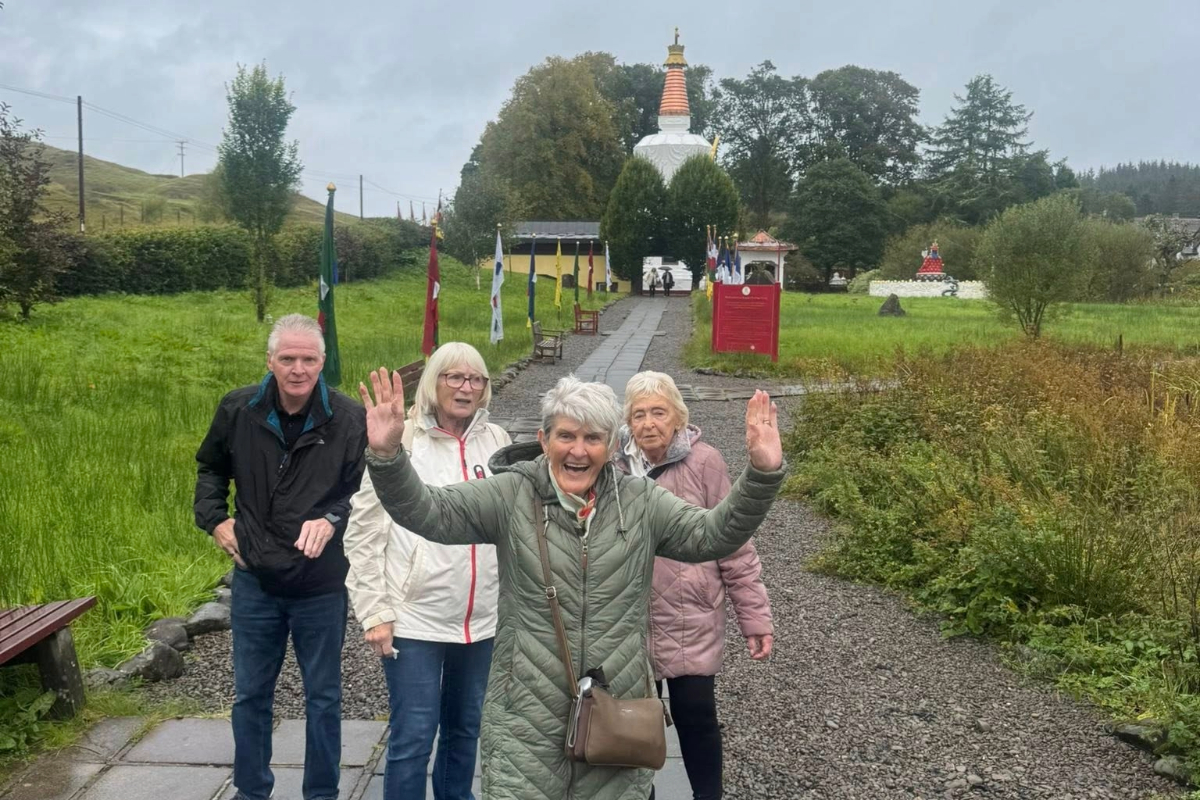
A group from dementia friendly meeting centres visiting Samye Ling

Beyond its planned outcomes, the Learning Exchange generated a wide range of additional learning and benefits. The shared activities inspired new ideas that could take place in their own Centres. Activities including fairground fun, planetarium visits, gin or soda tasting, sound baths, and trips to Samye Ling Buddhist Temple highlighted the diversity of programming possible and reinforced that activities can be engaging, locally relevant, and member-led. Members said that seeing these creative approaches in action encouraged them to adapt similar activities for their own communities, Since attending, members from Dementia Friendly Dunblane have introduced their Meeting Centre to the therapeutic experience of Sound Baths whilst others learned that for some people the experience felt uncomfortable and reinforced as a learning point how options are critical to developing sessions and activities in a Meeting Centre and quiet spaces to relax is feeling a sensory overload.

Learning Outcomes

  • Peer to Peer Learning, support and strengthened network
  • Practice based insights and Inspiration
  • Operational and Strategic Development

"Visiting other Centres and meeting peers highlighted both the diversity and shared ethos of our Meeting Centres, reinforcing that the movement is community-led and shaped by our own voices."

Case Studies

Women’s Aid Orkney visit to Shetland Women’s Aid

Building collaboration opportunities

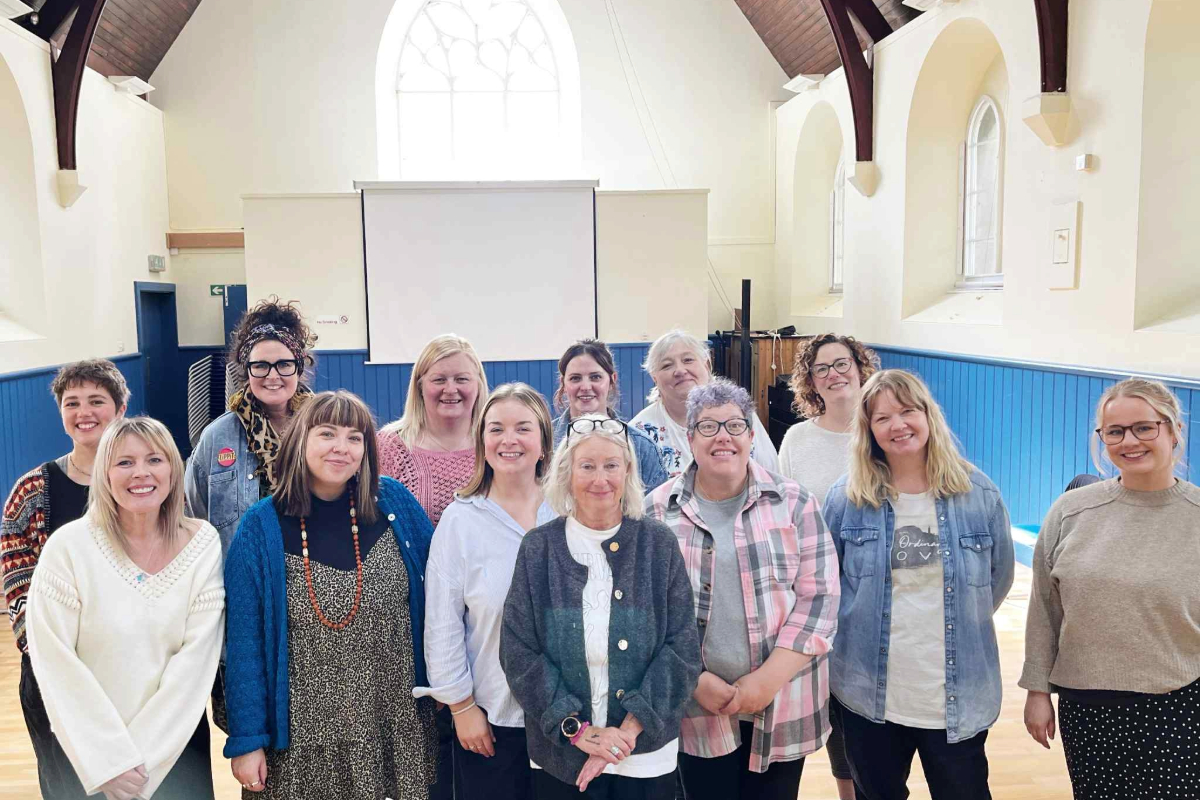
A group of 13 people smiling at the camera

The exchange allowed Women’s Aid Orkney team members to sit back and reflect on the breadth and depth or service they provide on a daily basis. It allowed them to feel proud of what they are achieving and the difference they are making. Spending time with some of the Shetland Women’s Aid team brought a real sense of solidarity. Relationships have been forged that will be beneficial on a personal level but also to the services more widely. There were enthusiastic conversations about future collaboration and finding ways to meet annually. At WAO we have been approached by numerous people who want to volunteer with us and we have been considering how best to start a volunteer program. Hearing from Shetland Women’s Aid about the ways in which they work with volunteers and also facilitate continued engagement from service users was inspiring and gave us lots of ideas.

Learning Outcomes

  • Share learning around tools and approaches like Own My Life that can help promote culture change and engage local communities in efforts to prevent GBV.
  • Learn how to work better to meet the needs of survivors of GBV across island areas, especially those on outer isles and in smaller communities. Gain an understanding of what support local groups are providing in their communities and how WAO can work with them to support them and their service users.
  • Sharing knowledge on staff wellbeing, learning from other organisations how they champion the wellbeing of their staff.

"The best part of the day for me was meeting some of Shetlands Women's Aid. This was beneficial for learning more about them and some of the differences, but also similarities in what we offer. This was also great to give us ideas on how to continue to grow and develop our service"

Case Studies

SES member group visit

Environmental stewardship for health & wellbeing

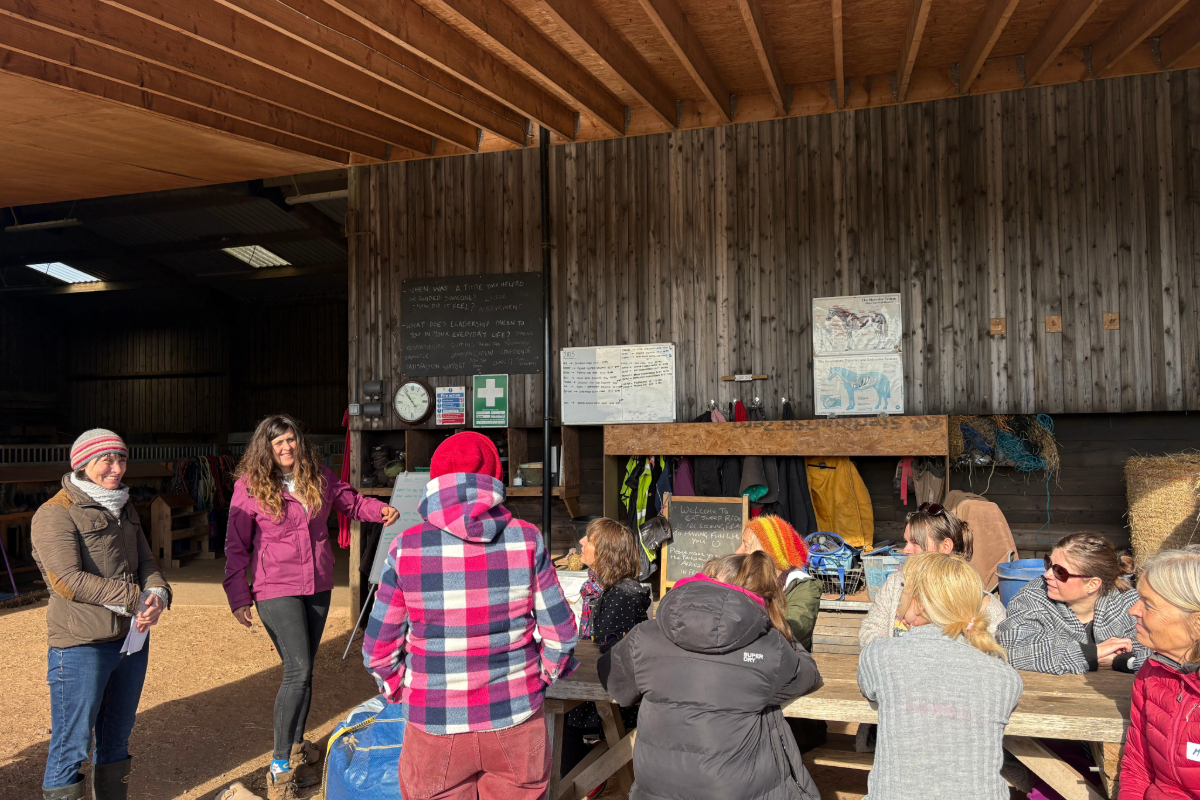
A group photo in Eat, Sleep, Ride stables

The team and facilitators at Eat Sleep Ride taught us all about Herd Dynamics and how the interpersonal relationships between horses can effectively mirror how we relate with others through our work in the Third Sector. Attendees were encouraged to approach the horses as their own true selves as horses can sense inauthenticity. Horses use a shared leadership model which is often seen within the Third Sector and attendees discussed the benefits of this. We also had a number of discussions about how these practices can be put into use in both the attendee’s professional and personal lives.

Learning Outcomes

  • Attendees will learn about Biomimicry and how Eat Sleep Ride are using this process in order to develop their projects and support development.
  • Attendees will also learn about how Eat Sleep Ride operate as a female-led social enterprise and their experience with collective leadership models.
  • Finally, attendees will learn about how Eat Sleep Ride take responsibility for looking after the natural environment in order to protect it for future generations.

"We took part in a guided meditation in both the stables and the gardens which helped to ground us and connect us to the emotions that we were coming into the space with. We also learnt a little about how Eat Sleep Ride use horse waste as a sustainable fuel source and about the importance of environmental stewardship."

Case Studies

Spirit of Springburn exchange with Cranhill Development Trust

Opportunities for locally owned food in community employed shops

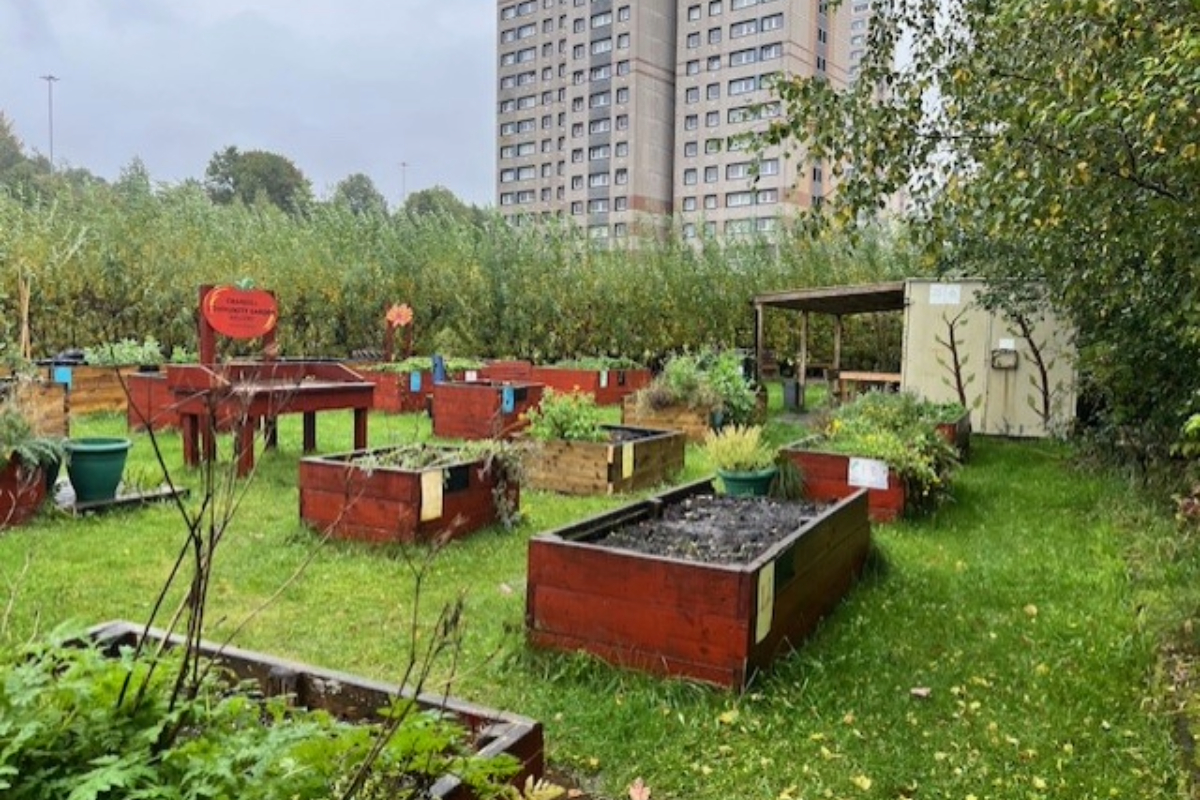
Food growing planters in Cranhill DT Community Garden

A fantastic visit and came away with brilliant ideas on moving forward. Their community shop is up and running and of great value to local folk. Very professionally run, with a post office in place too. A ‘village shop’ idea, the wee shop is a labour of love and provides a lot of items very cheaply. Also gave us ideas of type of products to provide and how to supply (many products come in multiple packs and can be very expense – or just not needed in that amount – they provide one or two of each which saves a lot of money and is achievable). Provision of food bags with small recipes that are tried, tested and popular. We’re taking this idea on board too.

We run a community fridge however we were looking at becoming a stand-alone pantry however, after discussion with the team at CDT, we’ve decided to go with the shop idea. There’s a more dignity in practice involved here which clients having a basket and deciding their own shopping needs, with a ‘checkout’ at the end. At this stage there’s an opportunity to share information, to find out a bit more about the family/individual needs and create an ongoing relationship through time,


Learning Outcomes

  • The first is to see how CDT set up their shop at the beginning and the support and management involved, and to compare and discuss similarities with what we’re doing already (one of our volunteers will lead on this.
  • To discuss similarities between our communities and how they identified the need for a shop (and why a shop?). This will be an open discussion. To learn from each other, discuss stories etc.
  • How they started and the process to follow – also to plan a support strategy. Here we will also look at getting feedback from each of the volunteers from each group.

"We discussed our journeys with start-up and becoming a development trust. She shared a lot of really relevant information and our stories are very similar, right down to the pressure involved! CDT are way ahead of us in development. They provide such a lot of support right in the middle of the community and a lot of activities take place in their own building. Made me realise how 'hemmed' in we are in the shopping centre unit. Also encouraged me to initiate progress to our next steps. Prioritising how we go forward as a charity/DT and what our priorities should be according to Springburn Local Place Plan. A brilliant visit and we left feeling very positive and motivated. Lastly, what really helped overall was to hear Carnhill's journey. It's a high stress environment and the needs are great. We were reassured that we are doing the 'right things' and following the right paths. Knowing that helped a lot. Issues we face are common ones. Support and suggestions to move forward helped a lot as there wasn't anything that we've faced, that the CDT team haven't already come across. Reassuring."

Case Studies

Stonehouse Men’s Shed visit to Lanark Men’s Shed

The Men’s Shed network

Image of Lanark Men's Shed tool station and workshop

Our members spent time with the Lanark Shed members responsible for the 3D printer. This was a great help in deciding what type of printer we need and what can be produced.
Other members visited the workshop and to view ideas of what can be produced as  sellable souvenir items.

Learning Outcomes

  • Use operation and cost of a 3D printer including the benefits of what can be made .
  • Our woodwork team are looking at ideas for manufacturing and skills involved.
  • To learn of the history of the New Lanark site.

"This type of visit will further cement relationships between the South Lanarkshire Network. We also learnt that one of their members make guitars…a particular interest to the Shed Band from Stonehouse"

Case Studies

Banff, Macduff & District Men’s Shed

Specialist machinery for community projects

A group of people in a tool/ 3D printing workshop

We had a very enjoyable and informative trip. We had demonstrations of 3D Printing, Laser Engraving and CNC Routing. We were shown different uses of the machines and advised on suitable machines for our requirements. We were also shown products which had proven popular and were relatively easy for beginners. We were also advised of suitable locations and environments within our premises. We are now looking to identify suitable locations to site the machines and will then be purchasing machines for our Shed. The trip proved to be very beneficial and we are now looking forward to a new and rewarding activity for our Members.

Learning Outcomes

  • Demonstration of 3D Printers: Tuition of the 3D printing process and the safe operating procedures of the machines. Learning which machine will suit our needs, Things to consider when buying a machine and what we need to look for.
  • Demonstration of Laser Printers: Tuition of the laser printing process and safe operation of the machines. Learning which machine will suit our needs. Things to consider when buying a machine and what we need to look for.
  • Demonstration of a CNC router. Tuition of a CNC router and the safe operation of the machine. Learning which machine will suit our needs, Things to consider when buying a machine and what we need to look for.

"We were shown a variety of activities and products which can be achieved from the various pieces of equipment that was demonstrated, quite a lot of which we didn't know about and therefore hadn't considered. We definitely returned with a lot to think about and with added enthusiasm."

Case Studies

Edinburgh Community Food visit to The Courtyard Pantry Enterprise; Glasgow Community Food Network; Transition South Edinburgh; The Haven

Strengthening local food systems through equity and justice

People viewing a mobile food bike

The exchange effectively supported all three specified learning outcomes, the participants engaged in high-quality discussion, and the learning objectives were successfully met. In relation to strengthening local food systems, attendees explored practical strategies for connecting with local producers and building resilient community food networks. Insights from The Courtyard Pantry and Glasgow Community Food Network highlighted how collaboration, transparency, and community-led models can improve access to affordable, fresh food.

The exchange also supported learning around improving food access for low-income households. The Courtyard Pantry’s social enterprise model provided a powerful example of dignity-based, affordable food provision, combining retail with wraparound support. This approach sparked useful conversations about replicability in other contexts.

Sustainability and inclusivity were central themes throughout the day. Participants shared efforts to reduce food waste, eliminate single-use plastics, and ensure food reflects cultural and dietary needs. Glasgow Community Food Network helped frame this work within a wider systems-change approach—emphasising the importance of structural action alongside practical delivery. Edinburgh Community Food (ECF) shared learning from our Bridging the Gap project, funded by Sustain, which focused on improving equitable access to locally grown food. We discussed barriers experienced by low income communities, challenges around supply chain inclusivity, and how food provision can reflect cultural identity and build trust. This brought a valuable, reflective dimension to the exchange and encouraged others to consider how equity and justice are embedded in their local food strategies.

Representation from Aberdeenshire added an important rural perspective. The group was able to explore the distinct challenges of food access, transport, and infrastructure in more remote settings. We supported this participant to make useful connections with others working on related issues, helping to build a wider support network.

The exchange provided a meaningful opportunity for learning, relationship-building, and cross-sector reflection. It enabled participants to share practice, challenge assumptions, and leave with renewed energy and ideas for strengthening their own local food systems.

Beyond the specified learning outcomes, the exchange generated several additional benefits that enriched the experience for all involved. One of the strongest outcomes was the informal peer support that emerged. Attendees appreciated the chance to speak candidly about the realities of delivering community food projects—including managing limited resources, responding to rising demand, and adapting to changing local needs. These conversations created a sense of solidarity and mutual encouragement.

Learning Outcomes

  • Strengthening Local Food Systems – Participants will learn effective strategies to connect with and support local farmers, improving access to fresh, locally sourced, and organic produce while fostering a more resilient community food network.
  • Bridging the Food Access Gap – Attendees will gain insights into practical approaches for making nutritious food more affordable and accessible to low-income households, addressing food inequality and child poverty through sustainable community-led initiatives.
  • Building Sustainable and Inclusive Food Enterprises – Participants will explore best practices for integrating organic produce into community food projects, reducing food waste, eliminating single-use plastics, and ensuring cultural inclusivity in food provision.

"The setting and format of the exchange allowed for unstructured, in-depth conversations that wouldn’t typically happen in more formal settings. This enabled participants to reflect not just on what they do, but how and why they do it. The open atmosphere encouraged critical thinking around values, power dynamics, and long-term change—particularly when discussing the intersections between food justice, poverty, and racial equity. Participants gained practical insights into how others are using food work to support wider outcomes such as employability, mental health, and community connection. For example, The Courtyard Pantry’s integration of support services within a food retail model prompted reflections on how to embed wraparound support without compromising dignity or choice. Others were inspired by how some groups are experimenting with different funding models, pricing structures, and referral pathways. The inclusion of a rural voice from Aberdeenshire brought unexpected but valuable learning. While food insecurity is often framed in urban terms, this perspective encouraged others to think more deeply about rural transport, distribution models, and infrastructure barriers—especially when working across large or sparsely populated areas."

Case Studies

Grey Matters Active Ageing visit to The Community Bureau

Crafting connections

A small group of people sharing crafting and knitting practices

Members had the chance to showcase their current projects and share their hobbies, sparking lively conversations and exchanging ideas on how to approach similar activities. The visit offered valuable guidance and inspiration, and there’s a strong sense that future collaborations between the groups could grow from these new connections. Despite the distance between Helensburgh and Campbeltown, the visit clearly strengthened community ties. Both groups expressed a strong interest in meeting again, with many hoping this marks the beginning of an
ongoing relationship. The day was especially valuable for newer members, offering them the opportunity to connect with others and gain insight into different approaches to active ageing in another community.

Learning Outcomes

  • Enhanced Craft Skills: Participants will have the opportunity to learn new techniques, methods, and approaches from each other, broadening their skill sets. This may include working with different materials, exploring new styles, or mastering specialist techniques that one group has more experience in. By sharing practical knowledge, troubleshooting common challenges, and offering hands-on demonstrations, members will improve their craftsmanship and refine their creative processes. This exchange will also encourage the development of
    unique and innovative work.
  • Increased Confidence & Creativity: Engaging in a supportive learning environment will empower participants to take creative risks and push their artistic boundaries. Many members may feel hesitant to try new methods or display their work, but through encouragement and shared learning, they will gain the confidence to experiment and express themselves more
    freely. Seeing others’ work and receiving constructive feedback will spark inspiration, leading to fresh ideas and a more adventurous approach to crafting. As a result, participants will be more willing to showcase their work and even explore opportunities to teach others.
  • Stronger Collaboration & Networking: The learning exchange will not only enhance practical skills but also foster meaningful relationships between individuals and groups. Through working together, participants will establish valuable connections that could lead to future joint projects, exhibitions, or even collaborative with other groups. The exchange will also create a lasting network of support, where members can continue to share resources, advice, and opportunities beyond the event. Strengthening these relationships will help sustain the craft groups, ensuring that knowledge and skills are continuously shared and developed over time.

"It was actually just a lovely friendly day. People went away feeling happy. They commented on the kindness and friendliness they experienced and it strengthened the working relationship between the two groups. We feel this is something we should do more often now. Shared learning, shared experiences and shared resources really brings together communities."

Case Studies

The Haven in Stonehaven visit to Kin Collective

Increased community wellbeing and emerging community needs

Two people smiling in front of door signs for wellbeing services

Our journey took us to Leith, where we visited the Kin Collective, a wonderful organisation doing impactful work.

What’s been so rewarding about these trips is the practical insights we bring back with us. For instance, during our visit to Kin Collective, we realised we didn’t have a toddler potty in our bathroom. A small detail, perhaps, but it’s one that makes a real difference when it comes to creating a welcoming, inclusive space for families. We also loved the way the hub engaged beneficiaries by offering an opportunity to win a voucher for the time to give feedback. It’s such a simple and effective way to show appreciation and nurture a sense of belonging. This is something we can easily implement and also support the work of our Havenites, wellbeing co-workers.

One shared experience that stood out during our visit to Kin Collective was the lack of in-person breastfeeding support. Both of our organisations have worked hard to fill this gap, providing essential services that can make a real difference to new parents. We’ve also shared the frustration that, despite our work in supporting NHS aims, the support we provide often only moves in one direction, leaving social enterprises to deliver health services with no funding.

Learning Outcomes

  • Sustainability and Income Models: To gain a deeper understanding of Kin Collective’s sustainability and income generation strategies, exploring how they balance financial viability with community impact, and identifying adaptable practices for The Haven.
  • Best Practices and Community Impact: To exchange insights on successful programmes, tools, and approaches that improve accessibility, inclusivity, and responsiveness to community needs, while maximising the impact of family wellbeing services.
  • Community Impact Strengthening: To co-develop strategies that maximise the impact of our respective services, ensuring they are accessible, inclusive, and responsive to community needs.

"As we continue our journey, we’re excited to see what new insights and connections the next exchange will bring. The bonds we’ve formed with other organisations remind us that, together we can go further than we can alone."