Case Studies

Stonehouse Men’s Shed visit to Lanark Men’s Shed

The Men’s Shed network

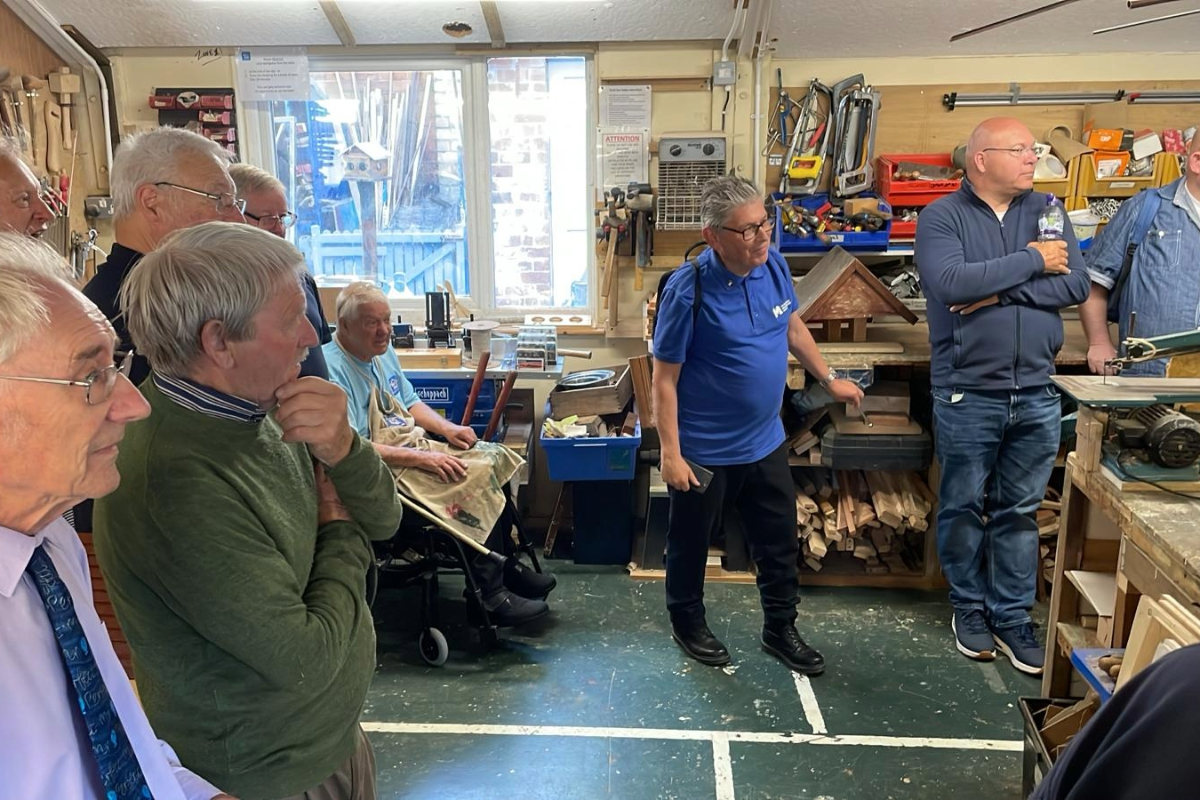
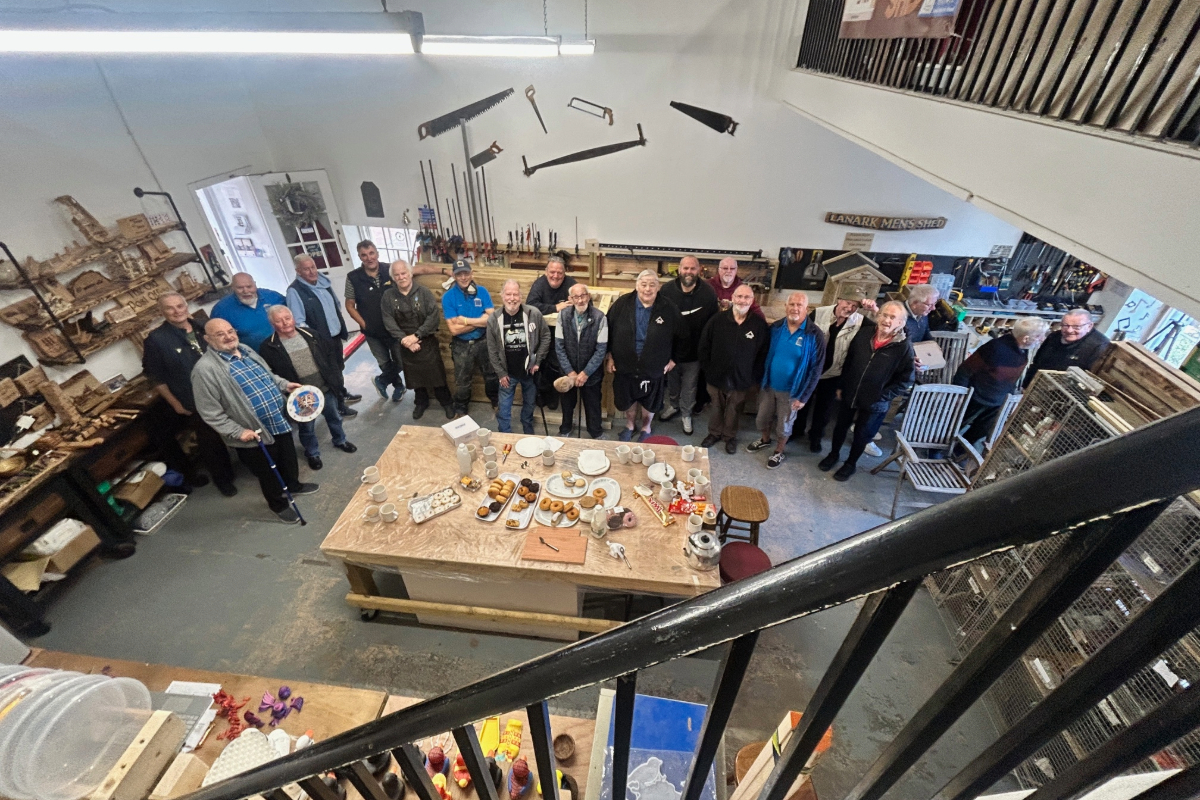
Image of Lanark Men's Shed tool station and workshop

Our members spent time with the Lanark Shed members responsible for the 3D printer. This was a great help in deciding what type of printer we need and what can be produced.
Other members visited the workshop and to view ideas of what can be produced as  sellable souvenir items.

Learning Outcomes

  • Use operation and cost of a 3D printer including the benefits of what can be made .
  • Our woodwork team are looking at ideas for manufacturing and skills involved.
  • To learn of the history of the New Lanark site.

"This type of visit will further cement relationships between the South Lanarkshire Network. We also learnt that one of their members make guitars…a particular interest to the Shed Band from Stonehouse"

Case Studies

Banff, Macduff & District Men’s Shed

Specialist machinery for community projects

A group of people in a tool/ 3D printing workshop

We had a very enjoyable and informative trip. We had demonstrations of 3D Printing, Laser Engraving and CNC Routing. We were shown different uses of the machines and advised on suitable machines for our requirements. We were also shown products which had proven popular and were relatively easy for beginners. We were also advised of suitable locations and environments within our premises. We are now looking to identify suitable locations to site the machines and will then be purchasing machines for our Shed. The trip proved to be very beneficial and we are now looking forward to a new and rewarding activity for our Members.

Learning Outcomes

  • Demonstration of 3D Printers: Tuition of the 3D printing process and the safe operating procedures of the machines. Learning which machine will suit our needs, Things to consider when buying a machine and what we need to look for.
  • Demonstration of Laser Printers: Tuition of the laser printing process and safe operation of the machines. Learning which machine will suit our needs. Things to consider when buying a machine and what we need to look for.
  • Demonstration of a CNC router. Tuition of a CNC router and the safe operation of the machine. Learning which machine will suit our needs, Things to consider when buying a machine and what we need to look for.

"We were shown a variety of activities and products which can be achieved from the various pieces of equipment that was demonstrated, quite a lot of which we didn't know about and therefore hadn't considered. We definitely returned with a lot to think about and with added enthusiasm."

Case Studies

Edinburgh Community Food visit to The Courtyard Pantry Enterprise; Glasgow Community Food Network; Transition South Edinburgh; The Haven

Strengthening local food systems through equity and justice

People viewing a mobile food bike

The exchange effectively supported all three specified learning outcomes, the participants engaged in high-quality discussion, and the learning objectives were successfully met. In relation to strengthening local food systems, attendees explored practical strategies for connecting with local producers and building resilient community food networks. Insights from The Courtyard Pantry and Glasgow Community Food Network highlighted how collaboration, transparency, and community-led models can improve access to affordable, fresh food.

The exchange also supported learning around improving food access for low-income households. The Courtyard Pantry’s social enterprise model provided a powerful example of dignity-based, affordable food provision, combining retail with wraparound support. This approach sparked useful conversations about replicability in other contexts.

Sustainability and inclusivity were central themes throughout the day. Participants shared efforts to reduce food waste, eliminate single-use plastics, and ensure food reflects cultural and dietary needs. Glasgow Community Food Network helped frame this work within a wider systems-change approach—emphasising the importance of structural action alongside practical delivery. Edinburgh Community Food (ECF) shared learning from our Bridging the Gap project, funded by Sustain, which focused on improving equitable access to locally grown food. We discussed barriers experienced by low income communities, challenges around supply chain inclusivity, and how food provision can reflect cultural identity and build trust. This brought a valuable, reflective dimension to the exchange and encouraged others to consider how equity and justice are embedded in their local food strategies.

Representation from Aberdeenshire added an important rural perspective. The group was able to explore the distinct challenges of food access, transport, and infrastructure in more remote settings. We supported this participant to make useful connections with others working on related issues, helping to build a wider support network.

The exchange provided a meaningful opportunity for learning, relationship-building, and cross-sector reflection. It enabled participants to share practice, challenge assumptions, and leave with renewed energy and ideas for strengthening their own local food systems.

Beyond the specified learning outcomes, the exchange generated several additional benefits that enriched the experience for all involved. One of the strongest outcomes was the informal peer support that emerged. Attendees appreciated the chance to speak candidly about the realities of delivering community food projects—including managing limited resources, responding to rising demand, and adapting to changing local needs. These conversations created a sense of solidarity and mutual encouragement.

Learning Outcomes

  • Strengthening Local Food Systems – Participants will learn effective strategies to connect with and support local farmers, improving access to fresh, locally sourced, and organic produce while fostering a more resilient community food network.
  • Bridging the Food Access Gap – Attendees will gain insights into practical approaches for making nutritious food more affordable and accessible to low-income households, addressing food inequality and child poverty through sustainable community-led initiatives.
  • Building Sustainable and Inclusive Food Enterprises – Participants will explore best practices for integrating organic produce into community food projects, reducing food waste, eliminating single-use plastics, and ensuring cultural inclusivity in food provision.

"The setting and format of the exchange allowed for unstructured, in-depth conversations that wouldn’t typically happen in more formal settings. This enabled participants to reflect not just on what they do, but how and why they do it. The open atmosphere encouraged critical thinking around values, power dynamics, and long-term change—particularly when discussing the intersections between food justice, poverty, and racial equity. Participants gained practical insights into how others are using food work to support wider outcomes such as employability, mental health, and community connection. For example, The Courtyard Pantry’s integration of support services within a food retail model prompted reflections on how to embed wraparound support without compromising dignity or choice. Others were inspired by how some groups are experimenting with different funding models, pricing structures, and referral pathways. The inclusion of a rural voice from Aberdeenshire brought unexpected but valuable learning. While food insecurity is often framed in urban terms, this perspective encouraged others to think more deeply about rural transport, distribution models, and infrastructure barriers—especially when working across large or sparsely populated areas."

Case Studies

Grey Matters Active Ageing visit to The Community Bureau

Crafting connections

A small group of people sharing crafting and knitting practices

Members had the chance to showcase their current projects and share their hobbies, sparking lively conversations and exchanging ideas on how to approach similar activities. The visit offered valuable guidance and inspiration, and there’s a strong sense that future collaborations between the groups could grow from these new connections. Despite the distance between Helensburgh and Campbeltown, the visit clearly strengthened community ties. Both groups expressed a strong interest in meeting again, with many hoping this marks the beginning of an
ongoing relationship. The day was especially valuable for newer members, offering them the opportunity to connect with others and gain insight into different approaches to active ageing in another community.

Learning Outcomes

  • Enhanced Craft Skills: Participants will have the opportunity to learn new techniques, methods, and approaches from each other, broadening their skill sets. This may include working with different materials, exploring new styles, or mastering specialist techniques that one group has more experience in. By sharing practical knowledge, troubleshooting common challenges, and offering hands-on demonstrations, members will improve their craftsmanship and refine their creative processes. This exchange will also encourage the development of
    unique and innovative work.
  • Increased Confidence & Creativity: Engaging in a supportive learning environment will empower participants to take creative risks and push their artistic boundaries. Many members may feel hesitant to try new methods or display their work, but through encouragement and shared learning, they will gain the confidence to experiment and express themselves more
    freely. Seeing others’ work and receiving constructive feedback will spark inspiration, leading to fresh ideas and a more adventurous approach to crafting. As a result, participants will be more willing to showcase their work and even explore opportunities to teach others.
  • Stronger Collaboration & Networking: The learning exchange will not only enhance practical skills but also foster meaningful relationships between individuals and groups. Through working together, participants will establish valuable connections that could lead to future joint projects, exhibitions, or even collaborative with other groups. The exchange will also create a lasting network of support, where members can continue to share resources, advice, and opportunities beyond the event. Strengthening these relationships will help sustain the craft groups, ensuring that knowledge and skills are continuously shared and developed over time.

"It was actually just a lovely friendly day. People went away feeling happy. They commented on the kindness and friendliness they experienced and it strengthened the working relationship between the two groups. We feel this is something we should do more often now. Shared learning, shared experiences and shared resources really brings together communities."

Case Studies

The Haven in Stonehaven visit to Kin Collective

Increased community wellbeing and emerging community needs

Two people smiling in front of door signs for wellbeing services

Our journey took us to Leith, where we visited the Kin Collective, a wonderful organisation doing impactful work.

What’s been so rewarding about these trips is the practical insights we bring back with us. For instance, during our visit to Kin Collective, we realised we didn’t have a toddler potty in our bathroom. A small detail, perhaps, but it’s one that makes a real difference when it comes to creating a welcoming, inclusive space for families. We also loved the way the hub engaged beneficiaries by offering an opportunity to win a voucher for the time to give feedback. It’s such a simple and effective way to show appreciation and nurture a sense of belonging. This is something we can easily implement and also support the work of our Havenites, wellbeing co-workers.

One shared experience that stood out during our visit to Kin Collective was the lack of in-person breastfeeding support. Both of our organisations have worked hard to fill this gap, providing essential services that can make a real difference to new parents. We’ve also shared the frustration that, despite our work in supporting NHS aims, the support we provide often only moves in one direction, leaving social enterprises to deliver health services with no funding.

Learning Outcomes

  • Sustainability and Income Models: To gain a deeper understanding of Kin Collective’s sustainability and income generation strategies, exploring how they balance financial viability with community impact, and identifying adaptable practices for The Haven.
  • Best Practices and Community Impact: To exchange insights on successful programmes, tools, and approaches that improve accessibility, inclusivity, and responsiveness to community needs, while maximising the impact of family wellbeing services.
  • Community Impact Strengthening: To co-develop strategies that maximise the impact of our respective services, ensuring they are accessible, inclusive, and responsive to community needs.

"As we continue our journey, we’re excited to see what new insights and connections the next exchange will bring. The bonds we’ve formed with other organisations remind us that, together we can go further than we can alone."

Case Studies

COPE Scotland exchange

Fostering collaboration and resilience through self-care

A 7 day self-care score card

Two events were conducted, one with the Rural Social Enterprise network online and another as a hybrid event in Mid Argyll, Kintyre, and the Islands (MAKI). These events brought together over 40 people from 24 different groups, highlighting the diversity of perspectives from both urban and rural settings. We used the Discovery Action Dialogue (DAD) of the Liberating Structures method to stimulate discussions in small breakout groups as this method encourages open dialogue and collective insight to find better solutions to common and shared problems.

The exchange explored some of the challenges experienced both in rural and urban settings based on two simple questions: ‘What are the challenges that you notice in urban/rural settings?’ and ‘What helps in improving wellbeing in rural/urban settings?’. Whilst there were some unique differences, there were also areas shared in common. Such as- transport, social isolation and loneliness, barriers to digital connectivity were shared across both- whereas a lack of anonymity, being surrounded by the community you work in with lots of dual relationships making it hard in rural settings. In contrast, the specific challenges faced in urban settings were about constant business, noise, a lack of green space and funding competition making collaboration a challenge.

The learning exchanged to alleviate some of this included: the importance of connection and close relationships, alongside creating space for informal connections, creativity and having options for independent support. Developing a culture of workplace wellbeing was seen as key through enhancing organisational policies.

Learning Outcomes

  • Being mindful of self-care- sharing tools for practice.
  • How we apply learning in our daily lives and practising it until it becomes a habit.
  • Sharing the challenges across different settings and contexts for improved wellbeing.

" The learning from this exchange underscores the power of collaboration and shared learning. By brining together diverse groups from urban and rural settings, the CLE creates a platform for mutual support and innovation, fostering resilience in the face of challenges. Together, we can find ways to navigate these challenging times or at least mitigate their impact."

Case Studies

1st Step Development Ventures

Visit to Lang Toun Cycles

Numerous styles and sizes of bikes stacked against a fence

By spending the day with the Lang Toun Cycles Team, we learnt about the history and growth of the social enterprise. This was a key outcome from the exchange. We were able to discuss pricing strategies for products and services and also the scope for introducing new products to our range. We also identified a new source to purchase bike tools and equipment from that is saving us money and so reducing our costs.  Toun Cycles shared their volunteer policies, which have been useful in developing our own systems. Toun Cycles shared their refurbishment and quality assurance checklist documents, which we have used to develop our own records. Their documents have been fine tuned through trial and error and sharing these documents has meant we have saved time and potential mistakes.

This was a new contact for us and as well s sharing buying contacts and other cycle networks with us we feel that as an organisation we would be able to reach out to Toun Cycles in the future if we needed a critical friend to discuss something with. The sharing of ideas and discussion of common solutions will enable us to develop our enterprise more efficiently because we have been able to tap into the knowledge acquired by a relevant partner organisation. As a result of the visit our team of staff and volunteers that took part were strongly motivated to put into practice the learning and come back to the shop with lots of new ideas and inspiration. The face-to-face visit has enabled a stronger partnership of support and sharing which we hope will be long term.

A really brilliant benefit was the huge uplift the visit made to our staff and volunteers. Being able to go and visit another organisation was very good for morale and for reinforcing our team spirit to build a stronger more resilient team!

Learning Outcomes

  • Detailed understanding of how the Toun retail model has developed.
  • Stronger understanding of how their learning (what has worked well and how they have overcome challenges) can support our own retail enterprise development.
  • Expanded partnership networks and valuable peer support.

"It was valuable to share their pricing structures for work to ensure that we are pricing/pitching ourselves at the right point in the market. We had quite extensive discussions around working with diverse volunteers and some of the mutual challenges we have experienced. It was comforting to share these experiences and share some of our own ways of supporting vulnerable volunteers with often high support needs."

Case Studies

Men’s Shed Govan meets East Kilbride Men’s Shed

Shed to Shed Visit

a group of people standing outside East Kilbride Men's Shed looking at the camera

The exchange provided the opportunity for the Govan Shedders to travel to East Kilbride to share experiences on how they’ve set up their shop and workshop. Our aim to have a better layout for our workshop means our Men’s Shed will be able to be more productive, run more projects in our local community for other groups and complete more requests from local community members. Such as playground repairs, benches and raised beds for local Primary schools and Nurseries. The tour really helped give an in depth understanding of the whole set up for approaches to bring back to Govan.

Learning Outcomes

  • To find out about dust extraction systems for wood-workshop that other sheds use and try to gain expertise from those who already have one in place.
  • Gaining ideas for a workshop re-design – what works for other sheds and good ways of workshop layout.
  • The challenges of setting up and moving premises

"We were over the moon when the East Kilbride shedders very kindly agreed to for us to 'steal' some of their ideas! Our Shed is very busy at the moment getting ready for our Christmas Fair fundraiser which can generate a lot of income for us so we particularly enjoyed seeing the different ideas they had for their many creations."

Case Studies

The Maid of the Loch maritime exchange

Fairfield is a community museum dedicated to telling the story of Govan’s role in world ship building.

Three men chatting inside a ships engine room.

Loch Lomond Steam Ship Company, better known as Paddle Steamer Maid of the Loch is run entirely by volunteers. This exchange gave an opportunity to expand  thinking on what to offer and how to further support valued volunteers.

Learning Outcomes

  • Share learning with Fairfield volunteers on how they operate their guided tours
  • Explore topic featured at Fairfield to support Maid volunteers with co-curating maritime & industrial collections
  • Collaborate around outcomes for the health and wellbeing of volunteers.

"Both community museums have a shared interest and history- the exchange was a great opportunity to share that. I served as an apprentice here, and other volunteers has parents and grandparents who were employed in shipbuilding at Fairfield."

Case Studies

Repair cafes and tool libraries

To provide a dynamic opportunity for members to learn first hand about repair cafes and tool libraries and discuss how this could work in the context of a Men’s Shed.

a close up of a boat in a workshop

Learning Outcomes

  • To see a small scale sawmill in operation for plans to incorporate into the organisation.
  • Hearing what other Sheds support mental health such as Tai Chi, cycling groups and a lunch shed.
  • How tool libraries items are logged and maintained.

“The outcome of these visits are that Inverclyde Shed plans to launch a repair café and sawmill- utilising local wind-felled timber. No such services currently exist in Inverclyde so we hope to be able to start them to help the local economy and strengthen our sheds activities for men in the area.”