News

Ceci n’est pas un Plan

July 31, 2025

Blog post by Anna Chworow, Deputy Director – Nourish Scotland


On the eve of summer recess we have received the news of Good Food Nation progress. The government released “The Proposed National Good Food Nation Plan” for parliamentary scrutiny.

In terms of the broad direction of travel, here is a lot to celebrate.

Those following the Good Food Nation journey will not be surprised to see the Scottish Government’s vision of a fairer, more sustainable, healthier food system set out in the outcomes. Little has changed there since the public consultation and for a good reason – the public and stakeholders supported the long-term vision.

There is a clear alignment with the right to food in anticipation of legal incorporation in due course. The population health-related outcomes, targets and indicators are particularly well developed. They pay attention to nutrition as well as diet-related health conditions, have specific focus on inequalities and include measures for infants, older children and adults alike. In the broader picture there are some interesting indicators, including one looking at the total agricultural land area used to produce fruit and vegetables for human consumption.

There big-ticket items are, of course, the metrics that could not be ignored: greenhouse gas emissions from agriculture, food insecurity levels, diet-related illness. We have work to do on all those fronts. But it is uncanny how many of the other indicators are ones where the available metrics are already trending in the positive direction. There are also several that have little impact on the overall food system – such as the indicators which relate to consumer perceptions and self-reported behavioural changes, as opposed to measurable changes in the food system and environment.

There are of course many gaps – some of them fundamental. While the document references food environment extensively, it makes no attempt to measure or track trends. There are no indicators related to food deserts, concentration of takeaways per head of population, or fast-food ads in either physical or digital space. There is a glaring omission of sustainability in relation to the food and drink sector, apparently ignoring the work of Scotland Food & Drink Net Zero Programme. There is no mention of trying to track worker safety on sea and on land – occupations which gained notoriety for the disproportionate number of deaths and life-changing injuries.

And then there are surprises. One particularly eyebrow-raising example is the inclusion of the production volume of salmon under the climate and biodiversity outcome. Could it be the government is looking to bring that volume down, based on the troubling environmental practices and mass mortality events that plague the industry? More likely it’s an economic indicator in the wrong place – an apt illustration of the disjointed approach between growth and sustainability.

In short, the Government picked up pieces of the existing metrics and policies and tried to convince us this makes for a good plan. One would be justified in wondering why this policy took 3 years to develop. To this end it’s not a Good Food Nation Plan; it’s The Treachery of a Plan.

But there is a glimmer of hope. Outcome 5 speaks of people and communities being empowered to participate in, and shape, their food system. Why it proposes to measure it by the number of people growing fruit and veg is anyone’s guess. Instead, we shall measure it by the number of people who respond to this document. The plan is now undergoing a period of parliamentary scrutiny, with opportunities to engage with MSP and committees. We will be setting out more details about opportunities for input in due course.

The transition to a Good Food Nation will not happen overnight – but if it is to happen at all, it will require leadership. Thus far the government has missed the opportunity to lead from the front – and so it creates a space for the MSPs, Committees, civil society and citizens to lead from behind.

Case Studies

Torridon District Community Association

Developing robust feasibility studies and business plans.

Cromarty camping chemical waste disposal unit

We visited Cromarty Community Development Trust to learn about their community run campsite. We had a tour of the site and met with the development officer, board members, campsite warden and apprentice. Whilst at the site we learnt about regulations, planning, risk management and health and safety, including some valuable insights Cromarty Development Trust have gained in their first 18 months of running a campsite.

The development officer and board members were able to give us insight on the process of developing and setting up the campsite including how challenging the process was when it came to community engagement and buy in as the process went on. It was very helpful to learn this from a Community Development Trust who has been through the process quite recently and who could identify some of the pitfalls and things they would have done differently.

Cromarty are one of the few campsites open all year round and it was particularly useful to see the detail of their occupancy rates and financial information for the full 12 months of a year. Julie, the development worker for Cromarty Community Development Trust also produced a very comprehensive handout for us to take away.

Learning Outcomes

  • Participants will gain an understanding of the financial management of a community run campsite including potential grant funding, business planning, salary costs etc.
  • Participants will learn about the regulations, health and safety and risk management involved in running a campsite in Scotland.
  • Participants will learn about the process of setting up and running a community owned campsite, including strategies for community engagement with the project.

"The exchange allowed us to make valuable links with a Community Development Trust further along in the process of income generation. It was useful to hear their reflections on what they would have done differently and what new challenges they face as an organisation trying to provide benefit for the community whilst running a business aimed at tourists."

Case Studies

Dunvegan Community Trust exchange

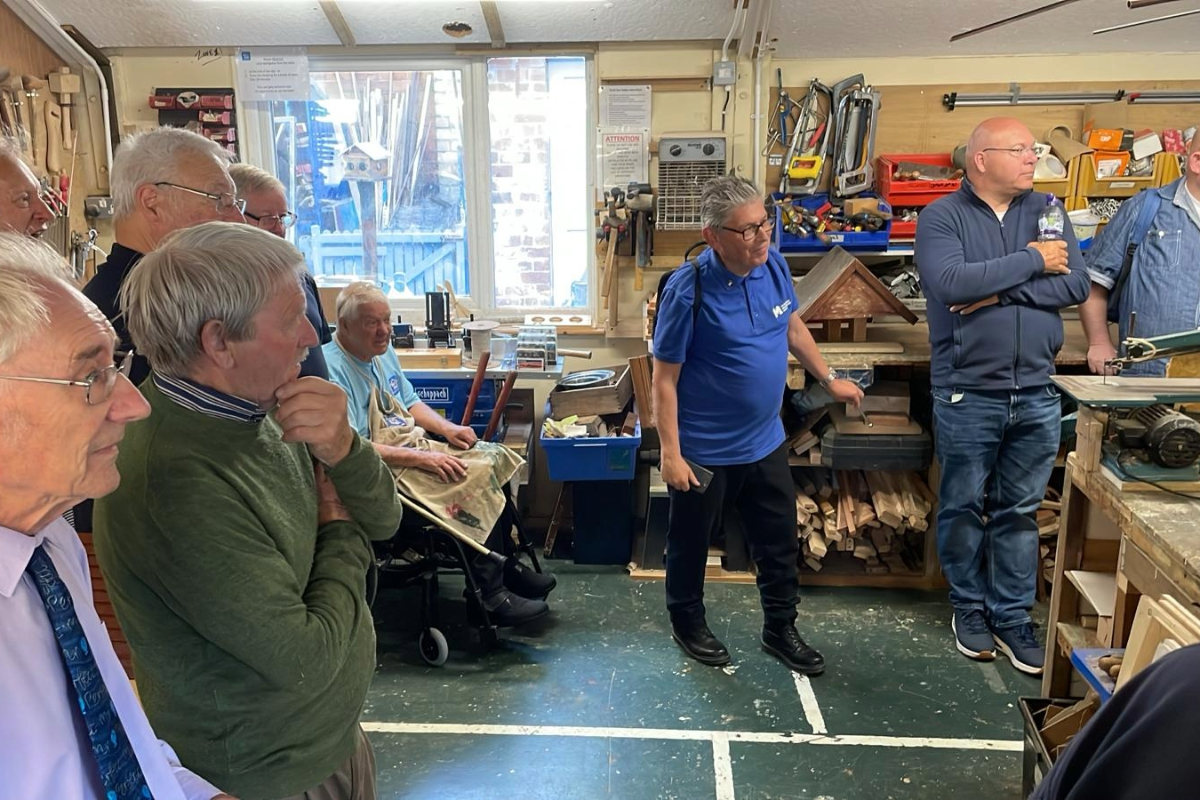
Tool libraries- developing new projects and reviewing services

Tool library workshop
  • How do they manage their facilities in terms of health and safety, storage, and staffing (paid and voluntary)?
  • What challenges they have encountered and how they have overcome them?
  • How do they ensure the facilities are well used and create the best possible value to the communities they serve?

Learning Outcomes

We found out a lot about how the different organisations manage their facilities, about different ways of funding the services about the day to day processes and what staff and volunteers do to make the services work. We learnt the importance of enthusiastic and engaged volunteers – and to create this good relationship the importance of trust, good training and using volunteer input to shape the services. We very particularly wanted to know about storage and it was great to see that in person, to take lots of photographs and get specific ideas about how the tools should be stored for ease of accessibility. We got ideas about how to make the space adaptable, and were please to see that the size of the space would work for what we wanted to achieve.


"A significant takeaway from all of the visits was how useful it was to see the facilities in person and to talk to volunteers and staff face to face. This gave us a real insight into how things were run, the enthusiasm of everyone for the services offered and how great our proposals could be! It made the project seem much more real and much more achievable."

Case Studies

Toisgeal Exchange

Gaelic & Island Arts & Culture

A small group of people visiting a textile studio

We discussed our hosts projects, exhibitions, practices, challenges and ways in which they collaborate with each other and with other artists, local and beyond, including the Even Here, Even Now project currently linking creative practitioners in the Outer and Northern Isles. We were able to reflect on our own aims and ethos as a group and think about ways in which we can grow our
creative community in a way that gives a voice to place-based art and practitioners, a Gaelic-focused approach to creating, and ways of mapping a path forward to future initiatives. The time we were able to dedicate to this was invaluable and in an environment that supports local creative practitioners in a very positive way.

In terms of peer-peer learning we discussed ways we could bring a joint exhibition/workshop event together and take it on the road around local village halls to engage different communities- we have started making a plan for a funding application to enable us to do so. We also identified details for a joint exhibition theme and highlighted threads to pick up for research and investigation, which we will take forward during monthly meet-ups.

Learning Outcomes

  • As our primary interest is in Gaelic/island arts and culture it would be incredibly useful to see how this has been developed and is managed in Lewis. We wish to visit and learn from groups of similarly-engaged artists who live within a similar island community facing comparable geographical and cultural challenges.
  • We have identified this visit as an opportunity to engage in peer-peer learning opportunities/skill-sharing. This will be a focused, informal environment and a supportive, effective way to encourage, strengthen and develop our creative practice.
  • We endeavour that this visit would be the start of an island-island exchange of practice and place-based learning as well as an opportunity to connect with fellow island artists and art centres/organisations on the island.

"We've learned about the variety and vitality of place-based art practices on our neighbouring island which has motivated us to seek more time to spend time collaboratively, and have been inspired to identify funding streams we may apply to to allow us to support art in different ways within our communities."

Case Studies

Cross sector learning exchange

Action planning anti racism

Woodlands Development Trust urban community garden.

The exchange focused on the Woodlands Community Development Trust’s anti-racism programme, and how community and volunteers have been key to its development. Everyone was provided with examples of how to approach community engagement activities and events in order to grow their network of engaged individuals. This helped identify actionable steps organisations could take towards making anti-racism a priority across programmes and organisational structures. Woodland’s anti-racism action plan added detail to the work they have done as a guide to action area themes.  There was space to discuss challenges that may arise when taking forward this work, and workshop solutions. Together, we carried out a strengths, opportunities, challenges and threats analysis of our own organisational anti-racism work which highlighted a shared commitment to challenging racism through working in partnership with communities. Funding short-termism  and structural inequality across national and local policy often present barriers to lasting change.

Learning Outcomes

  • Deliver a network-wide exchange programme which appeals to community organisations with a shared common interest.
  •  Identify knowledge gaps and transform them into cross-sector learning opportunities.
  • Provide individuals with transferable knowledge/skills specific to their role and improve overall role performance.

"Any work in this field takes time, everyone's involvement and commitment. There is a lot that can be learned from an intermediary perspective on what is being done on the ground locally- we need space to have open conversations to embed proactive steps."

Case Studies

Community Woodland Association member visit to Kilsture woodlands

Using biodiversity recording tools to protect forest ecology.

Community woodland group standing talking in Kilsture woodland

Our visit helped us understand a lot about biodiversity. The people at Kilsture are passionate about their forest and it inspired us to try and introduce more biodiversity into what our own group does. It was really interesting talking to people from other woodland groups  – with a focus on biodiversity . We found the sessions on iNaturalist app and woodland assessment interesting and useful. The usefulness of the iNaturalist app is worth exploring and we have now started using the app on the sites we work on to start recording what’s seen on site.

Learning Outcomes

  • How KFCG works with FLS to represent community interests.
  • How we use Citizen Science to build our understanding of forest ecology.
  • How we’re planning for the future of the woodland.

"I hope to have persuaded my group to construct a pond, or to have created a bit of wetland - incorporating lessons learnt into our citizen science - I would like to think we have a better understanding of the health of our woodland by adopting a system such as the WCA being used at Kilsture Forest - I'd like to see CCW doing some of the ID and recording work through our Rural Skills Centre - A year from now, it would be good to go back in a year and see the progress the community are making."

Case Studies

Biggar Community Market Garden visit to Sustainable Kirriemuir

Community food growing

Image of a yellow courgette flower

The Sustainable Kirriemuir team is managing their growing and greenspace, leading to development of ideas on how we can facilitate activities in our own local primary settings.  Emphasis was on primary school reach and how this can be leveraged to gain wider community engagement with BCMG through school newsletters and events. Sustainable Kirriemuir  focused on how volunteer recruitment and retention is successful where they invite their community to come to them with ideas which Sustainable Kirriemuir can support.  By diversifying their activities, they have embedded the organisation through a range of focuses, from health and foraging walks to large scale community events for families.  Going forward the Biggar Community Market Garden team are keen to think of how we can take similar approaches in our area so that we are responding to the needs and interests of community members to invest their time and passion into wider climate resilience goals.

Learning Outcomes

  • Gaining insights into funding and support mechanisms – community, local authority and national – utilised by each organisation.
  • Understanding the range of approaches of both organisations to volunteer recruitment and retention and extent of impact.
  • Understanding the range of approaches to engagement with nurseries, primary and secondary schools and wider community in each setting, including community engagement opportunities and the extent of impact of these approaches.

" Sharing our educational resources and experiences that can be adapted to our setting to support our learning programmes and community engagement opportunities has helped inform our approaches to nurturing good relationships with volunteers that can be implemented in our setting to support retention and recruitment. We have a better understanding of strategies for building positive and sustained relationships with local businesses, local authority and national funders which will result in financial, logistical and organisational support."

Case Studies

Linlithgow Community Development Trust visit to Edinburgh Tool Library

Working with established networks for better engagement

A tool workshop

We discussed all points around the learning outcomes. The main takeaways for both outcomes 1 and 2 are that working with established community groups who are already embedded in the geographical/related subject areas are a great way to gain buy in from communities and also to act as an intermediary when gathering requirements and assessing if a location is suitable for expansion. Information on workshops was useful in terms of practical/logistical arrangements, and made us think about how we could offer a range of workshops to our members as well as to the general public.

Learning Outcomes

  • Understand the benefits and best practice around running projects that are inclusive of adults with learning disabilities/additional support needs.
  • Explore the ‘Hub and Spoke’ model for expanding sharing services – what are the obstacles and considerations for identifying suitable locations.
  • Understand the success ETL have enjoyed around providing workshops – both the financial benefits and the knock-on effects this may have on TL membership and community engagement.

"We were impressed by the logical and organised layout of the TL space, and by the positive signs and the code of conduct for the members. Chris' knowledge is excellent and I know that the volunteers that accompanied me on the exchange have several ideas they can incorporate in Linlithgow. I am going to be following up with Chris about some work the ETL do on demographic surveys, in order to better understand how we engage with a wider audience."

Case Studies

Greener Kirkcaldy visit to Angus Cycle Hub

Active travel exchange

Image of bikes and seating area inside Angus cycle hub

Seeing how the open workshop sits alongside the cafe and public area was invaluable. The use of easy build screens, that were very well decorated and had ample signage and information on them
greatly enhanced the experience of someone visiting for the first time. These are used very flexibly to mark boundaries between different areas, and can be moved very easily with lockable castors
The use of a screen to display a rolling slideshow about services, events and other useful information digitally was great, very professional looking and easy to amend and update to keep current at very little ongoing cost.

When classes and events take place at the Dundee Cycle Hub, everything on the floor is moveable to clear required space and the large screen is used to show films, presentations and any other useful visual aids. Most of the active travel information is there for people to access independently, but all members of staff from the workshop, retail and cafe have had in house training on how to discuss active travel and where to signpost people to find out more, especially around journey planning.

We learned about their workshop management system (Citrus Lime) and their Point of Sale system (Square) and how these don’t work together very well and discussed our won findings that Hub Tiger workshop management can integrate with Square. We were also very impressed with the simple way that Square can host online sales of bikes through their web
based shop function.

Learning Outcomes

  • Explore how active travel advice is given to individuals on site.
  • View how active travel information is displayed and accessed on site.
  • See how the cycle shop and workshop work alongside the active travel centre and cafe.

"There was a great deal of inspiration to be taken from their collaborative work with Dundee City Council, Dundee Dragons adaptive cycling and the breadth and scale of their Access to Cycles work, across the whole of Dundee and Angus."

Case Studies

Weaving Words and Wonder visit to Orkney Folklore and Storytelling Centre

Storytelling tools for inclusion

Image of a cairn in Orkney by the sea

Seeing how Orkney Folklore and Storytelling works with additional support needs has reinforced what is unique in our own practice. The storytelling is interactive with the audience and has space for children’s different ways of receiving the stories. The Centre also run ceramic workshops for children and families and we could really see the quality of what the children produce and the experience of a traditional craft – the slow process of drying the clay, firing, glazing and glaze-firing and how stories build through the characters which emerge. Also the environmental
benefits of this slow craft where there is a lot less waste than with other forms of art ‘n’ crafts.

We explored how the peoples’ Island Calendar and their partnership with the ancient landscapes and surrounding seas has shaped the social landscape of today in these magical Highland and Islands of Scotland. This will enable us to share this knowledge with our Moray audiences – to enrich our tales with the first hand account of The Islands, the islanders and their history, culture, traditions and lives.

Learning Outcomes

  • Find out about past Highlanders’ and Islanders’ culture, social customs, work traditions and beliefs.
  • Learn how to make our story telling sessions inclusive of those children who may find it challenging to just sit and listen to a story – enabling our stories to reach a broader audience and include those with Additional Support Needs.
  • To learn the Folklore, Folk Tales, Legend, Rhymes, Poetry, Sagas, sea legends, crofting tales and myths to share with our Moray audiences.

"The experience of being on Orkney brings a depth and detail to our stories which would be missing if we hadn't seen the height and majesty of the standing stones, crawled through the deep dark tunnels of the ancient chambered burial cairn of dogs and re-emerged into the bright light of morning, gentle green hills sloping down to the turquoise loch and affirming that we live because of those who have gone before."