Case Studies

WHALE Arts visit to The Stove network

Building creative community hub networks

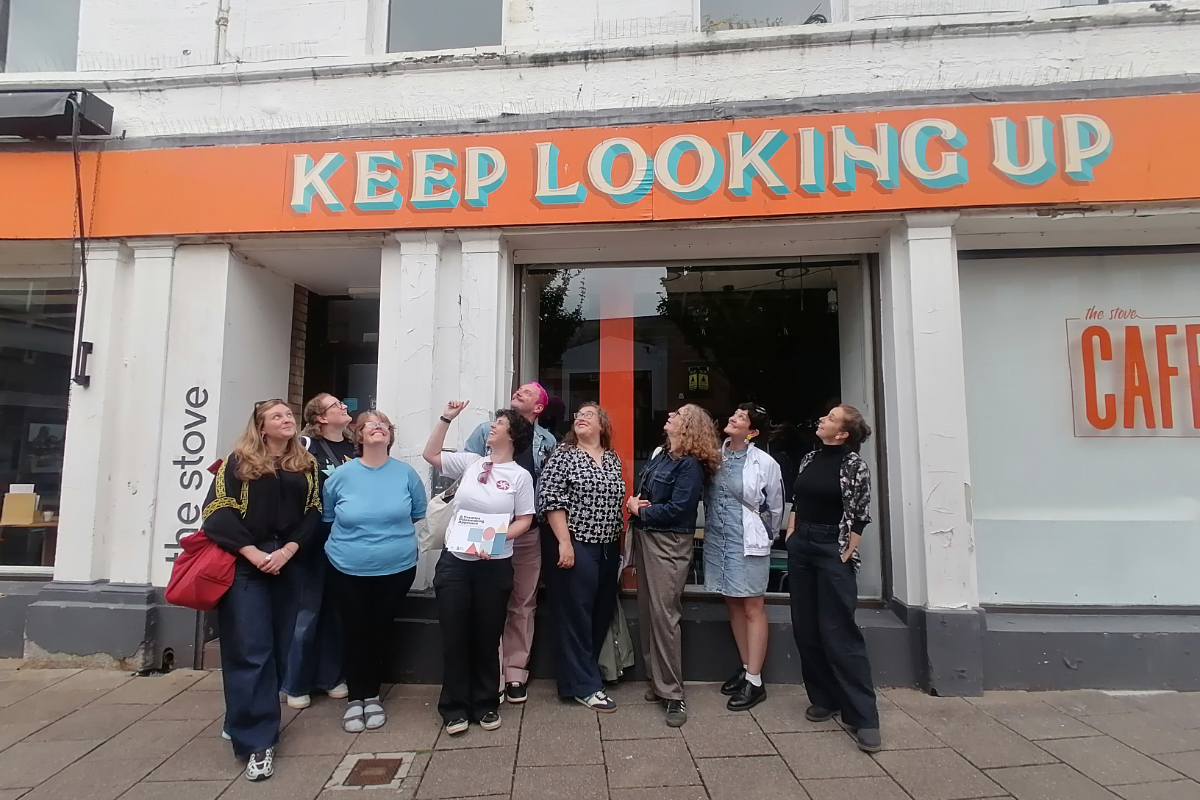
A group of people smiling looking up at a shop front sign

Our visit was split into two parts – first we had a short tour of the Midsteeple Quarter, a sister project of The Stove that seeks to reanimate the high street in Dumfries by offering studio and community space, local makers selling their wares, a risoprint studio and potentially even an artist flat for visiting artists. During and after lunch, we heard from Katharine Wheeler, Development Director and Lead on the What We Do Now Network about their work in their base and cafe space on the high street.

It was both interesting and useful learning about the origins and evolution of The Stove and the various projects they’re involved in, particularly when it came to reflecting on our own network and the challenges and opportunities we face locally. It was also helpful to think of our work in a larger political context, and of the various nuances involved in acting as a mouthpiece for a range of organisations, its drawbacks and benefits. It was also of interest to The Stove to hear about the work we have been doing over the last three years, and for them to gain insight into our developing methods of working together.

Learning Outcomes

  • To learn from other networks at different stages of development. The Creative Community Hubs Network is a relatively new entity, made up of a variety of community-based organisations in Edinburgh, some of which have been in existence for decades and some which have only been serving their local communities for a couple of years. This trip will allow us all to learn from a different sort of network which has evolved differently and which has years of experience to share with us.
  • To better advocate for our communities. All members of the Hubs Network are fierce advocates of our local communities, but we don’t always speak with a unified voice. Seeing how The Stove advocates for the work they do will inform our approach, and there is also the possibility of future work between the two networks to better articulate our collective needs and wishes.
  • To build bonds and solidarity across organisations with similar ethos and aims. We anticipate there will be a great deal of resonance between what the Hubs Network is trying to achieve, and the aims of The Stove Network. Visiting one another in each other’s place will help us better understand the successes and challenges we each face, and allow us to potentially work together better in the future.

"The addition of insight into The Midsteeple Quarter was useful, not just to stretch our legs after a long drive as well as seeing some of Dumfries city centre, but also as a standalone project of an organisation having real impact on communities locally. A number of organisations in our network have recently completed Community Asset Transfers on their buildings and/or land their buildings stand on, and work like this is inspiring in terms of how a community-based organisation can continue to have impact on their local community, outside the confines of their building. The exchange also helped fund a member of Whale Arts staff gain their MiDAS certificate in minibus driving, which will be of benefit to the organisation for years to come."

Case Studies

Group learning exchange

Community composting solutions

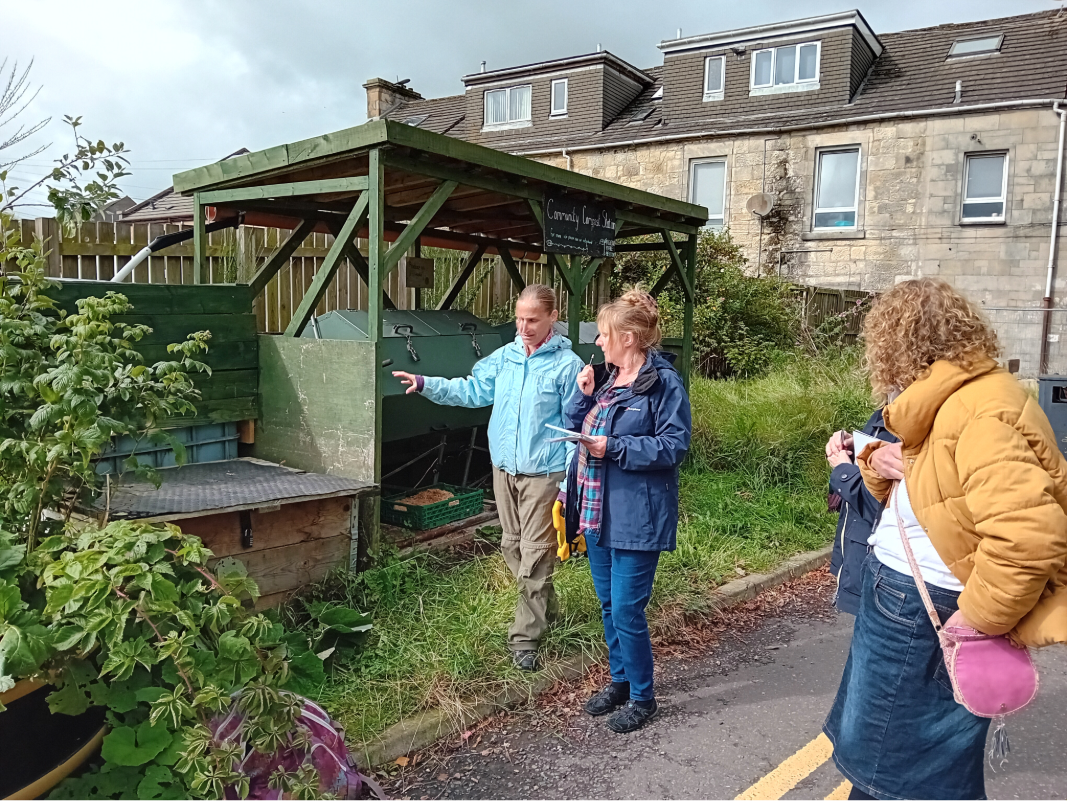
image of a garden containing composting solutions

We are setting up a pilot project with three new community composting sites in Dumfries and Galloway. We have funding in place to purchase three composters (Jora/Ridan) and a little funding for coordination of the projects. The purpose of the exchange was to get the three different communities on board,  inspired by existing similar community composting projects. The exchange increased our knowledge and understanding of how a community compost system can be set up, physically.  We visited three very different sites: Incredible Edible Neilston’s community compost which has two Jora composters, which are covered over. Then we visited St Angela’s school which has a system with two Jora’s, followed by a visit Woodlands Community Garden which has a Ridan. On each site we measured the set up and drew pictures. This provided us with the opportunity to discuss the pros and cons of different browns and saw the different storage systems for them. We asked questions about the social organisation of Blether, as well as the 3 compost sites. We discussed with each site the potential problems that have arisen in our communities.

Learning Outcomes

  • Increased knowledge and understanding of how a community compost system can be set up, physically. How to source and store ‘browns’ (woodchip/shredded paper etc). We will see more than one type of tumbler composter in order to ascertain criteria for what kind of composter and shelter to purchase or build ourselves.
  • Increased knowledge and understanding of the social organisation of a community fridge and community compost system – number and roles of volunteers and what commitment is required. Maintaining site security.
  • Increased knowledge and understanding about composting in a community setting. How to deal with questions which have arisen in our communities and with regards to legislation, such as whether we can take animal products (Eggshells? Meat? Commercial food waste?), how to prevent rats, smell, flies and where to mature the compost.

"It was fantastic to see in action the different systems and to understand the 3 very different needs and desires of the 3 different communities in Galloway, as we are all pretty far away from each other."

Case Studies

Lanark Men’s Shed Visit

Comparing viability of different shed activity

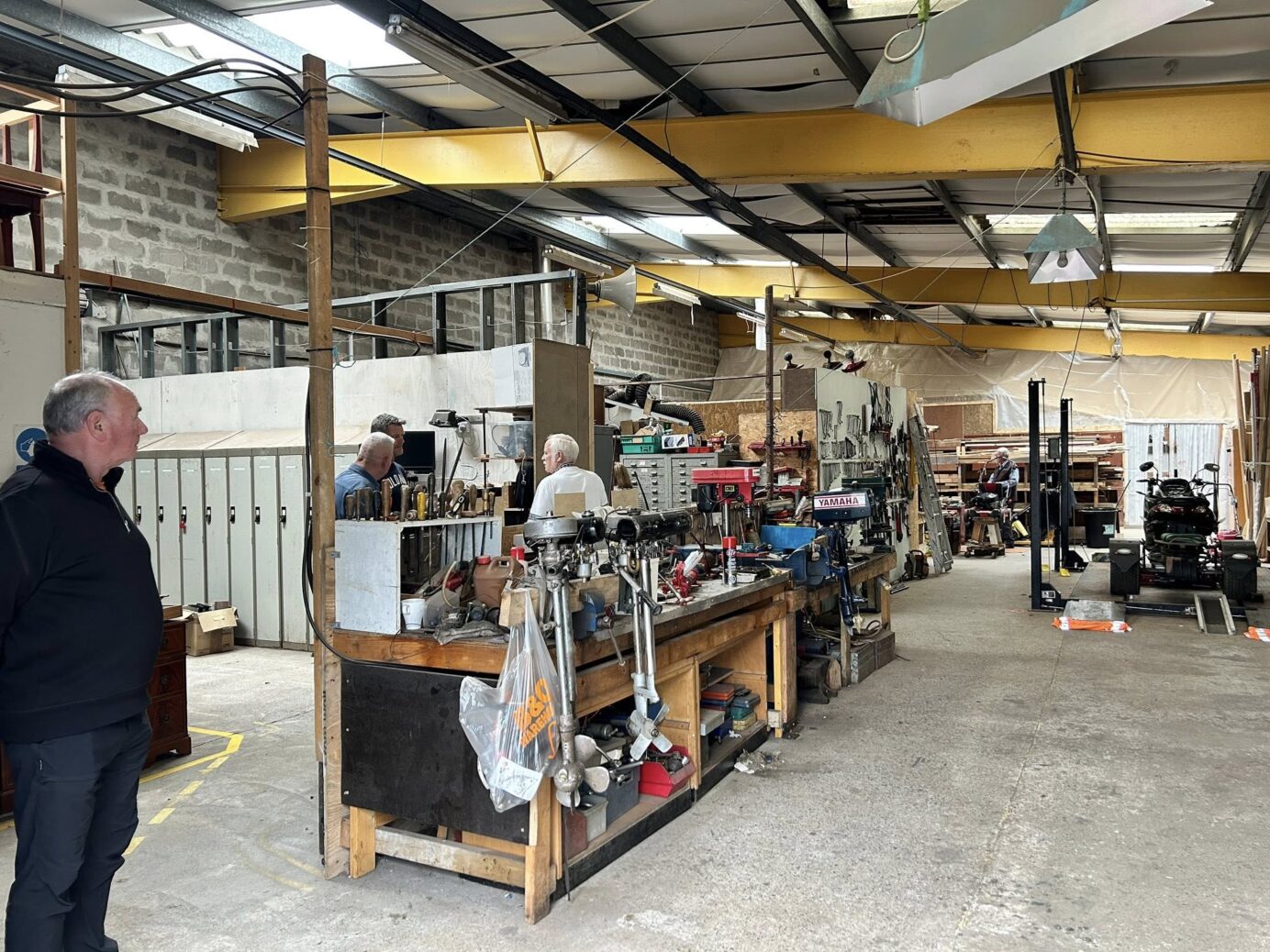
Image showing scale of Dunoon Men's shed

Every shed is unique, and that the location and type of building naturally influence the kinds of activities and facilities that can be offered. For example, Dunoon hosts some fantastic activities that we simply can’t accommodate due to the size of our premises and the health and safety constraints of operating within a listed building. Their shed focuses heavily on repair work—vehicles, motorcycles, and various other items—which we’ve chosen not to pursue. Instead, our members are more interested in creating bespoke items from scratch and working on commissioned projects, which better reflects the character and interests of our group.

Learning Outcomes

  • Interacting with international visitors etc.
  • How to grow our Shed further.
  • Sustaining operations.

"During our visit to this particular shed, we initially hoped to gather ideas for expanding our own Men’s Shed. However, it quickly became apparent that the scale of their operation differs significantly from ours—not only in terms of the size of their premises, but also in the volume of members and the additional responsibilities involved in sub-letting parts of their space to external community groups and individuals. This approach helps them generate income to cover overheads and utility costs, but it also introduces a more commercial dynamic. The visit was valuable in helping us clarify our own direction. We’ve come to realise that this model doesn’t align with our vision. Our focus remains on fostering a close-knit, creative environment tailored to our members’ interests, rather than pursuing a larger, more commercially driven setup."

Case Studies

All Sorts Activity Club visit

Reducing isolation and loneliness in rural and island communities.

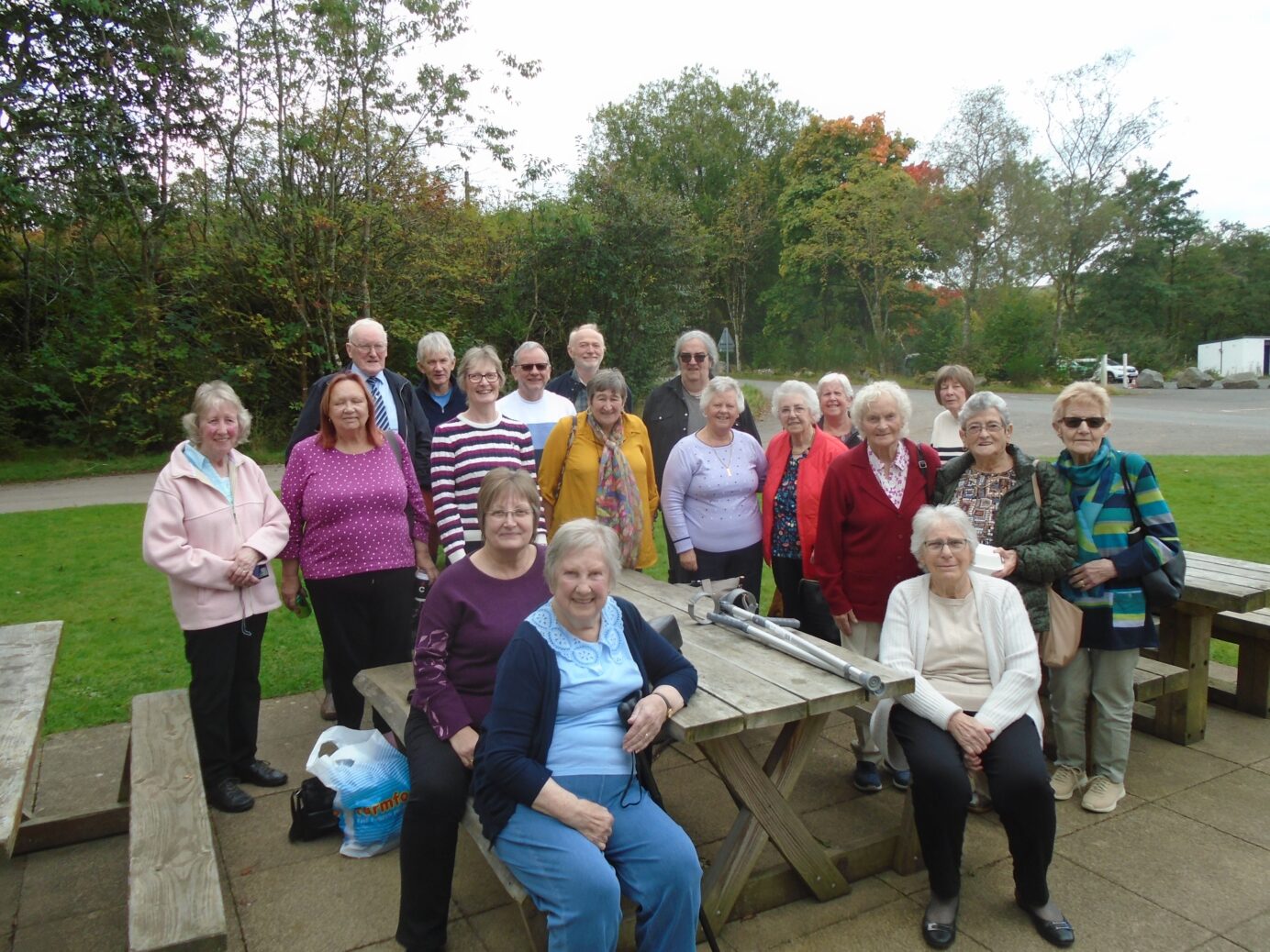
An image group members of the All Sorts Club

Our visit involved two rural communities at either end of Scotland from Bernera to Dumfries- one island crofting and one forestry based and learnt that each have similar issues with an ageing and reducing population, public services and remoteness from large towns. Both have difficulties gaining new members even though have encouraged new members to join using similar methods.

Learning Outcomes

  • To understand how each group fits into their local community and how they can encourage more people to join in the group activities to the benefit of both existing and new members.
  • How each group raises funds to continue operating, not just what grants may be available, but what local fund raising activities they have locally, which work and which do not. Also are there any cost saving ideas that could be shared.
  • For the people of Bernera to see and learn about an area of Scotland that few have visited, to learn about the heritage such as Robert Burns in Dumfries and to experience a different landscape from the one they live in.

"The exchange gave a chance for older people from two different communities, one small island and one small rural village, to meet up face to face and learn about the way of life in each area. We identified our similarities, differences and problems each face and shared some practical solutions that each have found to implemented in the others area,.in particular how to encourage more people in their areas to come out and join the clubs hence reducing feelings of isolation and loneliness that is prevalent in such small rural communities."

Case Studies

Cross-sector Learning exchange

The benefits of community led tourism in Lunan Bay and East Haven

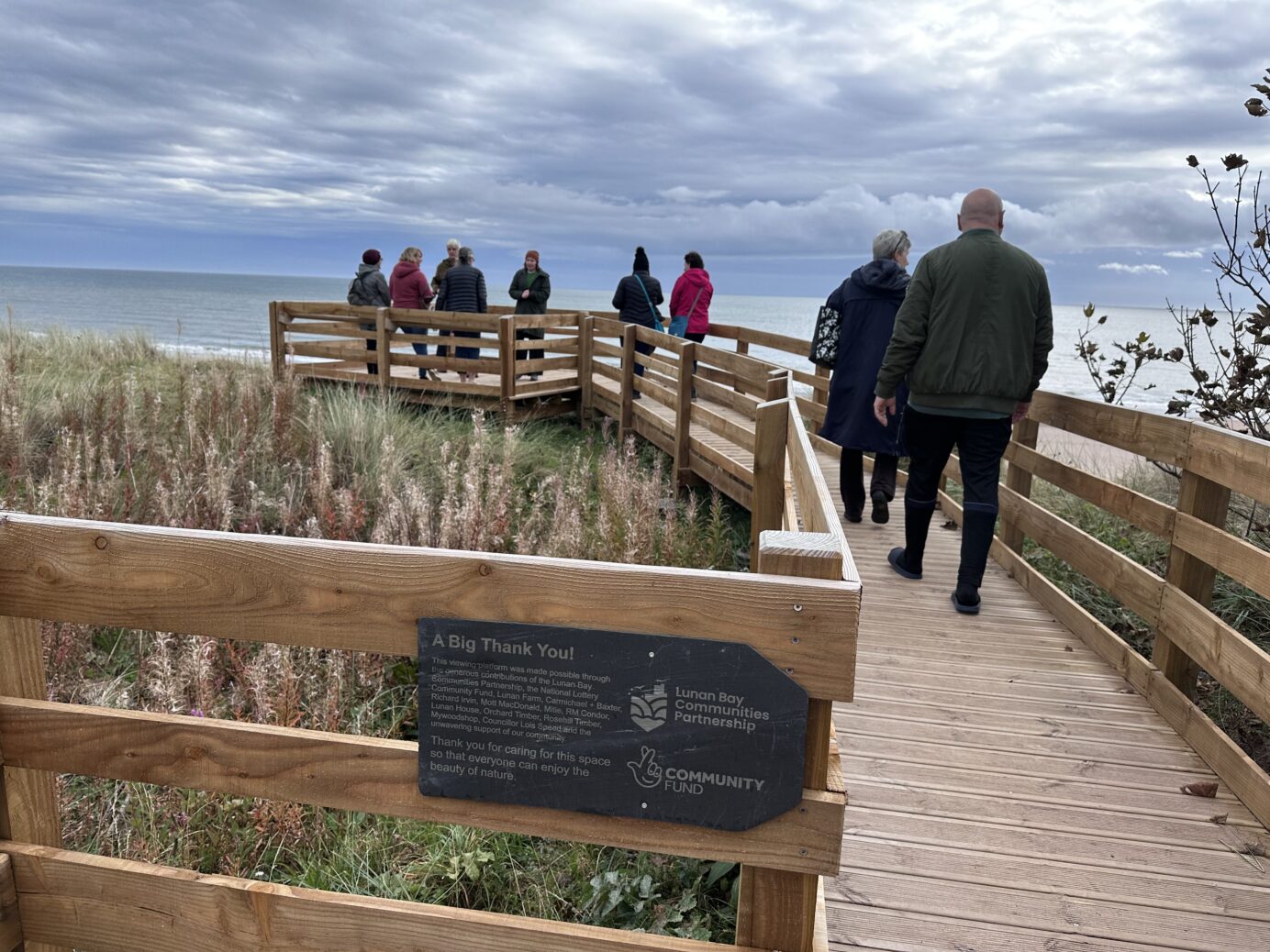
People on a wooden platform looking over Lunan Bay, Angus

The Exchange was delivered as a cross-sector partnership to enable community organisations and groups from different parts of the sector to see first hand how they might recalibrate their spaces around community led tourism. An approach that, when managed with the community at it’s heart, can lead to greater sustainability, resilience in support of less extractive models of tourism- keeping wealth circulating locally.

Learning Outcomes

Lunan Bay Communities Partnership

  • Exploring the role and impact of a community-led ranger service in improving visitor management, community wellbeing and outdoor education.
  • Learning how community-led projects, such as the new all-abilities viewing platform at Lunan Bay, can be delivered by engaging businesses with corporate social responsibility commitments and other key stakeholders to provide vital visitor infrastructure.
  • Exploring how business-led collaborations can provide sustainable income streams for community projects, drawing on examples such as the Make Travel Matter campaign with Trafalgar Travel & Arbikie Distillery Experience, and other scalable commercial models.

East Haven Together:

  • Participants will learn how story telling and art have been used to engage people from across the world in promoting the history and heritage of this small coastal community.
  • Participants will gain insight into how nudge strategies have been used to influence and change public behaviours.
  • Participants will learn more about how visitors value the natural environment of East Haven and are actively engaged in helping to protect and conserve the amenity.

"It was very interesting meeting these other communities and hearing their stories, achievements and challenges - it was a delight to see the dedication to their area and the environment. Engaging businesses with social responsibility is something we'd like to explore more and there are plenty of visitor attractions that we can try to collaborate with to try provide sustainable income streams for community projects that our Town Hall can deliver - this was a great light bulb moment, as we believe the community should benefit more directly from the huge volume of tourists can use our facilities and infrastructure, and not just an income stream to the businesses the tourists visit. "

News

Is the NHS failing Scotland’s patients, passengers and Community Transport operators?

September 29, 2025

Whether it’s getting to a hospital appointment or visiting family and friends, all of us need local transport to live a happy and healthy life. That’s why Community Transport is essential to making Scotland healthier.

Blog by David Kelly, Scotland Director and Head of Policy & Campaigns, Community Transport Association


Every year, CTA members deliver more than half a million journeys to health- and social care-related destinations, from GP surgeries and hospitals to day care centres and residential homes. Beyond trips, Community Transport keeps older and disabled people active, connected and independent through prescription deliveries, active travel projects and befriending networks.

Back in 2019, the Scottish Parliament recognised gaps in provision and passed new legislation imposing duties on all NHS Boards to deliver community benefit and work with Community Transport operators in non-emergency patient transport. Since then, NHS Scotland has published its Climate Emergency & Sustainability Strategy (2022), secondary legislation has been enacted (2023) and the Scottish Government has created a Transport to Health Delivery Plan (2024) to bring transport planning and health planning together.

Meanwhile, it has become a political priority with the First Minister of Scotland promising a more accessible, patient-centred NHS with transport support for those who need it. But how much has changed—for patients, passengers and Community Transport operators? In March 2025, we launched a new research project to find out.

Our Research

As part of the next stage of our Healthy Communities programme, we sought answers to three questions:

  • How are NHS Boards complying with their 2019 legal duties?
  • How are Community Transport operators making Scotland healthier and what challenges do they face?
  • What is the value of Community Transport for passengers who rely on our sector to access health & social care?

Key elements of the research:

  • Worked with South West Community Transport (Glasgow) to bring members’ work to life via a video case study.
  • Submitted Freedom of Information (FoI) requests to Scotland’s 14 regional NHS Boards.
  • Secured 82 responses (≈45% of Scotland’s Community Transport sector) to an operator survey.
  • Partnered with Borders Wheels (Borders), Partnerships for Wellbeing (Highland) and Portlethen & District Voluntary Community Ambulance (Aberdeenshire) to pilot a new passenger survey.

References:

Our Findings

Community Transport is playing a major role in improving access to health & social care. Using data from the new operator survey and our 2022 State of the Sector report, we estimate around 329,000 journeys to health-related destinations and ~200,000 journeys to social care-related destinations each year.

These services are increasingly important due to Scotland’s ageing population and limited capacity in non-emergency patient transport. Since 2017/18, patient transport trips delivered by the Scottish Ambulance Service have fallen by nearly 64%.

For individuals, the impact is tangible: passengers told us that having Community Transport available brings peace of mind and, in some cases, is “life-saving.” 39% of passenger survey respondents said they would not be able to make their journey without Community Transport.

Demand is rising: 72% of operators report increased demand over the last 12 months and 49% ‘often’ or ‘sometimes’ have to refuse requests for support. Yet despite preventing missed appointments and helping to tackle NHS waiting lists, services remain underfunded and undervalued: only 28% receive funding for health journeys from NHS Boards or Health & Social Care Partnerships, and just 16% receive funding for social care journeys.

There is a serious risk of lifeline services being lost due to a lack of funding, rising costs, growing demand and recruitment challenges: 26% of operators are not confident they will survive the next three years, while 53% report driver or volunteer shortages.

Compliance with the law is poor: we found that just 5 out of 14 NHS Boards are complying with their duty to deliver community benefit, and only 2 out of 14 are complying with their duty to work with Community Transport. Some Boards were unaware of the Act until our FoI, while others denied responsibility.

Collaboration is lacking: 80% of operators say they are not connected with their NHS Board and 87% are not involved in local decision-making or policymaking.

Meanwhile, NHS Boards are more likely to work with private taxi firms on an ad-hoc basis—leading to worse outcomes for patients and higher costs for taxpayers. Over the last five years, Boards spent more than £20.6m on taxis for non-emergency patient transport—six times more than was invested in non-profit Community Transport over the same period.

Conclusions & Recommendations

Community Transport is at the heart of healthy communities across Scotland but not at the heart of our health & social care system. Non-emergency patient transport delivered by charities, community groups and social enterprises does not receive the recognition, funding or support it needs. Most NHS Boards are failing to comply with their 2019 legal duties. More than six years on, Community Transport operators are still struggling and passengers are still waiting.

We’re calling for:

  • Investment in Community Transport to save lifeline services, meet rising demand and prepare for an ageing population.
  • Prevention first: harness community solutions to public health challenges to protect the NHS, improve outcomes, and reduce costs.
  • Partnership: a new agreement between Community Transport, the NHS and the Scottish Ambulance Service to prevent missed appointments, reduce waiting lists and end delayed discharge.

Find out more

Download the full report with findings and analysis.

Watch our video case study or download our FoI responses from our Healthy Communities Research page.

Questions about this research or our Healthy Communities programme? Email scotland@ctauk.org.

Case Studies

EATS Rosyth visit to Sunshine Kitchen

Catering for social impact

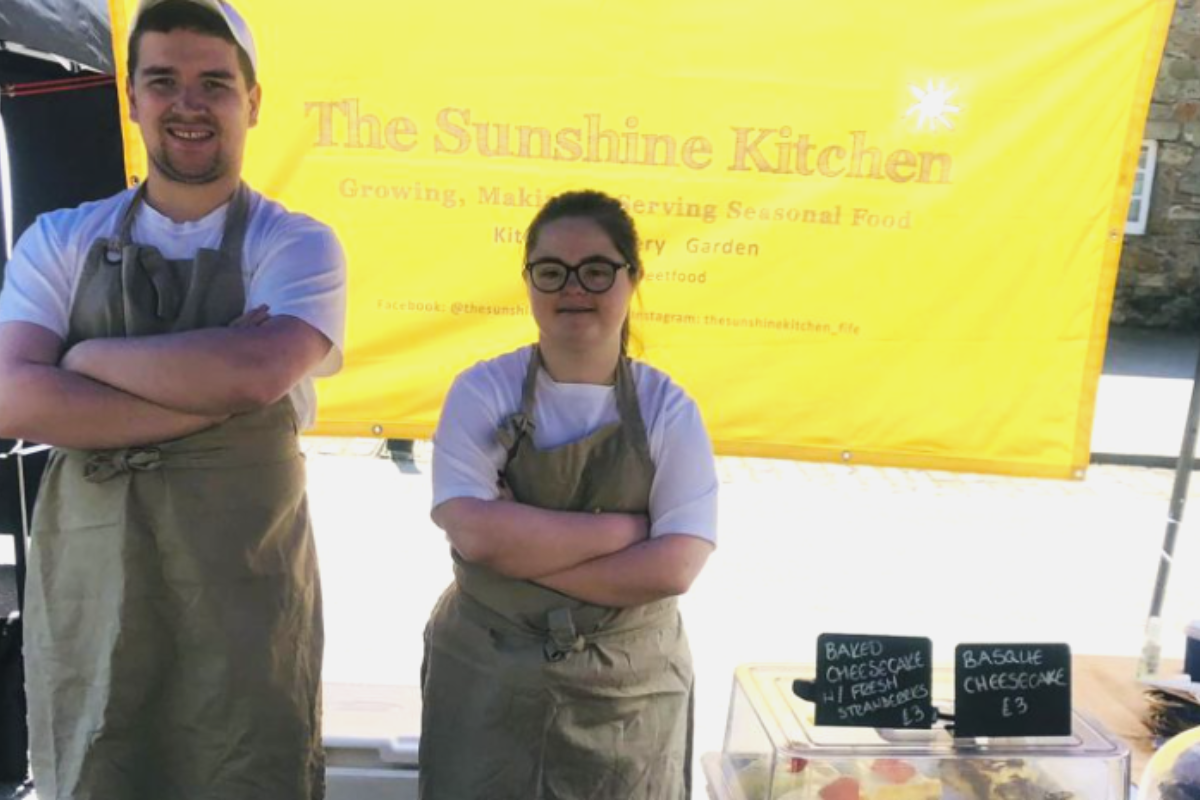
Young people standing next to a 'Sunshine Kitchen' sign with baked goods.

Building on our learnings from the exchange, we have identified the following actions for our own development:

Phased growth of income: We will explore a staged model of income diversification, beginning with modest trading activity and working gradually towards a greater proportion of self-generated revenue.
Market positioning: Our branding and marketing will prioritise the quality of our food offer, ensuring that customers buy from us first because of the product, with the added value of supporting a social cause.
Premises and facilities: Unlike Sunshine Kitchen, we already have our own premises, but to support growth we will need to furnish and equip a dedicated preparation kitchen. This will allow us to expand production capacity efficiently without the logistical challenges they faced.
Testing viability of new services: We will adopt a step-by-step approach, piloting new services carefully and
evaluating their commercial and social return before committing resources at scale.

Learning Outcomes

  • Diversified Revenue Streams – We aim to understand how a social enterprise can generate sustainable income from multiple services while maintaining its charitable mission. This includes exploring income sources, pricing strategies, and the balance between social impact and commercial viability.
  • Competition and Marketing Strategies – We will examine how the organisation positions itself in a competitive catering and market environment. This will cover approaches to branding, marketing channels, customer engagement, and strategies for standing out from competitors while securing repeat business.
  • Setting Up, Launching, and Lessons Learned – We will learn from the organisation’s experience of starting and growing its operations, including the practical steps taken, challenges encountered, solutions found, and key lessons. We will also seek advice that could guide our own expansion into new services.

"Engaging with The Sunshine Kitchen has given us valuable learning in three key areas: revenue diversification, marketing in competitive environments, and lessons from practical operational challenges. Across all areas, the central theme is maintaining social impact as the guiding principle, while exploring new pathways for sustainability and growth. Our next steps will put this learning into practice, ensuring we move towards greater financial resilience without compromising our mission."

News

Scotland’s first community-led marine conservation network

August 28, 2025

Blog by Sarah Docherty, Costal Communities Network Coordinator


The Coastal Communities Network (CCN) is a coalition of over 30 community-based organisations working to protect and restore Scotland’s coast and seas. This summer, they have been granted charitable status, becoming the first independent community-led marine conservation network in Scotland.

CCN formed as a result of a partnership between the Community of Arran Seabed Trust (COAST) and international conservation NGO Fauna & Flora. Both recognised the need for a space for community groups working on marine conservation and management to connect and share ideas, skills and experiences. The network officially launched in 2017 with eight members, and has now grown to 33 community based organisations based all around the coasts of Scotland, from Fair Isle to Berwickshire.

Working together, CCN members address a wide range of pressing issues, including the environmental impacts of salmon farming, unsustainable fishing practices, marine plastic pollution and the degraded condition of marine habitats.

Over the past eight years the network has gone from strength to strength and will now operate in its own right – having gained charitable status as a Scottish Charitable Incorporated Organisation (SCIO).

CCN achieving independent charitable status comes at a really pivotal moment for Scotland’s marine and coastal environment. With the2026 Scottish Elections on the horizon amidst the backdrop of a significant marine heatwave, we are reminded that the next Scottish Government will see us to2030, the critical year by which we have committed to halting biodiversity loss.

Our marine and coastal environments are in a critical state– over the past century, the amount of fish landed has declined steeply despite an increase in fishing effort, and seabird species have declined by 49% since1986, according to the State of Nature report. Coastal communities often witness first hand this deterioration, giving them a unique and crucial stake in marine decision-making.

To achieve our 2030 targets of halting biodiversity loss, we need an ecosystem-based recovery of our marine environment that empowers coastal communities and addresses local needs. Placing coastal communities at the core of decision-making can ensure that bold marine recovery efforts benefit nature, climate and people.

Case Studies

CAOLAS visit to Loch Broom oyster restoration

Engaging with community through oyster release sites

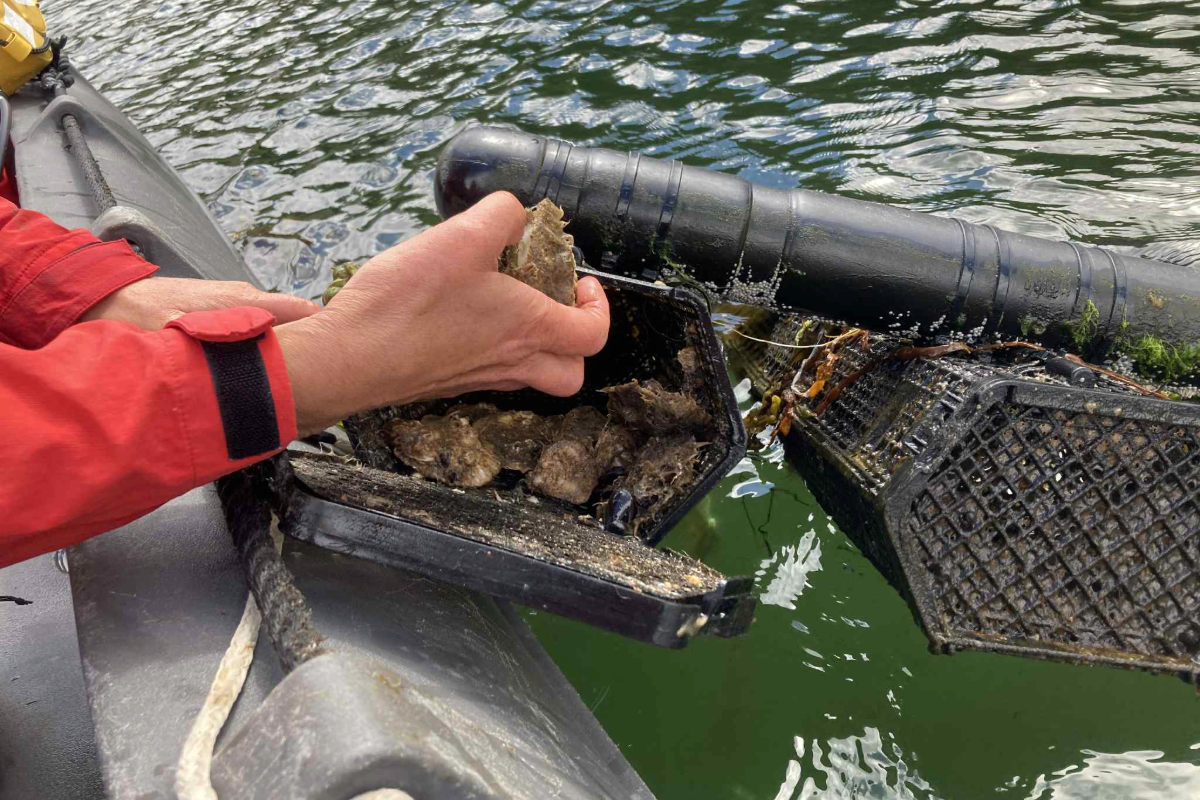
Oyster release site

Visiting the Loch Broom oyster restoration site gave us insight into new methods we could use for monitoring our own oyster release sites. This includes new ways to measure oyster mortality associated with natural predation, which we will use to inform site suitability for restoration. Loch Broom has only released a small cohort here, yet the site lends itself well to education sessions since it is more accessible compared to other release sites, and since children can be involved without great risk to the wider project. This is something we are now considering in our own loch to better engage the community in what we do. We also learnt about other outreach methods such as baiting a creel and investigating what it attracts, and using oyster hoisters at pontoons for easy public access to ‘exemplar’ oysters. With regards to training requirements to implement the methods we learnt about, it is unlikely that we need any additional training to go forward with these ideas.

Learning Outcomes

  • Analysis of methodologies used for monitoring.
  • How to effectively engage volunteers for personal growth and wider benefit to the community. Developing pro-environmental attitudes and behaviours to create a community of nature stewards.
  • Training requirements to implement appropriate methodologies.

"The sense of solidarity that emerged from our exchange provided a much needed boost to morale. It can be difficult pursuing active restoration in remote, rural locations such as Lochaline. Seeing the similar work being done and discussing the shared struggles allows us to feel as though we are connected. Having conversations about governmental policy and strategy associated with active restoration was another important benefit."

Case Studies

The Furniture Project (Stranraer) visit to Moray Waste Busters

Re-use and repair

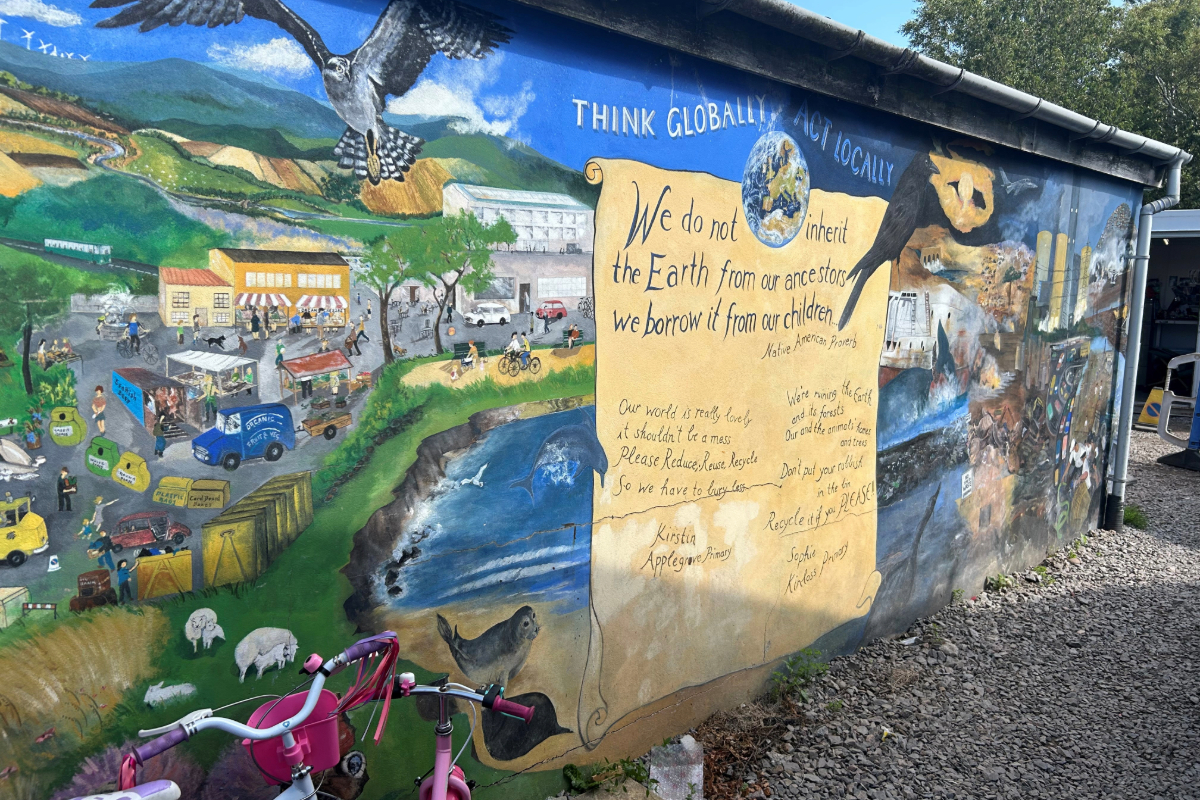
A wall mural of a circular economy

We found in general, we both attract similar customers, these can range from people purely looking for a bargain, to people on a tight budget to others who reuse for environmental reasons. We found we have a similar situation with kid’s books, these are made available free of charge to nurseries and schools as they run on very tight budgets. Moray also do discounts for local groups, this is a scheme we also run. At Moray they have a mixture of volunteers and paid staff, when they have a surplus in their income they look to employ to areas they need to grow, again this replicates what we do. Overall we found many similarities between the two sites and we are both at the same point where we need bigger premises. Moray have faced a challenge to find
a suitable premises to move to but have finally hit the jackpot with an asset transfer to a disused call centre building that is more than large enough, it also has a functioning café inside and car parking for 450. They hope to be up and running by Spring 2026 in the new building and will retain the current building to use as a warehouse.

Learning Outcomes

Insight into Business Operations:

-Observe how inventory is sourced, sorted, and priced. – Understand customer behaviour and what types of reused items are in demand. – See how marketing, display, and storytelling are used to attract eco-conscious shoppers.

Learn about Community Engagement and Social Value:

– Discover how reuse shops often support charitable goals or local employment. – Observe how businesses engage with volunteers, schools, and other groups. – Explore how social enterprises blend surplus with purpose, making positive change.

Discuss the plans for expansion:

– At what point was it clear that expansion was necessary? – Was there any community consultation? If so what did you do? – What if any hurdles have you faced so far?


"We are now looking at how we can change the layout of our sales area to allow people to explore the items more rather than for example coming in to look for a teapot, going to that section, getting one, paying and leaving. We also felt reassured that the way we work and the plans we have for our new build mean we are heading in the right direction and are in line with our peers."