Case Studies

A Heart for Duns exchange to Action Porty

Managing old building as community venues

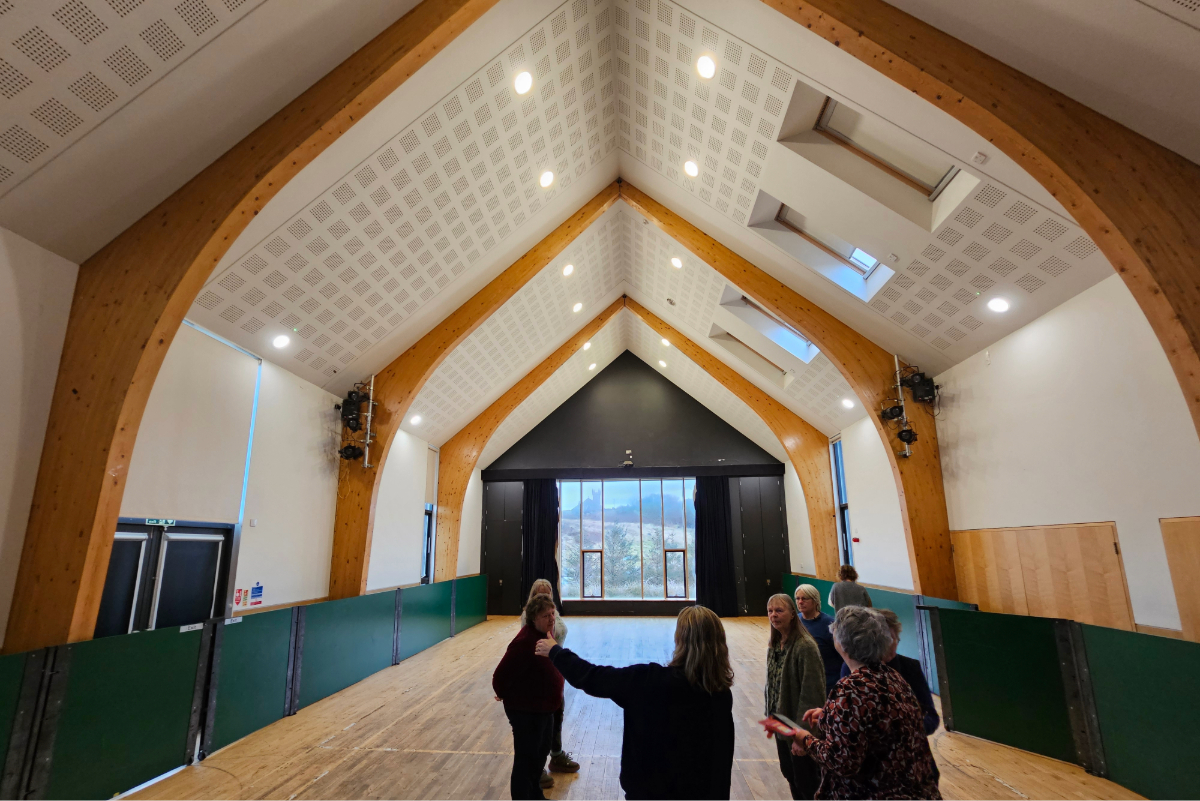
Community owned building in Duns known as 'A Heart for Duns'

Extensive discussion was had about all aspects of how Action Porty run & manage their venue including staffing structures etc. Trustees from A Heart for Duns (AHFD) shared information about our processes and structure. It was reassuring for us to hear that both organisations face similar staffing and volunteer issues but that our approach to managing these was similar. Both of us are moving towards creating an operations manager post. Action Porty shared their volunteer coordinator job description as we are hoping to also create such a post, pending funding.

It was interesting to hear their planned approach to taking on the Old Police Station in that they are not going to make any physical changes to the building initially but aim to move in and rent out space as it is currently configured. This is an approach we hadn’t considered & may be appropriate for an empty building in Duns that the community are interested in exploring with regards possible community ownership. There was a brief talk about their use of community conversations as part of their consultation process – this is something we agreed we would revisit with them at a later date.

Learning Outcomes

  • Insight into the staffing structure of another organisation managing a similar community asset, and the relationship between trustees and staff.
  • We know that Action Porty have been looking at taking a second building into community ownership and are interested to learn more about the community consultation and engagement process they have undertaken around this project.
  • We have been trying to raise funds to undertake a large scale capital refurbishment of our building. We know that Action Porty have recently started their own refurbishment project so want to find out how they went about financing that – including their use of community shares.

"The trip provided an opportunity for A Heart for Duns trustees to spend time with each other outwith formal meetings which enabled wide ranging discussions to happen that are hard to have during structured meetings. We all got to know each other better & have a deeper understanding of our different motivations in being on the board. We also picked up ideas for managing donations from the meeting venue, an unexpected outcome."

Case Studies

Community Land Scotland member exchange

Navigating long-term engagement, transparent governance, and generational renewal in practice.

A group visiting a community owned building in Kinlochleven

This Gathering was the third in our series of regional residential exchanges. While the CLE funding formed part of the overall event budget, it was particularly important in enabling the study visit hosting and covering most delegate travel costs. This was critical to ensuring that groups from across Argyll and Lochaber, the Inner Isles, and surrounding areas were able to participate fully. As with earlier events, funding directly enabled the mix of study visit, structured discussion, and informal network-building that defined the experience.

Peer discussion remained central to the programme’s impact. Across formal sessions and informal conversations, delegates explored shared challenges in governance, board capacity, relationships between staff and trustees, and long‑term organisational sustainability. Several participants noted that hearing from other trusts at different stages of maturity exposed them to new approaches to leadership, joint working, and organisational development. The open, honest nature of discussion was widely valued.

The study visit to Kinlochleven CDT produced especially meaningful learning. Delegates emphasised how helpful it was to hear directly from the Trust about long‑term land, housing, and organisational challenges, and to experience these issues in their local context.

Learning Outcomes

  • Delegates will deepen their understanding of effective, ongoing community engagement, drawing on practical examples from the study visit and peer discussion, and identify approaches they can adapt within their own organisations.
  • Delegates will strengthen their thinking and planning around succession, including how to encourage new people into leadership roles, support volunteer development, and build long-term organisational resilience.
  • Delegates will build meaningful peer connections with other community groups, with dedicated time together -including shared travel – helping to form relationships that support continued learning, collaboration, and problem-solving beyond the event.

"The peer support offered through this exchange has strengthened our regional connections. The reassurance you receive of discovering common ground with other trusts is invaluable."

Case Studies

Community Land Scotland member exchange

Strengthening ongoing community engagement and succession planning

A group of people standing on a country road in Assynt with hills and mountains behind them.

This event was the second in our series of residential Gatherings. While the CLE funding formed part of the overall event budget, it was particularly important in enabling the study visit hosting and covering most delegate travel costs. The study visit to Assynt Development Trust in Lochinver acted as the central anchor for the two-day programme.

Delegates consistently highlighted the value of visiting Assynt Development Trust projects in action, including housing, enterprise activity and environmental initiatives. Seeing completed and evolving projects provided tangible examples of long-term community engagement and resilience.

Participants reflected on shared challenges in volunteer capacity, leadership transition, and engaging younger generations. Hearing from groups across the Highlands and Islands helped normalise these challenges while surfacing practical responses.

The study visit provided concrete insight into how communities overcome practical barriers, including long development timescales, funding complexity, and governance pressures. Seeing projects such as housing developments, environmental initiatives and enterprise activity operating in challenging circumstances helped translate abstract policy discussions into real-world application.

Learning Outcomes

  • Delegates will deepen their understanding of effective, ongoing community engagement, drawing on practical examples from the study visit and peer discussion, and identify approaches they can adapt within their own organisations.
  • Delegates will strengthen their thinking and planning around succession, including how to encourage new people into leadership roles, support volunteer development, and build long-term organisational resilience.
  • Delegates will build meaningful peer connections with other community groups, with dedicated time together — including shared travel — helping to form relationships that support continued learning, collaboration, and problem-solving beyond the event.

"The exchanges helped surface broader sector reflections- such as environmental sustainability, estate-scale engagement, crofting land management, and the implications of emerging land legislation. We noted the value of connecting with people we had previously only known remotely, which strengthened our existing professional relationships."

Case Studies

Greener Duns visit to Stow Community Trust

Gaining understanding of how to develop larger scale projects

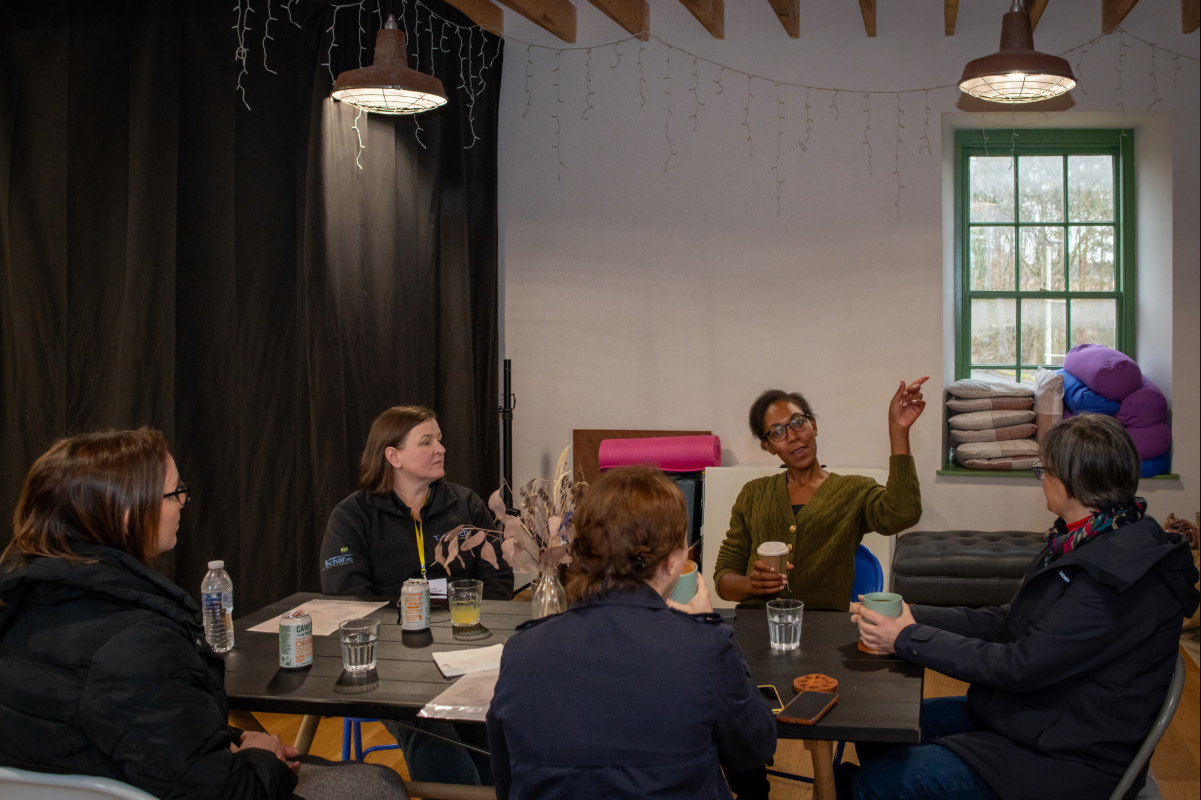
A group of 9 people sitting round a table in discussion

We discussed the cycle hub & pump track in Stow which is proving to be very popular, attracting people from Stow & the wider area. We compared the different aspects of our communities & considered our options to develop similar schemes in Duns. The lead at Stow Disrupters gave a very thorough talk about how the local schools are involved in environmental projects on a weekly basis which is something we are taking back to our contacts at Duns Primary School. The learning exchange benefited all participants by building solid relationships that will enable future dialogue.

Learning Outcomes

  • There are a number of empty properties in Duns which are of interest to several community led organisations in the town. We want to gain an understanding of what would be required to take ownership of an empty building and turn it into a sustainable community asset by learning about the Stow Station Building project.
  • The Duns & District Local Place Plan indicated a desire from the community for an e-bile scheme. We are keen to learn how such a scheme works in Stow to see if it might be possible for Greener Duns to take the lead on developing a scheme in Duns.
  • We are currently working with Duns Primary School on a number of small projects and would like to find out more about the relationship between Stow Community Trust and Stow Primary School through the Stow Disrupters project.

"Since arranging our visit to Stow there have been discussions about the use & Community Asset Transfers of a number of council owned buildings in Duns. Stow Community Trust shared their experiences of acquiring the old station building for use as a community asset which has been very difficult. With this background it seems the decision to acquire a dedicated building for Greener Duns is premature at this time."

Case Studies

9CC Group visit – Coalfields Regeneration Trust

Community Wealth Building in former coalfield communities

An image of a front page report showing a business unit and text reading 'Building Community Wealth in East Ayreshire

The 9CC Group are looking seriously at financing the new-build of Industrial units located on vacant brownfield sites within our former coalfield communities of the Cumnock & Doon Valley.

The learning exchange allowed us to explore justification of NEED and Evidence of DEMAND required prior to the 9CC Group progressing with any investment into the new-build of industrial units. The building of Business units on former Coalfield sites seems to be a very successful model particularly when multiple partners and multiple funding streams are available and accessible.
Bothy the 9CCG and Coalfields Regeneration Trust have agreed to pursue this partnership approach and will submit a funding bid to UK Government’s Local Growth Fund for financial assistance towards this project. The 9CCG will seek approval from our Board to direct funds from our Strategic Area Fund into this project also.

2. The 9CC Group learned what Economic and Social values would be increased.
Inward Investment would be £4M+
Regenerate a former vacant brownfield site X 1
39,000 Sq Feet to be re-used

3. What types of Business Start-ups will be using this facility
Preferential rates will be offered to Young People residing in our former coalfield communities for business start up premises

Learning Outcomes

1. Justification of NEED and Evidence of DEMAND would all be required prior to the 9CC Group progressing with any investment into the new-build of industrial units
–  Is this major project affordable
– The strength of any potential; partnership with CRT

2. The 9CC Group need to know what Economic and Social values would be increased.
– how many jobs created / supported
– how many acres of vacant brownfield land to be re-used and regenerate
– how much inward investment this will bring
– investing in brownfield site making PLACE more attractive
– Can we support more Young People into jobs

3. What types of Business Start-ups will be using this facility
– Can we encourage more social enterprises
– Can we encourage and support more women to start up their own enterprises
– Can we support more Young People to start up their own enterprises


"As a result of the exchange, we now have a proactive agreement in place to proceed with this project. CRT management staff will present at the next 9CC Board meeting to submit a joint funding application to the Local growth Fund, further site visits on location for new-builds in East Ayrshire and agree terms of reference for our Partnership Agreement."

Events

Local People Leading

Scottish Community Alliance landmark parliamentary event

SCA logo

Local People Leading

27th February 2026, Scottish Parliament

Delegate list (of those who gave consent for details to be shared)


Delegate Name  Organisation
Nick Addington (he/him) William Grant Foundation
John Aitchison (he/him) Coastal Communities Network Scotland
Melanie Allen SCOTO
Juliana Amaral (she/her) Borders Community Action
Laura Anderson (she/her) Circular Communities Scotland (Board)
Betty Andrews (she/her) Women’s Aid Orkney
Eugenie Aroutcheff Grow 73
Joana Avi-Lorie (she/her) Scottish Communities Climate Action Network (SCCAN)
Finlay Bain Kerr Strathclyde Institute for Sustainable Communities
Nancy Barr Larkhall Community Growers
Lucas Batt (he/him) Greater Community Media
Ellis Beardsmore (they/them) Proud Futures
Nicola Bell (she/her) Scottish Parliament
Chani Bond (she/her) Givin’ it Laldie
Phil Bowen Midlothian View
Evelyn Bowes (she/her) Scottish Government
Sheena Boyd (she/her) DTAS and New Cumnock Development Trust
Lauren Brook (she/her) Greener Kirkcaldy
Dan Brown (he/him) Creative Lives
Malcolm Bruce Peebles Community Trust
David Bryan Social Enterprise Academy
Colin Buchanan Isle of Luing Community Trust
Chloe Bukata (she/her) Wellbeing Economy Alliance Scotland
Steve Byrne (he/him) TRACS (Traditional Arts and Culture Scotland)
Steve Callaghan (he/him) Dunfermline Men’s Shed
Linda Cameron Glasgow West of Scotland Forum
David Cameron (he/him) Cairngorms NPA / Cairngorms Trust
Liz Campbell Castlemilk Credit Union – Scottish League of Credit Unions
Nathaniel Campbell-Scott-Howells (he/him) St. Fittick’s Park SCIO
Jayne Chappell (she/her) Social Enterprise Scotland
Alvina Chibhamu (she/her) Meaningful Participation Panel (MPP)
Ailsa Clark Inspiralba / RuralSEHub
Ruth Cluness (she/her) Udny Community Trust
Joe Cluxton (he/him) FEL Scotland
Kelvin Cochrane Handicabs Lothian
Paul Fisher Cockburn C&B News
Douglas Cook (he/him) Climate Café® Network
Ian Cooke Acorns2Trees
Elspeth Coutts West Stormont Woodland Group
Richard Cross (he/him) Save Our Green Space
Suzanne Cross (she/her) Save Our Green Space
Chris Dalglish (he/him) South of Scotland Community Housing
Rhiannon Davies (she/her) The Scottish Beacon / Greater Community Media CIC
Maria de la Torre Knocknagael Ltd
Charly Dempster Scottish Communities for Health & Wellbeing
Susan Dever Coalfield Community Transport
Florence Dioka Central and West Integration Network SCIO
Josh Doble Community Land Scotland
Elizabeth Docherty (she/her) Scottish Community Alliance
Sarah Doherty (she/her) Coastal Communities Network
Lyn Donnelly (she/her) VisitScotland
Becky Duncan Open Aye
Craig Dunn SCCAN
Amanda Eleftheriades-Sherry (she/her) Clydesider Creative CIC
Monty Erskine (he/him) Carna Coast & Communities
Lou Evans GrowGreen Scotland
Allan Farmer (he/him) Corra Foundation
Fash Fasoro (he/him) The DataKirk
Murray Ferguson Culduthel Woods Group, Inverness
Claire Finlayson Public Health Scotland
Ruby Flatley (she/her) Climate Cafe
Jody Fleck (he/him) Scottish Government
Anna Fowlie (she/her) SCVO
Luke Fraser Scottish Islands Federation
Tamara Fulcher Planning Democracy
David Gardner (he/him) Scottish Men’s Sheds Association
Nicki Georghiou (she/her) Scottish Parliament
Kathleen Glazik Scottish Government
Fiona Gordon Acorns2Trees
Bill Gordon Acorns2Trees
Fiona Grahame Orkney News Ltd
Kate Gray (she/her) Wasps
Donald Gray One Seed Forward
Rachel Green (she/her) The Ripple Project
Steph Greer (she/her or they/them) SHMU – Station House Media Unit
Gill Gunn Scottish Government
Donald Hall Badenoch and Strathspey Community Connections
John Halliday Community Renewal Trust
John Hamilton GWSF
Jackie Hamilton CHAF
Matthew Hannon The Strathclyde Institute for Sustainable Communities
Cornell Hanxomphou (he/him) Environmental Rights Centre for Scotland
Angus Hardie (he/him)
Ian Harley (he/him) Climate Action Strathaven
Louisa Harvey (she/her) Scottish Government
Chris Heardman Linnhe Leisure
Lara Henderson (she/her) Community Transport Association
Evelyn Henderson-Child (she/her) Centre for Local Economic Strategies
Lesia Herasymchuk SEAG
Sharon Hill (she/her) Mayfield and Easthouses Development Trust
Zoe Holliday (she/her) Community Energy Scotland
Mandy Holloway Kilsture Forest Community Group
Andy Inch University of Glasgow
Samurath Jabir (he/him) InspirAlba/RuralSEHub
Samar Jamal (she/her) Greater Govanhill
Jan Jasinski  (he/him) Strathclyde Institute for Sustainable Communities
Jill Keegan (she/her) Scottish Community Alliance
David Kelly (he/him) Community Transport Association
Becky Kenton-Lake (she/her) Stop Climate Chaos Scotland
Simon Kenton-Lake (he/him) Nourish Scotland
Helen Keron (she/her) Scottish Rural Action
Aaron Kerr (he/him) Thistle Credit Union
Caroline Kingston (she/her) Scottish Parliament
Lynne Laing Moray Ocean Community – Moray Firth
Teri Laing (she/her) Forgan Arts Centre
Matthew Lawson (he/him) Greener Kirkcaldy
Euan Leitch SURF – Scotland’s Regeneration Forum
Matt Lewis Circular Communities Scotland
Greig Liddell Scottish Parliament Information Centre
Suzanne Lofthus Cutting Edge Theatre
Thania M. Flores (she/her) Trimontium Museum
Amanda MacArthur (she/her) The Highland Weigh
Katie MacGregor (she/her) Royal College of Occupational Therapists
David Mackay HI-Scot
Jo MacKichan Caolas
Helen MacKinnon Barra & Vatersay Area Forum
Sarah MacLean (she/her) Bùth Bharraigh
Jemma MacVicar (she/her) Galson Estate Trust
Tia Manavis (she/her) Third Sector Interface (TSI) Scotland Network
Michael Marshall Kingsmeadows SCIO
Janet Marshall Scottish Island Federation
Tina Marshall (she/her) Tina Marshall Consultancy Ltd.
Alice Mathewson North Yell Development Council
John McCafferty Scottish Communities for Health & Wellbeing
Jennifer McCann (she/her) Cunninghame Housing Association
Annie McCormack (she/her) Broke Not Broken
Margaret McCulloch Climate Cafe Lochgilphead
Brian McDougall Udny Community Trust Company Ltd.
Linda McGlynn (she/her) YoMo Young Movers
David McHarg RETUNE SCIO
Paul McIlvenny Include Me 2 Club
Neil McInroy (he/him) Democracy Collaborative Foundation Inc
Catriona McKay Kingsmeadows SCIO
Ewen McLachlan Assynt Development Trust/ DTAS/Northwest2045
Kirsty McLuckie Oban Youth Cafe
Margaret  Mcneill New College Lanarkshire
Mags McSporran Highlands and Islands Enterprise
Cameron Mellowes (he/him) Scottish Government
Angela Mercer (she/her) Arkaig Community Forest
Phyl Meyer (he/him) Urras Thiriodh (Tiree Community Development Trust)
Jill Miller Creative Lives
Helen Moore (she/her) Scottish Contemporary Art Network
Karen Moore GrowGreen Scotland
Olivia Morgan (she/her) Nourish Scotland
Helen Morrison DTAS
Rachel Muir Community Land Scotland (Natural Capital Community Partnerships)
John Munro Gorbals Writing Group
Graeme Murray Cowal Community Energy
Wendy Murray East Haven Together
Grace Murray (she/her) Stow Community Trust
Liz Murray (she/her) Community Energy Scotland
Kate Musgrave South of Scotland Enterprise
Eloise Nutbrown (she/her) Scottish Government
Brendan O’Hanrahan SRA
Dermot O’Neill Scottish League of Credit Unions
Kimberley Palmer (she/her) Scottish League of Credit Unions
Artemis Pana Scottish Rural Action
Delphi Parker (she/her) New College Lanarkshire Student’s Association
Andrew Paterson (he/him) Scottish Community Development Centre
Andy Paterson (he/him) Social Enterprise Scotland
Vanessa Paynton (she/her) Art in Healthcare
Jess Pepper (she/her) Climate Café® Network
Rebecca Plant (she/her) Coastal Communities Network
Carolyn Powell (she/her) Huntly Development Trust
Zahida Purves (she/her) Nourish Scotland
Pete Rawcliffe (he/him) NatureScot
Wendy Reid A Heart for Duns
David Reilly (he/him) Poverty Alliance
Lyza Riddell (she/her) Marr Area Partnership
Neil Ritch (he/him) National Lottery Community Fund
Brian Robertson-Fern BRAG Enterprises
Andy Rockall Community Woodlands Association
Gavin Ross (he/him) Scottish Government
Graham Ross (he/him) THRE – Third Sector Human Rights and Equalities
Colleen Rowan Glasgow & West of Scotland Forum of Housing Associations
Anand Sajeevan Community Energy Scotland
Pasna Sallis Weekday Wow Factor
Jenny Salmean (she/they) Deveron Projects
Bobby Sandeman (he/him) KLTR
Chris Sanderson (she/her) Development Trusts Association Scotland (DTAS)
Toby Sandison Crown Estate Scotland
Michaela Scott (she/her) Forth Valley & Lomond YLAG – SRA
Duncan Shaw Safe Harbour Inverclyde
Drew Smart (he/him) Glenfarg Community Transport Group
Hazel Smith (she/her) All Roads Lead to Whithorn
Diane A Smith SCOTO – Scottish Community Tourism Network
Pauline Smith Development Trusts Association Scotland
Mhairi Snowden (she/her) The National Lottery Community Fund
Netty Sopata (she/her) Fios Newspaper
Lizzy Spence (she/her) Jock Tamson’s Gairden
Phyllis Stephen (she/her) The Edinburgh Reporter
Sheena Stewart Uist Council of Voluntary Organisations (UCVO)
Jaci Stewart Dundee Climate Cafe
Alexis Stroemer Traditional Arts and Culture Scotland (TRACS)
Clare Symonds Planning Democracy
Claire Taylor GWSF (Glasgow and West of Scotland Forum)
Max Taylor Crail Matters
Andrew Thin (he/him) Crofting Commission
Carron Tobin (she/her) SCOTO – Scottish Community Tourism Network
Mary Troup (she/her) Climate Cafe Network
Augustijn van Gaalen (he/him) SURF – Scotland’s Regeneration Forum
Fabio Villani SCCAN (Scottish Communities Climate Action Network)
Catriona Waddington (she/her) Wild Skies Shetland/SCOTO
Karen Wallace Right Way Credit Union
Kim Wallace (she/her) Social Enterprise Scotland
Douglas Westwater Community Enterprise
Richard Whitcomb (he/him) Bute Community Land Company
Sam Whitmore Public Health Scotland
John Williams Cassiltoun Housing Association
Angela Williams Langholm Initiative
Ross Wilson Community Land Scotland
Valerie Wilson Maryhill Housing Association and West of Scotland Housing Association
Kate Wimpress North Edinburgh Arts
Donna Wood (she/her) Good Green Futures
Douglas Worrall Community Woodlands Association
Siobhan Wright Caledonian Credit Union
Anna Wylie Longloch Farming Limited
Julie Young Argyll Countryside Trust

Book here

Case Studies

Greener Kirkcaldy visit to EATS Rosyth

Strengthening understanding and collaboration

A group of 9 people smiling and waving to the camera behind planter boxes and a sign for 'The Livingroom' cafe

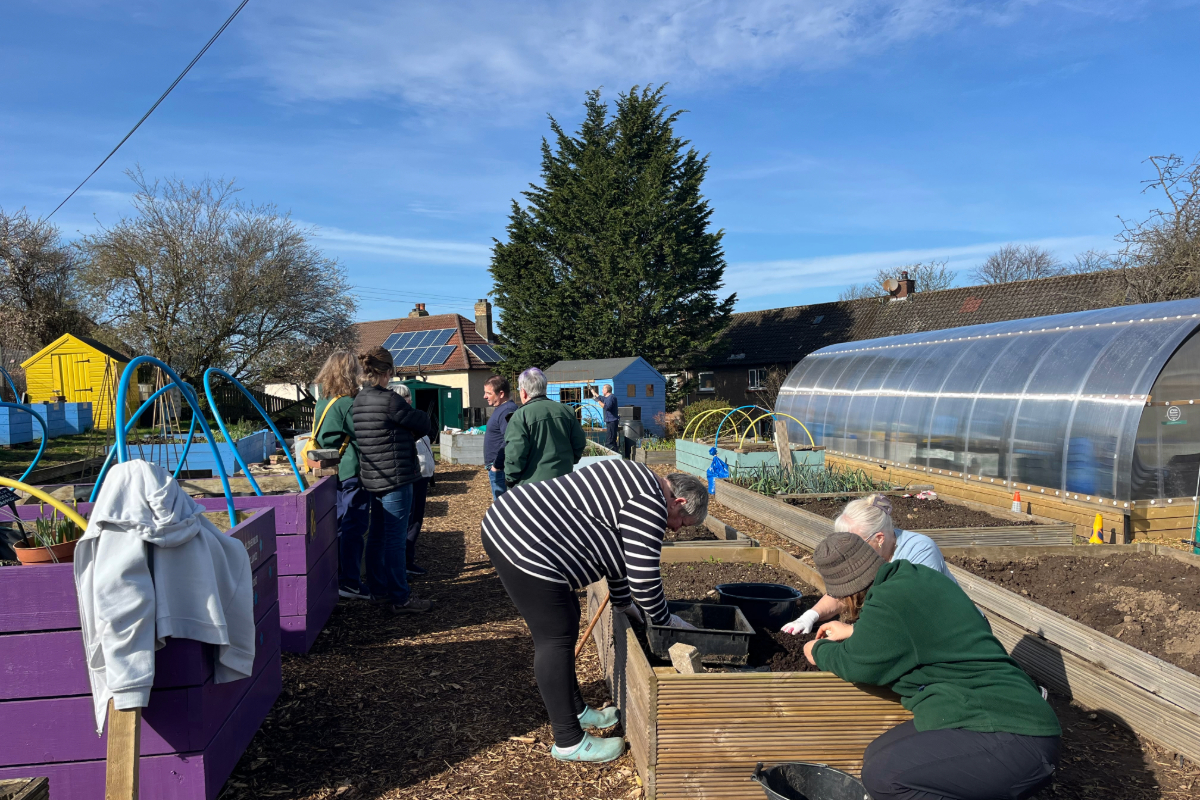
EATS Rosyth’s spaces feel very community-led, particularly their growing spaces, with some key volunteers feeling ownership almost as much as the staff. We would like to work towards this at GK, so it was interesting to hear their reflections on the time and circumstances needed for this to happen. We at GK are very consultative with our community but perhaps take their ideas and run with them more than supporting community members to develop the ideas themselves, which might mean they retain more ownership. EATS also work with schools and young children a lot more, meaning the community members they engage come from a broader spectrum, which means they continue to develop projects in a different way to us despite having similar aims and spaces.

Learning Outcomes

  • Explore how EATS Rosyth have developed successful food social enterprise activities.
  • Learn from EATS Rosyth’s approaches to delivering a variety of food and growing funded projects, including how they support and manage the volunteer teams vital for success.
  • Improve our understanding of how a peer project ensures they continue to be community led – how they engage with their local community and develop in response to their needs.

"It was interesting to compare the benefits and challenges of relying on volunteer 'manpower' for delivery between our two organisations, and the staff and systems they have in place for volunteer development and support. It was also really good to see their growing spaces, which are in some ways similar to our own, but more volunteer-led than ours. All our management team now have a better understanding of EATS Rosyth, who have become a key partner of ours for more collaborative opportunities."

Case Studies

Community Land Scotland member exchange

Navigating long-term engagement, transparent governance and generational renewal in practice.

Two people standing in front of a white 4x4 ranger with the Tarras Valley nature reserve surrounding them

The study visit to Langholm Initiative and Tarras Valley Nature Reserve provided a powerful and practical demonstration of long-term, inclusive community engagement in action. Seeing the site in use, hearing directly from those involved, and discussing engagement challenges and approaches with peers helped delegates critically reflect on their own practice. Many participants highlighted specific insights they planned to take forward, including approaches to youth engagement, the value of diverse engagement methods, and accepting the “messiness” and long timescales inherent in community-led development. Several delegates described leaving feeling re-energised and more confident in the value of sustained engagement work.

Succession was explored through both structured discussion and informal peer exchange, with delegates valuing the opportunity to learn from organisations at different stages of development. Feedback highlights increased confidence and clarity around encouraging new people into leadership roles, supporting volunteer development, and finding practical ways to include younger voices in governance. Peer discussion helped normalise shared challenges around capacity and leadership transition, while also surfacing adaptable ideas that delegates intend to take forward within their own organisations.

The exchange was particularly effective in building meaningful peer relationships. Delegates consistently highlighted the value of connecting with others facing similar challenges in what can often feel like an isolated sector

Learning Outcomes

  • Deepen understanding of effective, ongoing community engagement, drawing on practical examples from the study visit and peer discussion, and identify approaches they can adapt within their own organisations.
  • Strengthen thinking and planning around succession, including how to encourage new people into leadership roles, support volunteer development, and build long-term organisational resilience.
  • Build meaningful peer connections with other community groups, with dedicated time together -including shared travel – helping to form relationships that support continued learning, collaboration, and problem-solving beyond the exchange.

" The exchange strengthened regional connections. We experienced the value of understanding what else is happening locally and identifying opportunities for future collaboration, mutual support, and learning visits. These emerging connections represent a longer-term benefit of the exchange, supporting continued learning and resilience across the network."

Case Studies

Connected Hubs exchange

Building a Connected Hubs network for resilient community spaces

7 people standing together smiling beside a community hub with tress behind them

From the outset, our intention was to strengthen peer learning and deepen shared understanding across hubs, and this came through clearly in how people engaged. Through structured sessions and informal time together, we learned how different hubs really operate day to day. Not just how their models look on paper, but how they balance competing demands, respond to local pressures and adapt to the realities of their place.

Conversations around sustainable hub operations were particularly rich. Operational pressures quickly surfaced as a shared challenge, with open discussion about staffing, front-of-house hosting, systems, infrastructure and capacity. We explored the ongoing tension between development time and delivery time, the importance of keeping digital systems simple and affordable, and the reality that staff wellbeing and retention are fundamental to long-term sustainability. These were not abstract conversations, but practical ones, grounded in experience and shaped by comparison, problem-solving and peer-tested insight that people could take back into their own contexts.

It strengthened peer learning, built practical operational knowledge, deepened our understanding of membership and community, and laid the foundations for ongoing collaboration. In doing so, it created value not only for the hubs and leaders involved, but for the communities we serve and the wider ecosystem we are all part of.

Learning Outcomes

  • Practical Toolkit on Rural Hub Operations: Participants will co-create a toolkit with practical guidance on remote working, community engagement and staff wellbeing in resource-scarce contexts.
  • Shared Digital Case Study: A co-produced narrative and visual case study from the Dundreggan visit will document learning on regenerative practice, community leadership and resilience.
  • Formation of a Micro-Collaboration Group: 3–4 hubs will commit to exploring joint projects around climate, nature or rural innovation, extending the exchange into long-term peer support and experimentation.

“I have been on the verge of packing it all in for a year, as running a space isn’t stacking up in this climate. However, meeting others in similar positions, who share an understanding of the technical challenges and motivations behind running co-work and collaboration spaces in communities has helped. I know we have a long way to go with the network, but feeling I might make it until next year’s meeting now.”

Case Studies

Health & Wellbeing group exchange visit to Cranhill Development Trust

Using health & wellbeing as guiding approached for community engagement and staff welfare

A group of people standing outside on a public walkway with a kids park and 3 high rise blocks in the distance.

This exchange provided us with the opportunity to learn how to use effective community engagement to build a service offer for your community that is health and wellbeing centred. The exchange also had an internal focus, looking at how staff welfare is reflected in the organisation’s values and strategy. The exchange widened participants’ knowledge on participatory engagement and placemaking principles and helped kickstart ideas of how to develop this within their communities.

Learning Outcomes

  • Explore how designing effective participatory engagement can build trust, inclusivity and drive community-led action to shape health and wellbeing service design and outcomes.
  • Gain a deeper understanding of placemaking and place-based principles to ensure communities have a stronger role in and control over their social, economic and cultural wellbeing.
  • Learn about how our engagement with staff welfare has shaped our organisation’s values and strategy.

"The section on staff welfare was very helpful, we have now looked to implement some of the suggestions within our organisation to improve staff wellbeing and create a robust, resilient staffing cohort."