Case Studies

Farr North Community Development Trust visit

Sharing knowledge and expertise for community led housing projects

A person standing next to Communities Housing Trust pop up banner

The learning exchange helped to identify several possible sites to explore for Community Led Housing. It also allowed us to further promote the Housing Needs Assessment Survey currently being undertaken and gather information from attendees on local housing needs. Other learning included a better understanding of the Rural Housing Burden and how an allocation policy can help meet the communities housing aims. It also gave information on options for managing Community Housing, which was well received as this was a concern for some people attending.

Learning Outcomes

  • The communities will be made aware of existing Community Led Housing projects through discussing case studies. This will highlight the differing tenure options available to communities and the mechanisms by which they can allocate and manage properties.
  • The community will be informed about the process of developing Community Led Housing through discussing a route map. This will highlight the typical stages and processes communities will need to go through to be successful in delivering houses.
  • The communities will be informed about the funding mechanisms available to support the development of Community Led Housing. This will highlight the capital and revenue funding available during land purchase, project development and construction

"Overall the exchange has increased community knowledge and awareness of Community Led Housing and how it may be a potential solution to housing issues locally. Written materials were taken away by attendees to discuss with other groups and for those that couldn't attend."

Case Studies

ScrapAntics visit to Transition Stirling and Good Green Futures

Hands-on learning through recycled materials and skill-sharing opportunities for volunteers.

A group of people standing round a sculpture of Stirling re-use Hub

This was a hugely beneficial trip. It helped us see another organisation that runs in a similar way to us and see how they work and process their donations. It has given us a few ideas we can implement in our space. Spending the day together as a team was invaluable. Most people don’t get to meet each other as they work different shift with very little overlap. It was so good for everyone to get to meet and know each other outside of the workplace- especially participating in a creative workshop.

Learning Outcomes

  • Operational Learning: understand and document new approaches to sorting, organising, displaying, and pricing donated goods that could improve efficiency and visitor experience at ScrapAntics.
  • Team Development: strengthen team cohesion, communication, and morale by spending time together, learning, and connecting outside of our usual work environment. Also sharing a meal together and taking that time to sit with each other and have the time and space for connecting conversations to unfold.
  • Sector Connection and Inspiration: build lasting relationships with Transition Stirling and other circular economy initiatives, exploring potential collaborations and new ideas to bring back to Dundee.

"By visiting the Reuse Hub, Good Green Futures and the Made in Stirling shop, we gained valuable insights into how a similar community reuse organisation manages donations, sorts and organises stock, displays and prices items, and runs its day-to-day operations. This helped us identify new approaches to improve efficiency, presentation, and community engagement within our own project in Dundee."

Case Studies

European Rural Parliament learning exchanges

Scottish Community Led Local Development on the ground showcased in the European Rural Parliament

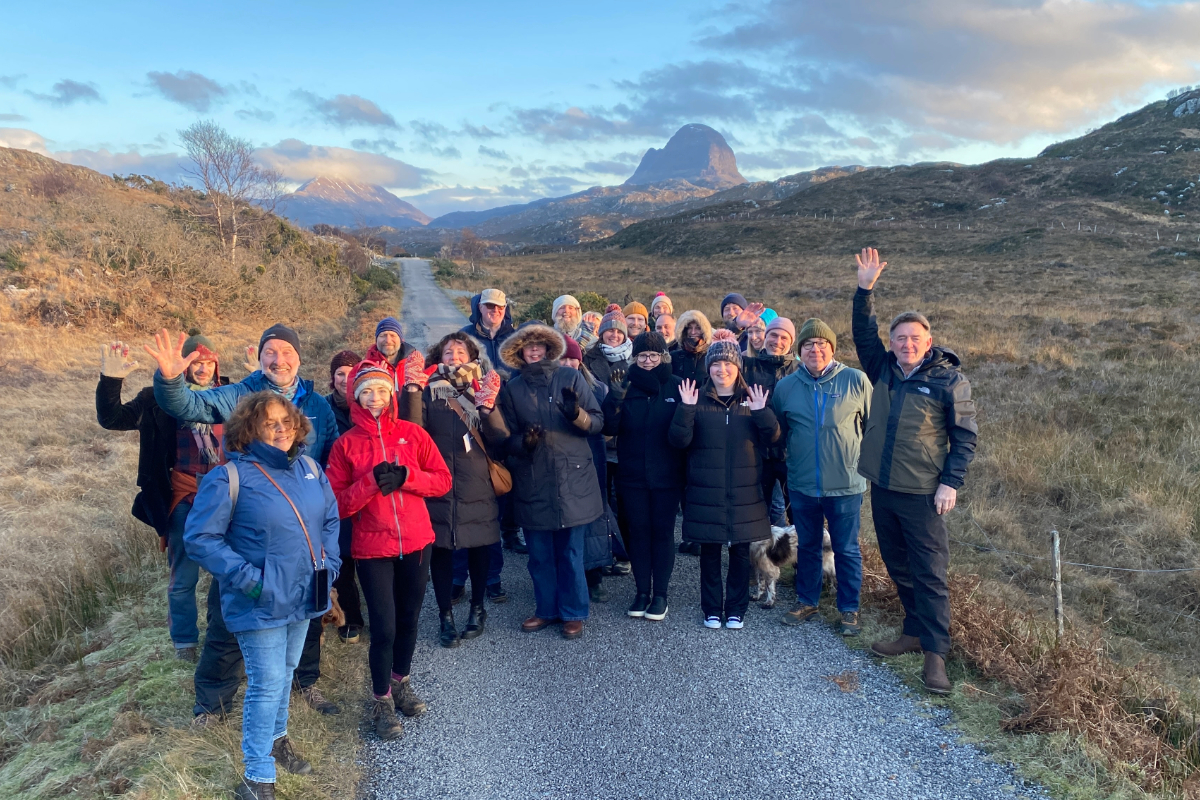
A group of people standing by a river

Chosen for its communities and enterprises that exemplify the theme of the 6th European Rural Parliament (ERP) — ‘Rural Community Solutions to Global Challenges’ — the North East of Scotland provided a rich platform for learning and dialogue. Eleven learning exchanges across Aberdeenshire, Angus, Moray and the Cairngorms National Park showcased excellence in rural practice, bringing the programme’s themes to life. These immersive and engaging study visits helped shape the Declaration of Inverurie, a bold vision for Europe’s rural future, and reflected the hard work and collaboration of the organisations that designed and curated the 6th ERP.

The CLE Fund supported four of these learning exchanges, focusing on community-led tourism, culture, land management, and health and wellbeing. Each study trip involved 25–35 delegates and enabled host communities to share best practice, build connections, and develop future partnerships. The visits demonstrated the power of peer-to-peer learning in addressing shared challenges, inspiring practical solutions that can influence policy.
Collectively, the exchanges strengthened the narrative around the visitor economy, reinforced the relevance of culture and heritage, explored diverse approaches to land use, and highlighted the central role of health and wellbeing in rural communities.

Learning Outcomes

  • Community Tourism: A stronger narrative for community led tourism and recognition of the need for realistic marketing of rural and island tourism destinations.
  • Culture: Raising awareness of the Doric language and local culture, reinforcing the importance of keeping languages alive for Europe’s collective future. Exploring cross-cutting themes with Climate Resilience, by providing a space for wider lunch networking with attendees of the NESCAN study trip.
  • Land Management: Exploring how better rural people can make best use of finite land to meet various, and sometimes conflicting priorities – nature conservation, economic development, community wellbeing, food production.
  • Health & Wellbeing: Raising awareness of health and wellbeing initiatives in rural areas, and promoting best practice around early intervention strategies.

"Seeing community-led solutions in action, and having honest conversations with people facing similar challenges, gave me ideas I can take home and apply immediately. The peer-to-peer learning was invaluable. Scotland can demonstrate local, national and cross-border rural development, outwith current EU programmes, yet in close collaboration and, where appropriate, alignment with them. For example Aberdeenshire is currently part of three Horizon programmes: CODECS, Granular, and Ruractive."

Case Studies

Cranhill Development Trust visit to Organic Growers of Fairlie

Integrated growing spaces for wider community benefits.

A small group of people observing a compost heap for organic growing

The visit to Organic Growers of Fairlie met all three learning outcomes. We gained valuable insight into governance and decision-making within a successful member-led organisation, including how responsibilities are shared, challenges are addressed, and continuity is maintained. Seeing the Fairlie site helped us understand how a growers’ space can be thoughtfully integrated alongside play areas, educational spaces and nature trails, balancing food production with wider community use. We also learned about the practical systems they use for day-to-day maintenance, volunteer coordination and long-term planning, which is particularly relevant as our own garden infrastructure continues to expand.

Learning Outcomes

  • Learn about key governance frameworks and gain insight about how member-led groups function successfully and navigate difficulties.
  • Gain insight to the development of the Organic Growers of Fairlie’s land – particularly how their growers space interacts with their natural play spaces, educational spaces and nature trails etc.
  • Deepen understanding of what systems are in play to ensure general and everyday maintenance of the space continues. As we expand our own infrastructure there will be additional need for soft landscaping, fence maintenance, etc.

"Beyond the stated outcomes, the exchange strengthened connections between our volunteers and another established community growing group. It provided reassurance that common challenges around maintenance, engagement and governance are shared across projects. Volunteers came away feeling inspired and motivated, with practical ideas that can be adapted to our own context. The visit also encouraged informal knowledge sharing and relationship-building, which may support future collaboration or peer support between groups."

Case Studies

Maryburgh Men’s Shed- Cromarty Firth Men’s Shed

Sustainability through reuse & repair for local impacts and partnership development

A group of people standing outside a large wooden cabin with a sign for Cromarty Firth men's Shed

The exchange fostered stronger ties between our group and Cromarty Firth Men’s Shed members. It created opportunities for intergenerational and cross-community dialogue, ensuring inclusivity and reducing social isolation. Shed members demonstrated practical skills (woodworking, repair, crafting, ) and shared knowledge with our group. The exchange encouraged peer-to-peer learning, enhancing confidence and competence in hands-on activities, which aligned with our application’s outcome of increasing participants’ skills and furthering their ability to share this knowledge with others.

Learning Outcomes

  •  Community Engagement & Inclusion.
  • Skills Sharing & Capacity Building.
  • Health & Wellbeing

"The Shed’s ethos of reusing materials and repairing items resonated with our project’s sustainability goals. Our exchange highlighted shared local resourcefulness and reduced waste, meeting environmental outcomes in our application. Overall we were able strengthen relationships between Maryburgh Men’s Shed and Cromarty Firth Men’s Shed, opening doors for future joint initiatives to support emphasis on building long-term partnerships and networks."

Case Studies

North Glasgow Community Food Initiative visit to MILK Cafe

Dignity in practice and how to deliver it.

MILK cafe shop front in Govanhill with a sign reading 'Refugees Welcome'

The services Milk Cafe provide to women, refugees and asylum seekers include a social space, a peer support service, Child legal Clinic, employment housing and civil support. There are also art and craft activities and of course food related activities. Food is the link that brings everyone together and is always at the heart of the space. The local area is extremely diverse and historically has been the first locale for New Scots. These New Scots bring with them a rich heritage of food culture and sharing this is encouraged. Many food cultures are shared amongst the service users and we were told that this is the key to building resilient cohesive communities. Encouraging community members from diverse backgrounds add such value to social inclusion through food.

It was interesting to hear that they moved to a fully staffed catering service. Milk Cafe now fully match funds its services through he Catering service so that one service feeds the other. We operate a donations based food provision that is fully funded separately. We have discussed offering catering services in the past (to 3rd sector partners predominantly) and the learning is to do this with dedicated paid staff, and allow the volunteers to continue to flourish on the community setting.

Learning Outcomes

  • Gain practical understanding of how a women-led community café and meal service is organised and delivered, including approaches to catering, volunteer involvement, and creating a welcoming environment for diverse groups such as refugees and asylum seekers.
  • Develop insight into how community cafés can be used as safe and supportive spaces for women, refugees, and asylum seekers, and explore ways of addressing social isolation, building confidence, and fostering inclusion through food and shared activities.
  • Explore how catering and community café models can be made sustainable, including approaches to funding, partnership working, and program design, and identify ideas that can be adapted to strengthen our own community meals and café development

"It was extremely interesting to see how our volunteers in particular responded to the challenges faced by Milk cafe, how they assessed and linked up the similarities between their activities and Milk Cafes despite both projects presenting differently. The similar themes were: Inclusion, Isolated Communities, Vulnerable individuals, Facing difficult situations."

Case Studies

Stow Community Trust

Experiencing how communities use different buildings to enable creative, social and practical activities.

Stow visit to Edinburgh Arts

Although the visits were planned primarily to inform and inspire thinking around the Royal Hotel site project, they generated a number of wider benefits for the community that extended beyond that single development. One of the strongest outcomes was the way that the visits encouraged local people to take practical steps to improve community life right away, rather than waiting forthe Royal Hotel site project to progress. The visits to both North Edinburgh Arts and the Duns Repair Cafe gave participants not only ideas, but also the motivation and confidence to start local activities. As a result, we now have community arts sessions taking place in the village, and there is active work under way to develop a community shed and tool library. These new initiatives were not part of the original project plan but have emerged directly from the inspiration of the visits. And while they are not currently directly contributing to the Royal Hotel Site Project, they are helping create that foundation of local involvement, awareness and confidence, so that when the site eventually opens, the community is already active and ready to connect with it.

Learning Outcomes

  • INSPIRATION – Identify innovative ideas and successful approaches that could be adapted to support people in our community.
  • UNDERSTANDING – Develop a clear understanding of the key steps, challenges, and resources needed to establish and sustain a community-led project.
  • PRIORITISING – Determine the most relevant and feasible actions we should take to apply our learning and drive meaningful change in our community.

"The exchange created benefits that were wider and more immediate than expected. It helped spark real community activity, strengthened local collaboration, encouraged belief in the collective impact of local action, and laid early foundations for longer term success. The visits offered personal learning for those who attended. People gained insights into how other communities build momentum, how to create a welcoming culture where people feel able to participate, and how projects grow through small early steps rather than through fully formed plans. We also built useful external contacts who have since offered advice and are open to continued support. "

Case Studies

Meetings Centres Scotland exchange

Dementia Friendly peer learning and support

A group from dementia friendly meeting centres visiting Samye Ling

Beyond its planned outcomes, the Learning Exchange generated a wide range of additional learning and benefits. The shared activities inspired new ideas that could take place in their own Centres. Activities including fairground fun, planetarium visits, gin or soda tasting, sound baths, and trips to Samye Ling Buddhist Temple highlighted the diversity of programming possible and reinforced that activities can be engaging, locally relevant, and member-led. Members said that seeing these creative approaches in action encouraged them to adapt similar activities for their own communities, Since attending, members from Dementia Friendly Dunblane have introduced their Meeting Centre to the therapeutic experience of Sound Baths whilst others learned that for some people the experience felt uncomfortable and reinforced as a learning point how options are critical to developing sessions and activities in a Meeting Centre and quiet spaces to relax is feeling a sensory overload.

Learning Outcomes

  • Peer to Peer Learning, support and strengthened network
  • Practice based insights and Inspiration
  • Operational and Strategic Development

"Visiting other Centres and meeting peers highlighted both the diversity and shared ethos of our Meeting Centres, reinforcing that the movement is community-led and shaped by our own voices."

Case Studies

Women’s Aid Orkney visit to Shetland Women’s Aid

Building collaboration opportunities

A group of 13 people smiling at the camera

The exchange allowed Women’s Aid Orkney team members to sit back and reflect on the breadth and depth or service they provide on a daily basis. It allowed them to feel proud of what they are achieving and the difference they are making. Spending time with some of the Shetland Women’s Aid team brought a real sense of solidarity. Relationships have been forged that will be beneficial on a personal level but also to the services more widely. There were enthusiastic conversations about future collaboration and finding ways to meet annually. At WAO we have been approached by numerous people who want to volunteer with us and we have been considering how best to start a volunteer program. Hearing from Shetland Women’s Aid about the ways in which they work with volunteers and also facilitate continued engagement from service users was inspiring and gave us lots of ideas.

Learning Outcomes

  • Share learning around tools and approaches like Own My Life that can help promote culture change and engage local communities in efforts to prevent GBV.
  • Learn how to work better to meet the needs of survivors of GBV across island areas, especially those on outer isles and in smaller communities. Gain an understanding of what support local groups are providing in their communities and how WAO can work with them to support them and their service users.
  • Sharing knowledge on staff wellbeing, learning from other organisations how they champion the wellbeing of their staff.

"The best part of the day for me was meeting some of Shetlands Women's Aid. This was beneficial for learning more about them and some of the differences, but also similarities in what we offer. This was also great to give us ideas on how to continue to grow and develop our service"

Case Studies

SES member group visit

Environmental stewardship for health & wellbeing

A group photo in Eat, Sleep, Ride stables

The team and facilitators at Eat Sleep Ride taught us all about Herd Dynamics and how the interpersonal relationships between horses can effectively mirror how we relate with others through our work in the Third Sector. Attendees were encouraged to approach the horses as their own true selves as horses can sense inauthenticity. Horses use a shared leadership model which is often seen within the Third Sector and attendees discussed the benefits of this. We also had a number of discussions about how these practices can be put into use in both the attendee’s professional and personal lives.

Learning Outcomes

  • Attendees will learn about Biomimicry and how Eat Sleep Ride are using this process in order to develop their projects and support development.
  • Attendees will also learn about how Eat Sleep Ride operate as a female-led social enterprise and their experience with collective leadership models.
  • Finally, attendees will learn about how Eat Sleep Ride take responsibility for looking after the natural environment in order to protect it for future generations.

"We took part in a guided meditation in both the stables and the gardens which helped to ground us and connect us to the emotions that we were coming into the space with. We also learnt a little about how Eat Sleep Ride use horse waste as a sustainable fuel source and about the importance of environmental stewardship."