Case Studies

Community Land Scotland member exchange

Navigating long-term engagement, transparent governance, and generational renewal in practice.
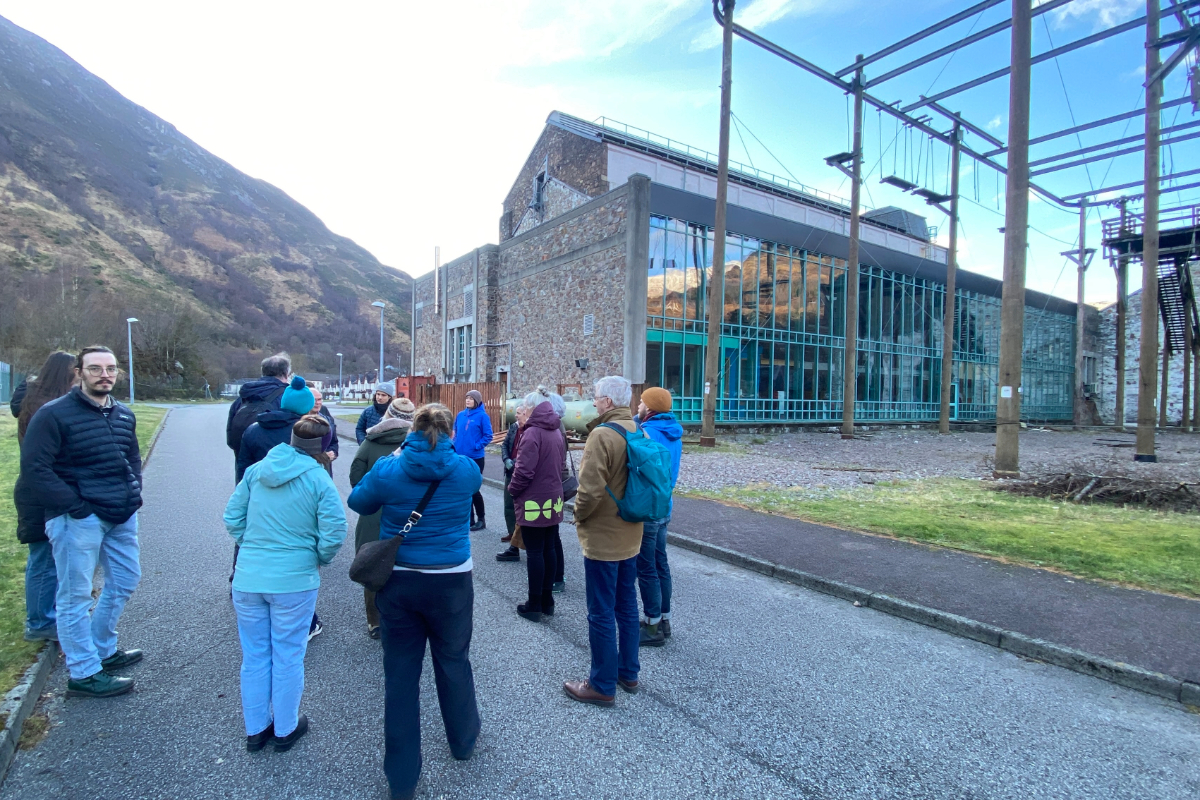
A group visiting a community owned building in Kinlochleven

This Gathering was the third in our series of regional residential exchanges. While the CLE funding formed part of the overall event budget, it was particularly important in enabling the study visit hosting and covering most delegate travel costs. This was critical to ensuring that groups from across Argyll and Lochaber, the Inner Isles, and surrounding areas were able to participate fully. As with earlier events, funding directly enabled the mix of study visit, structured discussion, and informal network-building that defined the experience.

Peer discussion remained central to the programme’s impact. Across formal sessions and informal conversations, delegates explored shared challenges in governance, board capacity, relationships between staff and trustees, and long‑term organisational sustainability. Several participants noted that hearing from other trusts at different stages of maturity exposed them to new approaches to leadership, joint working, and organisational development. The open, honest nature of discussion was widely valued.

The study visit to Kinlochleven CDT produced especially meaningful learning. Delegates emphasised how helpful it was to hear directly from the Trust about long‑term land, housing, and organisational challenges, and to experience these issues in their local context.

Learning Outcomes

  • Delegates will deepen their understanding of effective, ongoing community engagement, drawing on practical examples from the study visit and peer discussion, and identify approaches they can adapt within their own organisations.
  • Delegates will strengthen their thinking and planning around succession, including how to encourage new people into leadership roles, support volunteer development, and build long-term organisational resilience.
  • Delegates will build meaningful peer connections with other community groups, with dedicated time together -including shared travel – helping to form relationships that support continued learning, collaboration, and problem-solving beyond the event.
"The peer support offered through this exchange has strengthened our regional connections. The reassurance you receive of discovering common ground with other trusts is invaluable."

Case Studies

Community Land Scotland member exchange

Strengthening ongoing community engagement and succession planning

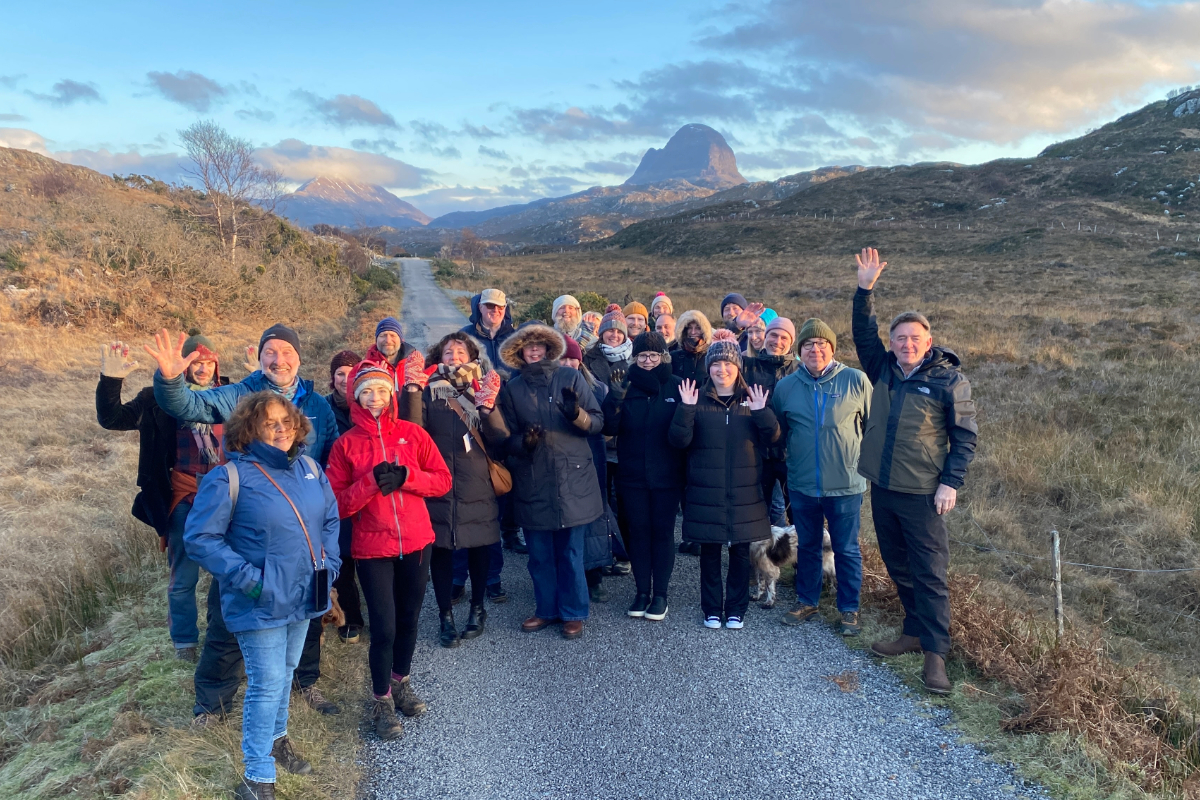
A group of people standing on a country road in Assynt with hills and mountains behind them.

This event was the second in our series of residential Gatherings. While the CLE funding formed part of the overall event budget, it was particularly important in enabling the study visit hosting and covering most delegate travel costs. The study visit to Assynt Development Trust in Lochinver acted as the central anchor for the two-day programme.

Delegates consistently highlighted the value of visiting Assynt Development Trust projects in action, including housing, enterprise activity and environmental initiatives. Seeing completed and evolving projects provided tangible examples of long-term community engagement and resilience.

Participants reflected on shared challenges in volunteer capacity, leadership transition, and engaging younger generations. Hearing from groups across the Highlands and Islands helped normalise these challenges while surfacing practical responses.

The study visit provided concrete insight into how communities overcome practical barriers, including long development timescales, funding complexity, and governance pressures. Seeing projects such as housing developments, environmental initiatives and enterprise activity operating in challenging circumstances helped translate abstract policy discussions into real-world application.

Learning Outcomes

  • Delegates will deepen their understanding of effective, ongoing community engagement, drawing on practical examples from the study visit and peer discussion, and identify approaches they can adapt within their own organisations.
  • Delegates will strengthen their thinking and planning around succession, including how to encourage new people into leadership roles, support volunteer development, and build long-term organisational resilience.
  • Delegates will build meaningful peer connections with other community groups, with dedicated time together — including shared travel — helping to form relationships that support continued learning, collaboration, and problem-solving beyond the event.
"The exchanges helped surface broader sector reflections- such as environmental sustainability, estate-scale engagement, crofting land management, and the implications of emerging land legislation. We noted the value of connecting with people we had previously only known remotely, which strengthened our existing professional relationships."

Case Studies

Women’s Aid Orkney visit to Shetland Women’s Aid

Building collaboration opportunities

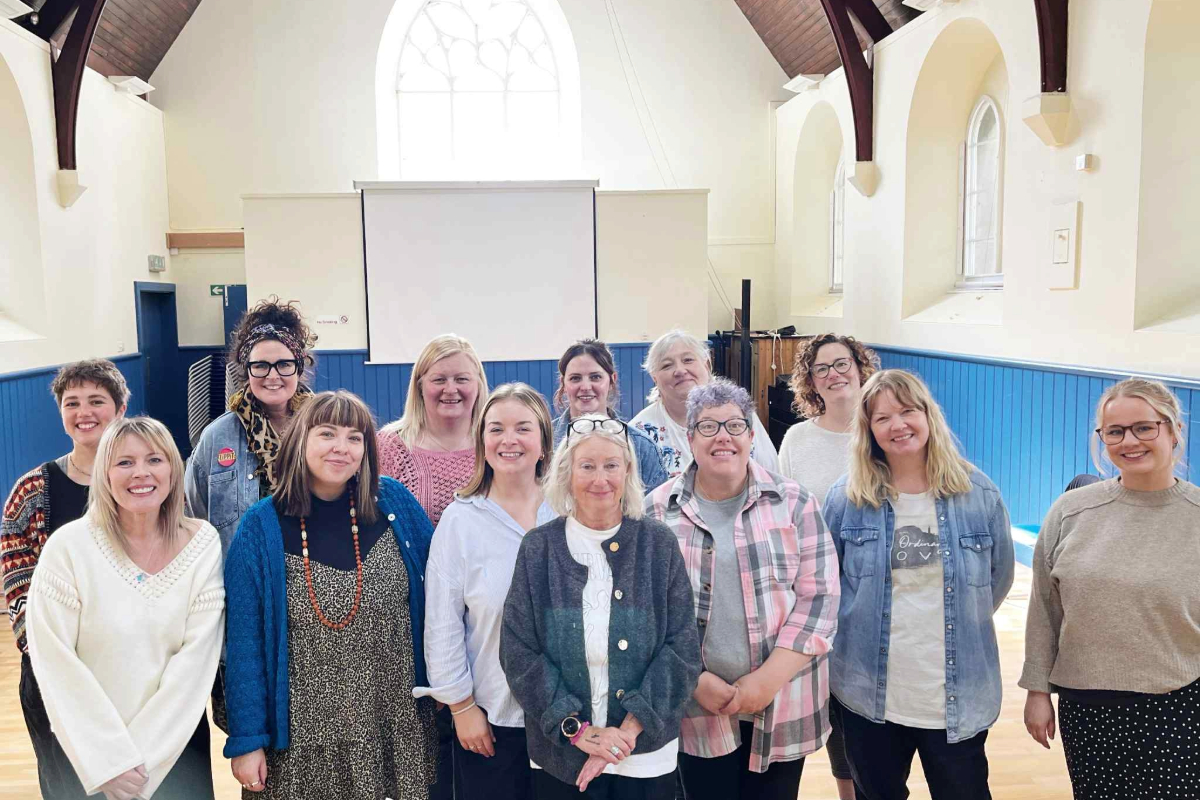
A group of 13 people smiling at the camera

The exchange allowed Women’s Aid Orkney team members to sit back and reflect on the breadth and depth or service they provide on a daily basis. It allowed them to feel proud of what they are achieving and the difference they are making. Spending time with some of the Shetland Women’s Aid team brought a real sense of solidarity. Relationships have been forged that will be beneficial on a personal level but also to the services more widely. There were enthusiastic conversations about future collaboration and finding ways to meet annually. At WAO we have been approached by numerous people who want to volunteer with us and we have been considering how best to start a volunteer program. Hearing from Shetland Women’s Aid about the ways in which they work with volunteers and also facilitate continued engagement from service users was inspiring and gave us lots of ideas.

Learning Outcomes

  • Share learning around tools and approaches like Own My Life that can help promote culture change and engage local communities in efforts to prevent GBV.
  • Learn how to work better to meet the needs of survivors of GBV across island areas, especially those on outer isles and in smaller communities. Gain an understanding of what support local groups are providing in their communities and how WAO can work with them to support them and their service users.
  • Sharing knowledge on staff wellbeing, learning from other organisations how they champion the wellbeing of their staff.

"The best part of the day for me was meeting some of Shetlands Women's Aid. This was beneficial for learning more about them and some of the differences, but also similarities in what we offer. This was also great to give us ideas on how to continue to grow and develop our service"

Case Studies

Community Woodland members group visit

Exploring diverse woodland management practices and the impacts for community engagement

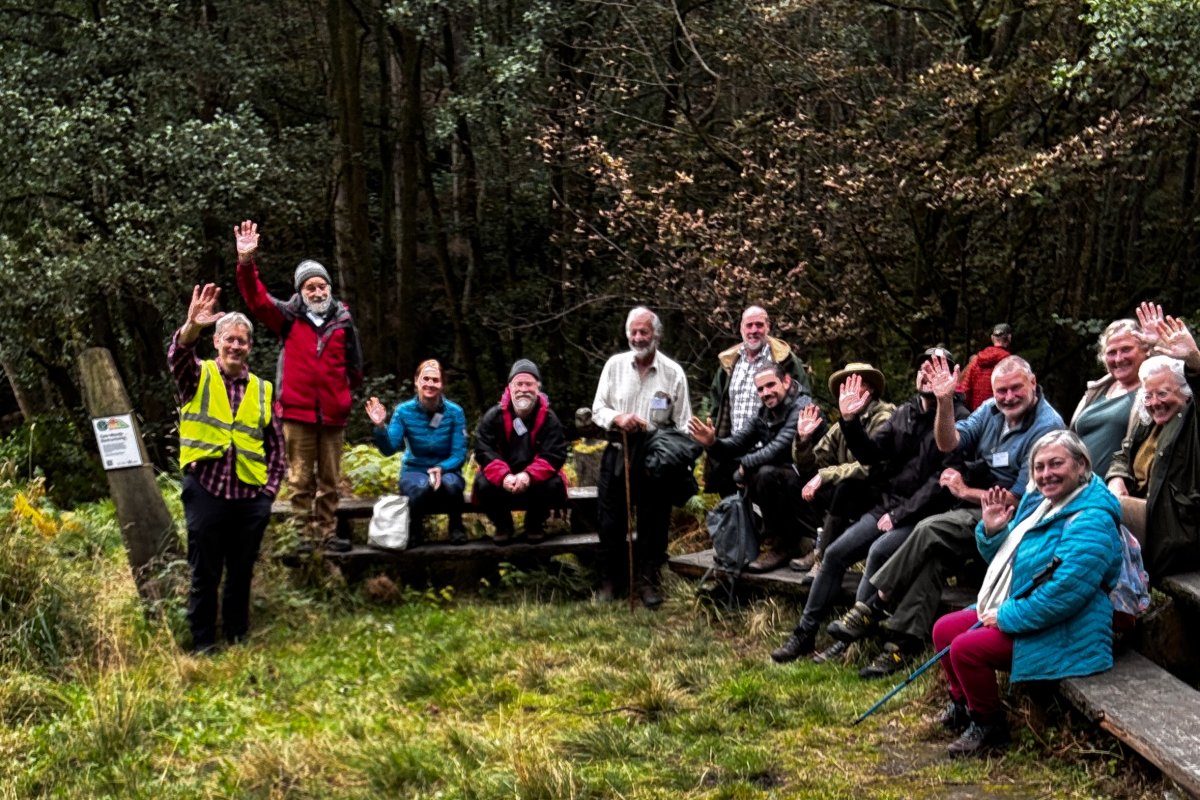
Group community woodland visit

These exchanges allowed our members to visit sites of  interest, to learn from the sites and the people who care for them, and to be able to learn from others on the visit. The rich conversations, the connections built between groups and the sharing of ideas is always incredible on these exchange days. Members were able to share knowledge on woodland management and community engagement. Knowledge of how to carry out ecological surveying, including the importance of invertebrate surveying for fresh water health in woodlands that have ponds was something participants were able to inform each other on.

Learning Outcomes

Learning for Cambusbarron Exchange:

  • Our recovery and replanting from compulsory larch removal in part of the woodland
  • Our attempts to engage the community and bring the walled garden back into use
  • The difficulties of operating a safe path network as a volunteer organisation
  • The development of our woodland work base to support future woodland activities

Learning for Doune Ponds Nature Reserve:

  • How we have engaged with the community and carry out our fundraising activities
  • How we have created and update our management plan
  • How we have used and developed the skills of our volunteers

Learning for Kippen Community Woodland Group:

  • Maintenance and repair of the former curling pond, including new infrastructure to maintain the level in the pond and to lower it when clearing out vegetation
  • Problems maintaining boardwalks and what we have done to replace them
  • The challenges presented by the Old Coup


"It is always inspiring to see what other interesting and innovative things people are doing with their local wood. "

Case Studies

Toisgeal Exchange

Gaelic & Island Arts & Culture

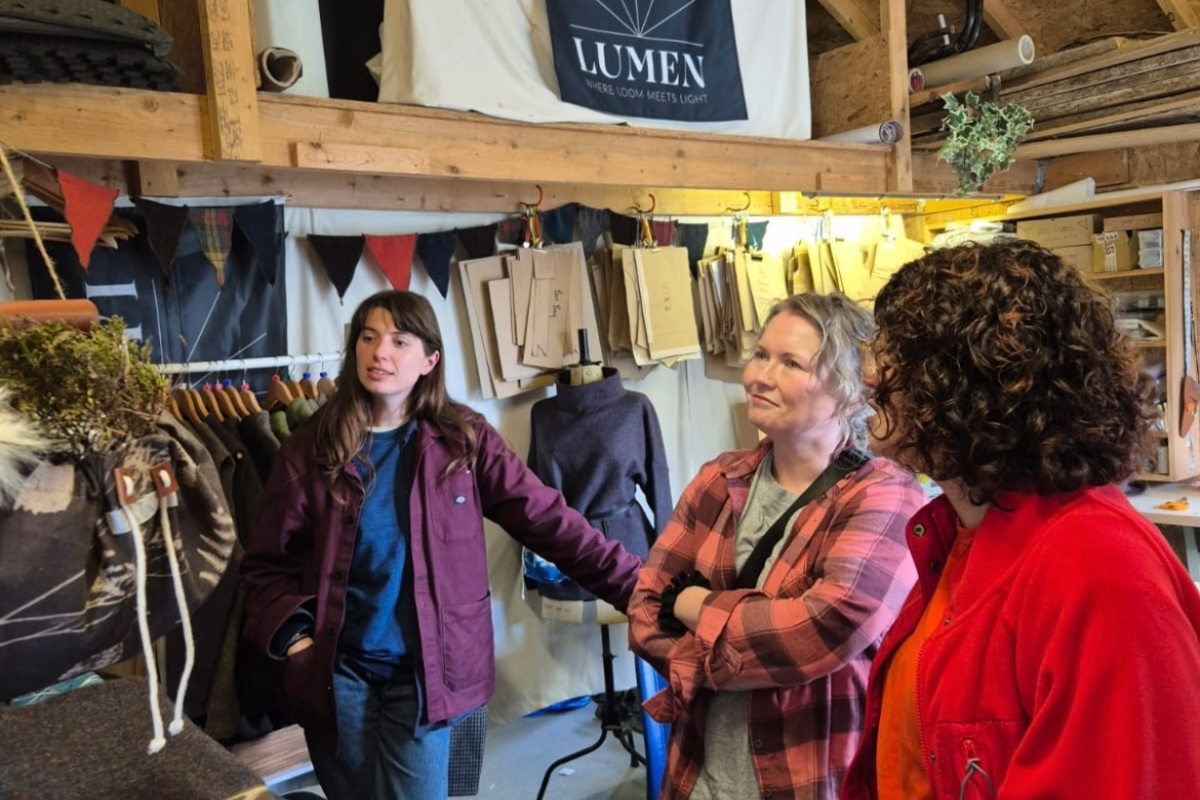
A small group of people visiting a textile studio

We discussed our hosts projects, exhibitions, practices, challenges and ways in which they collaborate with each other and with other artists, local and beyond, including the Even Here, Even Now project currently linking creative practitioners in the Outer and Northern Isles. We were able to reflect on our own aims and ethos as a group and think about ways in which we can grow our
creative community in a way that gives a voice to place-based art and practitioners, a Gaelic-focused approach to creating, and ways of mapping a path forward to future initiatives. The time we were able to dedicate to this was invaluable and in an environment that supports local creative practitioners in a very positive way.

In terms of peer-peer learning we discussed ways we could bring a joint exhibition/workshop event together and take it on the road around local village halls to engage different communities- we have started making a plan for a funding application to enable us to do so. We also identified details for a joint exhibition theme and highlighted threads to pick up for research and investigation, which we will take forward during monthly meet-ups.

Learning Outcomes

  • As our primary interest is in Gaelic/island arts and culture it would be incredibly useful to see how this has been developed and is managed in Lewis. We wish to visit and learn from groups of similarly-engaged artists who live within a similar island community facing comparable geographical and cultural challenges.
  • We have identified this visit as an opportunity to engage in peer-peer learning opportunities/skill-sharing. This will be a focused, informal environment and a supportive, effective way to encourage, strengthen and develop our creative practice.
  • We endeavour that this visit would be the start of an island-island exchange of practice and place-based learning as well as an opportunity to connect with fellow island artists and art centres/organisations on the island.

"We've learned about the variety and vitality of place-based art practices on our neighbouring island which has motivated us to seek more time to spend time collaboratively, and have been inspired to identify funding streams we may apply to to allow us to support art in different ways within our communities."

Case Studies

Weaving Words and Wonder visit to Orkney Folklore and Storytelling Centre

Storytelling tools for inclusion

Image of a cairn in Orkney by the sea

Seeing how Orkney Folklore and Storytelling works with additional support needs has reinforced what is unique in our own practice. The storytelling is interactive with the audience and has space for children’s different ways of receiving the stories. The Centre also run ceramic workshops for children and families and we could really see the quality of what the children produce and the experience of a traditional craft – the slow process of drying the clay, firing, glazing and glaze-firing and how stories build through the characters which emerge. Also the environmental
benefits of this slow craft where there is a lot less waste than with other forms of art ‘n’ crafts.

We explored how the peoples’ Island Calendar and their partnership with the ancient landscapes and surrounding seas has shaped the social landscape of today in these magical Highland and Islands of Scotland. This will enable us to share this knowledge with our Moray audiences – to enrich our tales with the first hand account of The Islands, the islanders and their history, culture, traditions and lives.

Learning Outcomes

  • Find out about past Highlanders’ and Islanders’ culture, social customs, work traditions and beliefs.
  • Learn how to make our story telling sessions inclusive of those children who may find it challenging to just sit and listen to a story – enabling our stories to reach a broader audience and include those with Additional Support Needs.
  • To learn the Folklore, Folk Tales, Legend, Rhymes, Poetry, Sagas, sea legends, crofting tales and myths to share with our Moray audiences.

"The experience of being on Orkney brings a depth and detail to our stories which would be missing if we hadn't seen the height and majesty of the standing stones, crawled through the deep dark tunnels of the ancient chambered burial cairn of dogs and re-emerged into the bright light of morning, gentle green hills sloping down to the turquoise loch and affirming that we live because of those who have gone before."

Case Studies

Glenmore Visitor Centre and Café visit to the GALE Centre

Community baking initiatives

GALE Centre Community Cafe

The Gale Centre as successfully operated a community baking model for over 12-years, selling cakes on a commission basis whilst supporting community bakers and maintaining a home baked offering in their café. This operating model supports the café operations, community wealth and circular economy and provides visitors and locals with freshly home-baking as opposed to bought in commercial bakes, whist creating strong relationship with their local community.

Key notes of learning achieved from this exchange included and understanding:

  • Commission-based baking model: Gale Centre operates on 67% of sales and 33% to cover costs.
  • Baker onboarding and training: understanding of environmental health compliance and allergen management.
  • Kitchen Space Limitations: Managing limited kitchen space effectively and food waste solutions.
  • Community Engagement and Sense of Ownership: Encouraging local bakers and maintaining a sense of pride and shared ownership.
  • Financial Sustainability: Ensuring fair price points cover costs for both the baker and café, whilst remaining community focused.

Learning Outcomes

  • Learn how the Gael Centre effectively collaborates with local bakers and other community businesses to create a sustainable and supportive network.
  • Gain insights into the Gael Centre’s strategies for creating an engaging and informative visitor information hub that attracts and educates visitors.
  • Understand the Gael Centre’s approach to managing a community-run café, including menu development, pricing, and customer service.

"The learning exchange was thorough and incredibly valuable. Janet Gale provided detailed insight, practical knowledge, and shared the Gale Centre Community Bakers toolkit, demonstrating a genuine willingness to support our community. We are incredibly grateful for the opportunity to learn from Janet. The information shared has given us a strong foundation to begin to develop our own community baking initiative at The Glenmore Visitor Centre and Café."

Case Studies

Radio City Association visit to Point & Sandwick Trust

Catalyst for deeper collaboration, mutual support, and shared ambitions for energy justice!

A group standing in front of Point & Sandwick Trust

One of the most illuminating aspects of the exchange was the realisation of just how many of the challenges and opportunities are shared across geographical boundaries. Both organisations had grappled with similar issues in the development and ongoing management of community energy projects. This mutual understanding created a strong foundation for meaningful discussion, learning, and idea generation. Through open and honest dialogue, both groups were able to deepen their understanding of the complexities and practicalities involved in establishing and maintaining community-led energy initiatives. This included detailed conversations around planning processes, funding models, community engagement, and long-term sustainability.

For the Radio City Association in particular, the visit was instrumental in shaping the future direction of its reinvestment strategy. Exposure to the initiatives run by Point and Sandwick Trust provided invaluable insight into how community reinvestment can be more strategically aligned with existing strengths and opportunities. Projects such as Point FC and the Gharabost Mill served as powerful examples of how to build upon existing community assets to drive social and economic benefit. These examples provided both inspiration and practical knowledge that will help guide the development of similar initiatives in other communities. A key learning point was the structure and operation of charitable models used by Point and Sandwick Trust.

Understanding how they distribute reinvestment income in a co-produced and equitable way was particularly useful. This inclusive approach ensures that the benefits of community energy projects are shared fairly and transparently, and the process itself fosters greater community trust and involvement. This insight will influence how reinvestment income is managed and distributed going forward, with an emphasis on co production and democratic decision-making.

In addition, the visit offered critical lessons in strategies to reduce fuel poverty. The work of the Energy Support Unit was particularly informative, offering effective models for delivering energy advice and support to vulnerable households. Learning about the practicalities of setting up such services and the kinds of partnerships needed to make them successful was especially helpful.

The exchange also provided detailed knowledge on the ongoing operation of community-owned wind turbines. Discussions covered a wide range of issues including financing, maintenance, operational logistics, and the importance of long-term planning. This operational insight, drawn from real-world experience, is difficult to obtain elsewhere and will prove crucial as other communities seek to replicate similar models.

Learning Outcomes

  • Learning about ongoing operation of community owned wind turbines including potential issues around financing, maintenance, and other operational issues etc.
  • Share knowledge around reinvestment strategy and including how to best develop co-production within the strategy and discuss examples of what projects have been effective in areas that both locality areas, although radically different in many ways share similarities such as population decline and high rates of fuel poverty to find out what projects have worked well.
  • Learn about what charitable structures and how best to distribute reinvestment income in a co-produced way have worked for P&S

"One of the most significant outcomes of the visit was the realisation of just how aligned both organisations are in their approaches to addressing key challenges such as fuel poverty, reinvestment strategies, and the practicalities of managing community-owned energy assets. These commonalities have created an environment of trust and mutual respect, and both groups have expressed a desire to build on this connection by working together on future projects and influencing national policy. In particular, there is great potential for joint efforts in shaping the upcoming GB energy legislation and contributing meaningfully to the associated community benefits consultations. Both organisations are well placed to advocate for stronger recognition of the role that community-led energy can play in the national energy landscape. By pooling our expertise and real-world experience, we can offer valuable insights to policymakers on what is needed to make the community energy sector more accessible, resilient, and impactful for local people."

Case Studies

Community Association of Lochs and Sounds (CAOLAS) Seawilding exchange in Loch Craignish

Supporting successful restoration and community engagement

An Oyster shell

This visit provided opportunities to learn from Seawilding who are very experienced and have encountered great success in oyster restoration. We learnt about the best methods used to collect spat, which is something we have not yet done in our project. This has been crucial to develop our own methodology for spat collection during summer. We learnt more about their methods of community outreach and engagement by visiting their own education station situated by the loch. Here, we explored the materials they use for community outreach days, including adapted monitoring guidance that members of the public can use. We also discussed in depth what works and what doesn’t when it comes to connecting people to our projects. Having these conversations with others in the field has provided inspiration and guidance for future events that CAOLAS will arrange, including creating volunteer events for spat collector set up. We do not think that any training is needed to pursue the methods we learnt about during our visit- however we did learn a lot about the requirements needed to set up a small scale hatchery.

We met an intern working with Seawilding, and we learnt about the challenges and opportunities that working with students presents. Since CAOLAS have aspirations to do this in the future, these were helpful conversations to have with others doing this first hand. We also met a hatchery expert who was visiting, allowing us to discuss logistics of small scale hatchery set up – another long term vision of CAOLAS. This was particularly interesting given the issues with spat procurement, providing us with some useful information to feed back to our trustees. CEO of Seawilding, Danny Renton was also on site, allowing us to chat with him. This was particularly positive since he offered to help us with spat procurement in the future. Having a larger group share some deliveries of spat with us is proving to be an effective method to overcome supply issues. Therefore, networking was another benefit of our exchange.

Learning Outcomes

  • Analysis of methodologies used for monitoring
  • How to effectively engage volunteers for personal growth and wider benefit to the community. Developing pro environmental attitudes and behaviours to create a community of nature stewards.
  • Training requirements to implement appropriate methodologies

"We benefited from some much needed inspiration from a hugely successful community focused project - showing us that our hard work can have even more far reaching positive benefits with an extended funding period. We left feeling uplifted!"

Case Studies

Rural Employability Partnership Learning Exchange

Third sector organisations from Argyll and Bute; Inspiralba, Fyne Futures, Oban Youth Cafe and HELP were able to host a learning exchange, with a focus on third sector collaboration for employability delivery.

a graphic of the Rural Employability Partnership

The exchange enabled 32 third sector representatives from across Argyll, Highland and Dumfries and Galloway to participate. In addition, representatives from Argyll and Bute Council, Highland Council, the Scottish Government, COSLA, and TSI’s attended and contributed to the discussions.

Learning Outcomes

  • Share learning on collaborative third sector delivery models: Exchanging ideas and strategies on how the third-sector organisations can work together effectively to improve their services.
  • Build connections across rural employability social enterprises: Creating networks among social enterprises that focus on rural areas, so they can share resources and work together to tackle local employment challenges.

“The exchange helped us identify the regional variations alongside the common themes. By sharing our experiences from the Highlands, Dumfries and Galloway, Argyll and Bute - we’ve gained a broader perspective on how employability services could be adapted to regional differences while still maintaining a cohesive strategy.”