Case Studies

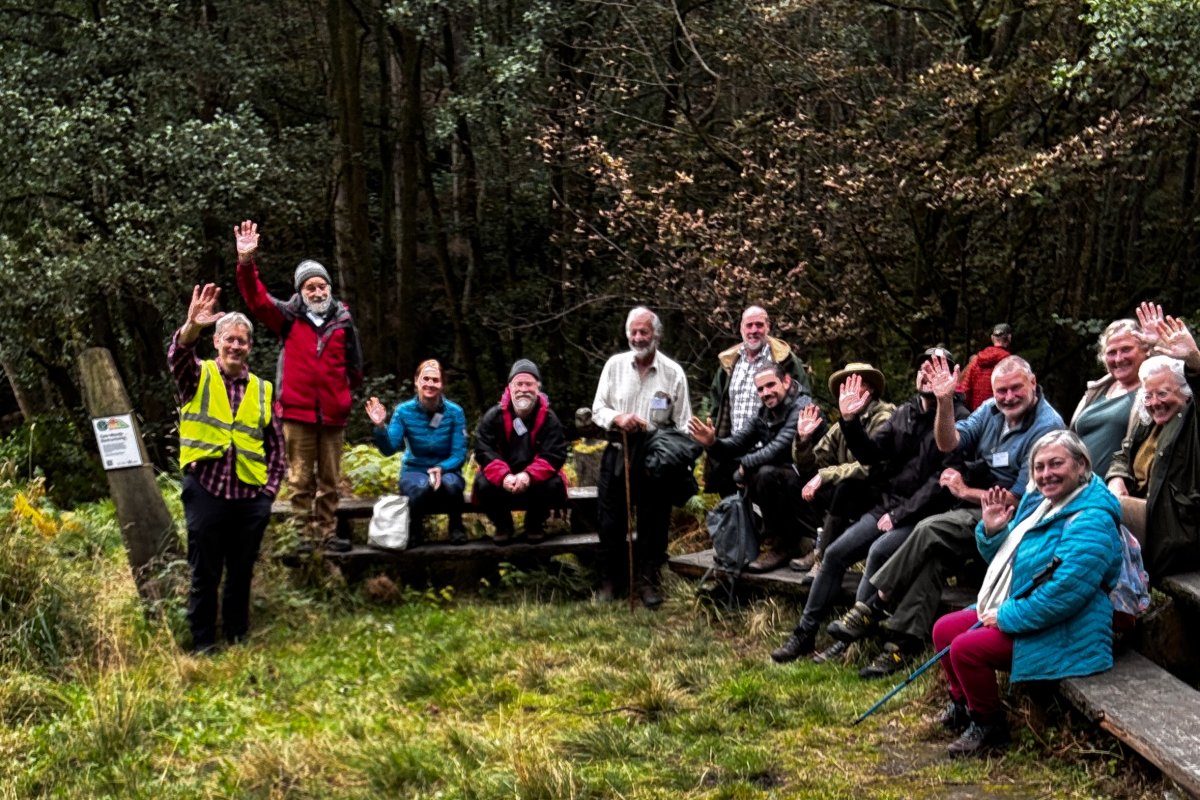
Community Woodland members group visit

Exploring diverse woodland management practices and the impacts for community engagement

Group community woodland visit

These exchanges allowed our members to visit sites of  interest, to learn from the sites and the people who care for them, and to be able to learn from others on the visit. The rich conversations, the connections built between groups and the sharing of ideas is always incredible on these exchange days. Members were able to share knowledge on woodland management and community engagement. Knowledge of how to carry out ecological surveying, including the importance of invertebrate surveying for fresh water health in woodlands that have ponds was something participants were able to inform each other on.

Learning Outcomes

Learning for Cambusbarron Exchange:

  • Our recovery and replanting from compulsory larch removal in part of the woodland
  • Our attempts to engage the community and bring the walled garden back into use
  • The difficulties of operating a safe path network as a volunteer organisation
  • The development of our woodland work base to support future woodland activities

Learning for Doune Ponds Nature Reserve:

  • How we have engaged with the community and carry out our fundraising activities
  • How we have created and update our management plan
  • How we have used and developed the skills of our volunteers

Learning for Kippen Community Woodland Group:

  • Maintenance and repair of the former curling pond, including new infrastructure to maintain the level in the pond and to lower it when clearing out vegetation
  • Problems maintaining boardwalks and what we have done to replace them
  • The challenges presented by the Old Coup


"It is always inspiring to see what other interesting and innovative things people are doing with their local wood. "

Case Studies

CAOLAS visit to Loch Broom oyster restoration

Engaging with community through oyster release sites

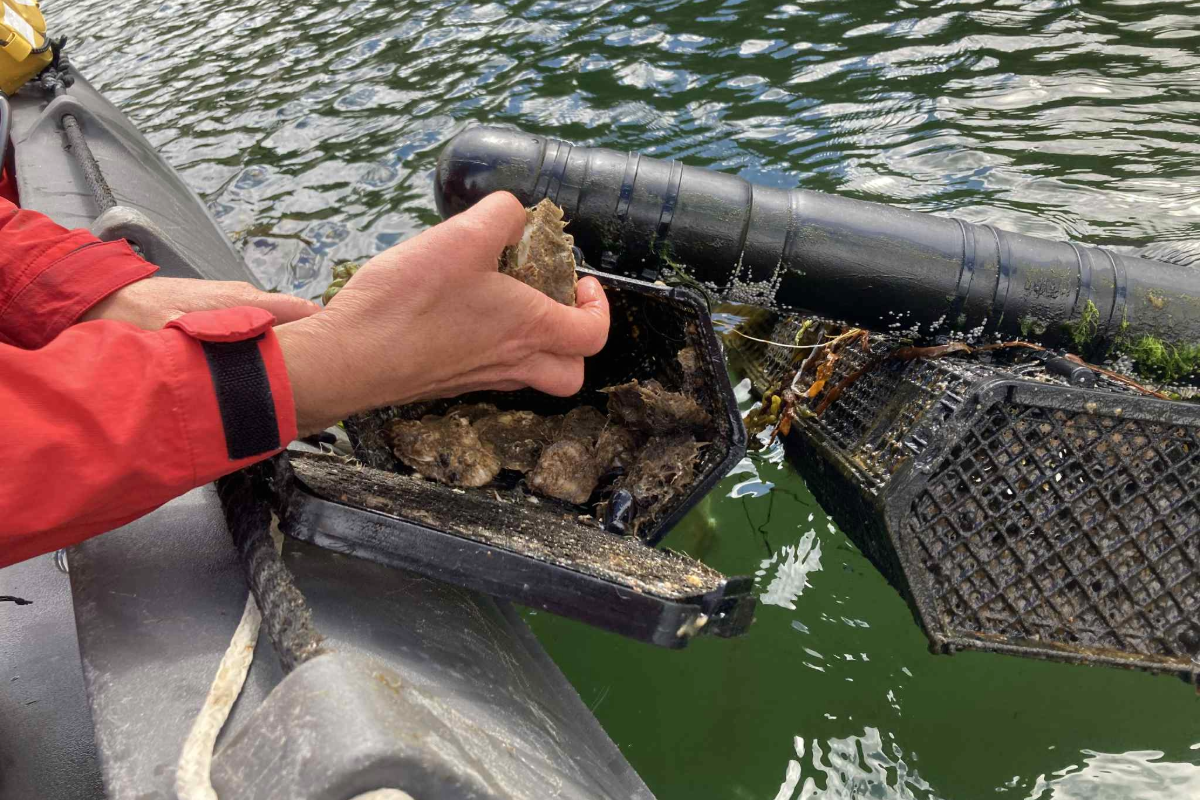
Oyster release site

Visiting the Loch Broom oyster restoration site gave us insight into new methods we could use for monitoring our own oyster release sites. This includes new ways to measure oyster mortality associated with natural predation, which we will use to inform site suitability for restoration. Loch Broom has only released a small cohort here, yet the site lends itself well to education sessions since it is more accessible compared to other release sites, and since children can be involved without great risk to the wider project. This is something we are now considering in our own loch to better engage the community in what we do. We also learnt about other outreach methods such as baiting a creel and investigating what it attracts, and using oyster hoisters at pontoons for easy public access to ‘exemplar’ oysters. With regards to training requirements to implement the methods we learnt about, it is unlikely that we need any additional training to go forward with these ideas.

Learning Outcomes

  • Analysis of methodologies used for monitoring.
  • How to effectively engage volunteers for personal growth and wider benefit to the community. Developing pro-environmental attitudes and behaviours to create a community of nature stewards.
  • Training requirements to implement appropriate methodologies.

"The sense of solidarity that emerged from our exchange provided a much needed boost to morale. It can be difficult pursuing active restoration in remote, rural locations such as Lochaline. Seeing the similar work being done and discussing the shared struggles allows us to feel as though we are connected. Having conversations about governmental policy and strategy associated with active restoration was another important benefit."

Case Studies

The Furniture Project (Stranraer) visit to Moray Waste Busters

Re-use and repair

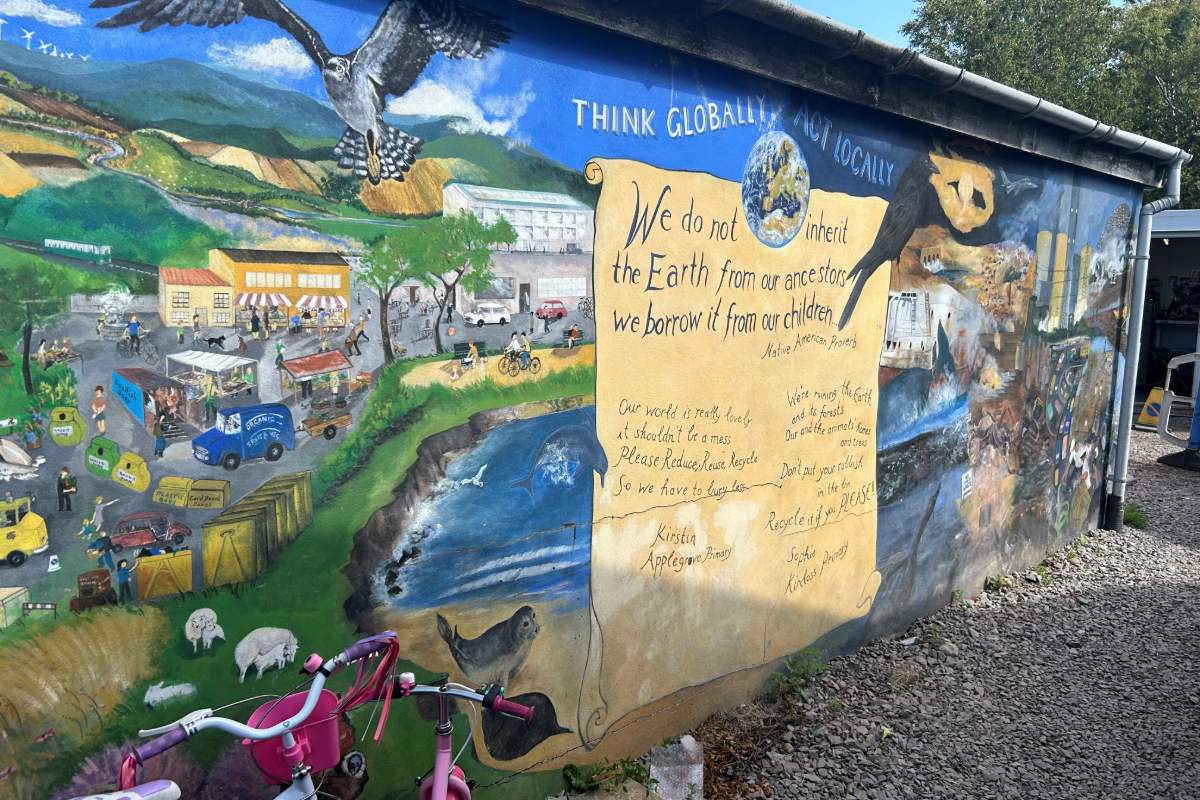
A wall mural of a circular economy

We found in general, we both attract similar customers, these can range from people purely looking for a bargain, to people on a tight budget to others who reuse for environmental reasons. We found we have a similar situation with kid’s books, these are made available free of charge to nurseries and schools as they run on very tight budgets. Moray also do discounts for local groups, this is a scheme we also run. At Moray they have a mixture of volunteers and paid staff, when they have a surplus in their income they look to employ to areas they need to grow, again this replicates what we do. Overall we found many similarities between the two sites and we are both at the same point where we need bigger premises. Moray have faced a challenge to find
a suitable premises to move to but have finally hit the jackpot with an asset transfer to a disused call centre building that is more than large enough, it also has a functioning café inside and car parking for 450. They hope to be up and running by Spring 2026 in the new building and will retain the current building to use as a warehouse.

Learning Outcomes

Insight into Business Operations:

-Observe how inventory is sourced, sorted, and priced. – Understand customer behaviour and what types of reused items are in demand. – See how marketing, display, and storytelling are used to attract eco-conscious shoppers.

Learn about Community Engagement and Social Value:

– Discover how reuse shops often support charitable goals or local employment. – Observe how businesses engage with volunteers, schools, and other groups. – Explore how social enterprises blend surplus with purpose, making positive change.

Discuss the plans for expansion:

– At what point was it clear that expansion was necessary? – Was there any community consultation? If so what did you do? – What if any hurdles have you faced so far?


"We are now looking at how we can change the layout of our sales area to allow people to explore the items more rather than for example coming in to look for a teapot, going to that section, getting one, paying and leaving. We also felt reassured that the way we work and the plans we have for our new build mean we are heading in the right direction and are in line with our peers."

Case Studies

MaCOLL visit to Orkney Skate Trust

Protecting marine life

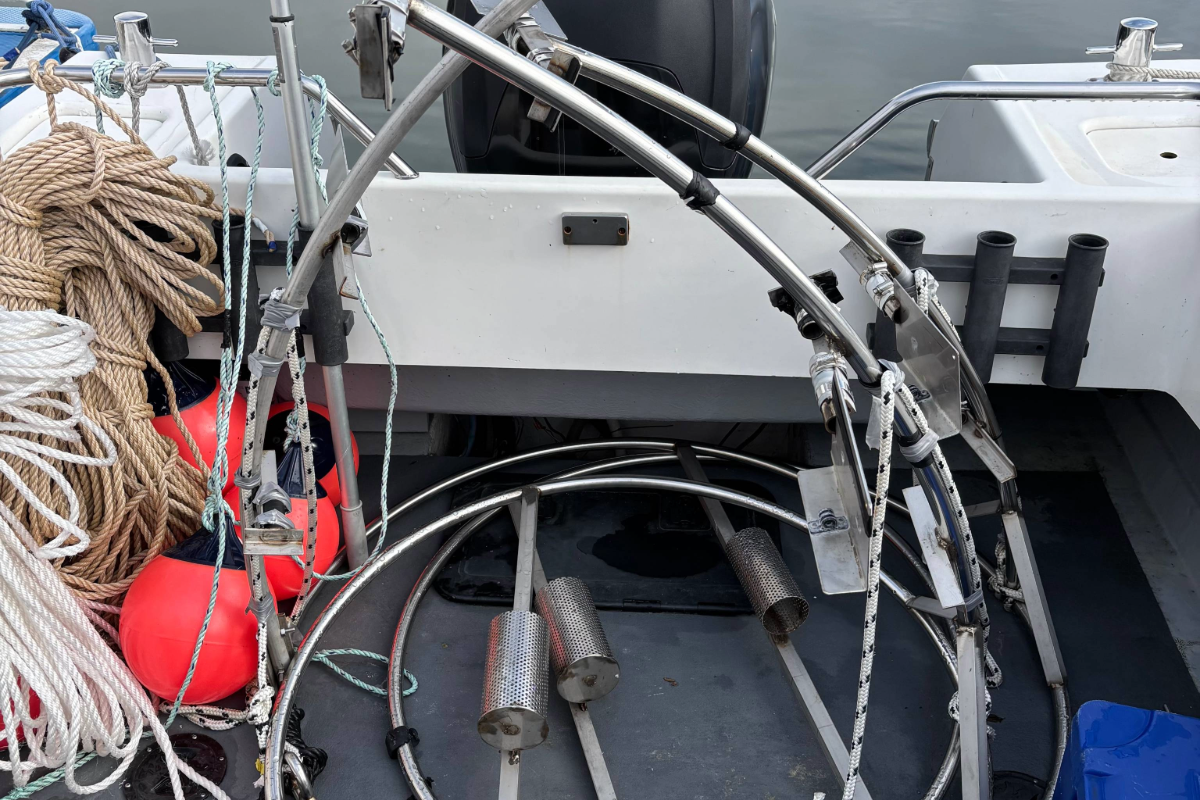
A Baited Remote Underwater Video (BRUV)

We discussed habitat and skate behaviour and how sites are chosen for survey and the Navionics application used to identify potentially interesting sites. and were given first-hand experience of how the boat and equipment is managed, the methodology and process. MaCCOLL will adopt a lot of these learnings going forward. we spent a lot of time talking about data processes and there
are a few improvements we can put into place. For example, separating the recording of flapper skate data from other species. It was reassuring to note that the Skat Trust stores data on the national marine database using Sea Search as we are currently doing.

We discussed community engagement and how he uses the work at the Orkney Skate Trust (OST) to inform the community and the scientific community.OST has well designed and established website which has some great flapper skate video content including the film “Uncommon. They have a section where anybody who sees a flapper skate or egg case can record it and place a pin on a map. OST also use social media to update the community. OST have become one of the foremost experts on flapper skate through his citizen science work and often talk at events. They talk to creel fishermen and other charter boats to find out if they have seen or caught Flapper Skate primarily to find out the location so that he can drop their BRUV where flapper skate have been seen.
In summary, this was a really beneficial trip which will provide huge benefit to MaCCOLL’s flapper skate project.

Learning Outcomes

  • Increase knowledge on flapper skate and methods of research.
  • Increase knowledge on equipment used for citizen science marine research.
  • Increase knowledge in how to engage the wider community in research about flapper skate.

"The exchange was hugely beneficial and will really help MaCCOLL improve our skate project. We went out on a boat with a plan to carry out 6 six BRUV (Baited Remote Underwater Video) drops. The trip to demonstrate the equipment, methodology and process used by Orkney Skate Trust."

Case Studies

Linlithgow Community Development Trust visit to Edinburgh Tool Library

Working with established networks for better engagement

A tool workshop

We discussed all points around the learning outcomes. The main takeaways for both outcomes 1 and 2 are that working with established community groups who are already embedded in the geographical/related subject areas are a great way to gain buy in from communities and also to act as an intermediary when gathering requirements and assessing if a location is suitable for expansion. Information on workshops was useful in terms of practical/logistical arrangements, and made us think about how we could offer a range of workshops to our members as well as to the general public.

Learning Outcomes

  • Understand the benefits and best practice around running projects that are inclusive of adults with learning disabilities/additional support needs.
  • Explore the ‘Hub and Spoke’ model for expanding sharing services – what are the obstacles and considerations for identifying suitable locations.
  • Understand the success ETL have enjoyed around providing workshops – both the financial benefits and the knock-on effects this may have on TL membership and community engagement.

"We were impressed by the logical and organised layout of the TL space, and by the positive signs and the code of conduct for the members. Chris' knowledge is excellent and I know that the volunteers that accompanied me on the exchange have several ideas they can incorporate in Linlithgow. I am going to be following up with Chris about some work the ETL do on demographic surveys, in order to better understand how we engage with a wider audience."

Case Studies

Greener Kirkcaldy visit to Angus Cycle Hub

Active travel exchange

Image of bikes and seating area inside Angus cycle hub

Seeing how the open workshop sits alongside the cafe and public area was invaluable. The use of easy build screens, that were very well decorated and had ample signage and information on them
greatly enhanced the experience of someone visiting for the first time. These are used very flexibly to mark boundaries between different areas, and can be moved very easily with lockable castors
The use of a screen to display a rolling slideshow about services, events and other useful information digitally was great, very professional looking and easy to amend and update to keep current at very little ongoing cost.

When classes and events take place at the Dundee Cycle Hub, everything on the floor is moveable to clear required space and the large screen is used to show films, presentations and any other useful visual aids. Most of the active travel information is there for people to access independently, but all members of staff from the workshop, retail and cafe have had in house training on how to discuss active travel and where to signpost people to find out more, especially around journey planning.

We learned about their workshop management system (Citrus Lime) and their Point of Sale system (Square) and how these don’t work together very well and discussed our won findings that Hub Tiger workshop management can integrate with Square. We were also very impressed with the simple way that Square can host online sales of bikes through their web
based shop function.

Learning Outcomes

  • Explore how active travel advice is given to individuals on site.
  • View how active travel information is displayed and accessed on site.
  • See how the cycle shop and workshop work alongside the active travel centre and cafe.

"There was a great deal of inspiration to be taken from their collaborative work with Dundee City Council, Dundee Dragons adaptive cycling and the breadth and scale of their Access to Cycles work, across the whole of Dundee and Angus."

Case Studies

Radio City Association visit to Point & Sandwick Trust

Catalyst for deeper collaboration, mutual support, and shared ambitions for energy justice!

A group standing in front of Point & Sandwick Trust

One of the most illuminating aspects of the exchange was the realisation of just how many of the challenges and opportunities are shared across geographical boundaries. Both organisations had grappled with similar issues in the development and ongoing management of community energy projects. This mutual understanding created a strong foundation for meaningful discussion, learning, and idea generation. Through open and honest dialogue, both groups were able to deepen their understanding of the complexities and practicalities involved in establishing and maintaining community-led energy initiatives. This included detailed conversations around planning processes, funding models, community engagement, and long-term sustainability.

For the Radio City Association in particular, the visit was instrumental in shaping the future direction of its reinvestment strategy. Exposure to the initiatives run by Point and Sandwick Trust provided invaluable insight into how community reinvestment can be more strategically aligned with existing strengths and opportunities. Projects such as Point FC and the Gharabost Mill served as powerful examples of how to build upon existing community assets to drive social and economic benefit. These examples provided both inspiration and practical knowledge that will help guide the development of similar initiatives in other communities. A key learning point was the structure and operation of charitable models used by Point and Sandwick Trust.

Understanding how they distribute reinvestment income in a co-produced and equitable way was particularly useful. This inclusive approach ensures that the benefits of community energy projects are shared fairly and transparently, and the process itself fosters greater community trust and involvement. This insight will influence how reinvestment income is managed and distributed going forward, with an emphasis on co production and democratic decision-making.

In addition, the visit offered critical lessons in strategies to reduce fuel poverty. The work of the Energy Support Unit was particularly informative, offering effective models for delivering energy advice and support to vulnerable households. Learning about the practicalities of setting up such services and the kinds of partnerships needed to make them successful was especially helpful.

The exchange also provided detailed knowledge on the ongoing operation of community-owned wind turbines. Discussions covered a wide range of issues including financing, maintenance, operational logistics, and the importance of long-term planning. This operational insight, drawn from real-world experience, is difficult to obtain elsewhere and will prove crucial as other communities seek to replicate similar models.

Learning Outcomes

  • Learning about ongoing operation of community owned wind turbines including potential issues around financing, maintenance, and other operational issues etc.
  • Share knowledge around reinvestment strategy and including how to best develop co-production within the strategy and discuss examples of what projects have been effective in areas that both locality areas, although radically different in many ways share similarities such as population decline and high rates of fuel poverty to find out what projects have worked well.
  • Learn about what charitable structures and how best to distribute reinvestment income in a co-produced way have worked for P&S

"One of the most significant outcomes of the visit was the realisation of just how aligned both organisations are in their approaches to addressing key challenges such as fuel poverty, reinvestment strategies, and the practicalities of managing community-owned energy assets. These commonalities have created an environment of trust and mutual respect, and both groups have expressed a desire to build on this connection by working together on future projects and influencing national policy. In particular, there is great potential for joint efforts in shaping the upcoming GB energy legislation and contributing meaningfully to the associated community benefits consultations. Both organisations are well placed to advocate for stronger recognition of the role that community-led energy can play in the national energy landscape. By pooling our expertise and real-world experience, we can offer valuable insights to policymakers on what is needed to make the community energy sector more accessible, resilient, and impactful for local people."

Case Studies

Community Association of Lochs and Sounds (CAOLAS) Seawilding exchange in Loch Craignish

Supporting successful restoration and community engagement

An Oyster shell

This visit provided opportunities to learn from Seawilding who are very experienced and have encountered great success in oyster restoration. We learnt about the best methods used to collect spat, which is something we have not yet done in our project. This has been crucial to develop our own methodology for spat collection during summer. We learnt more about their methods of community outreach and engagement by visiting their own education station situated by the loch. Here, we explored the materials they use for community outreach days, including adapted monitoring guidance that members of the public can use. We also discussed in depth what works and what doesn’t when it comes to connecting people to our projects. Having these conversations with others in the field has provided inspiration and guidance for future events that CAOLAS will arrange, including creating volunteer events for spat collector set up. We do not think that any training is needed to pursue the methods we learnt about during our visit- however we did learn a lot about the requirements needed to set up a small scale hatchery.

We met an intern working with Seawilding, and we learnt about the challenges and opportunities that working with students presents. Since CAOLAS have aspirations to do this in the future, these were helpful conversations to have with others doing this first hand. We also met a hatchery expert who was visiting, allowing us to discuss logistics of small scale hatchery set up – another long term vision of CAOLAS. This was particularly interesting given the issues with spat procurement, providing us with some useful information to feed back to our trustees. CEO of Seawilding, Danny Renton was also on site, allowing us to chat with him. This was particularly positive since he offered to help us with spat procurement in the future. Having a larger group share some deliveries of spat with us is proving to be an effective method to overcome supply issues. Therefore, networking was another benefit of our exchange.

Learning Outcomes

  • Analysis of methodologies used for monitoring
  • How to effectively engage volunteers for personal growth and wider benefit to the community. Developing pro environmental attitudes and behaviours to create a community of nature stewards.
  • Training requirements to implement appropriate methodologies

"We benefited from some much needed inspiration from a hugely successful community focused project - showing us that our hard work can have even more far reaching positive benefits with an extended funding period. We left feeling uplifted!"

Case Studies

SHAX visit to the Furniture Project

Partnerships for procurement

A furniture re-use warehouse

We wanted to gain a better understanding of the contract between the council and furniture project- which is based upon geographical location and solely to service re-cycle centres. We learned that this is a procurement contract and cannot be implemented for the east of the region unless it goes through the same criteria. The furniture can be of varying states of repair depending upon the recycle site and the operatives based there as to what is put aside for the project or put into landfill. The dedicated use of a van for this operation is essential as some locations can take all day to collect from and as there are over 10 sites to collect each week, a specific van is needed. This will involve further costs in the start up-  if SHAX could get a contract for this region, this will also mean recruitment of colleagues helping the local community.

Funding of all of the projects has become more difficult over time but the Furniture Project have lots of windfarms in their location which might help put them in a stronger position for funding in the future. The shop was well laid out and gave a few options for our renovation project going forward, we will need to invest in shop shelving going forward to utilise space better.
The idea of recruiting volunteers specifically for areas of the shop was intriguing as it ensured the volunteer knew their area of work when they turned up as well ensuring each section of the shop had someone that took ownerships and gave it the TLC that it needed.

We discussed working in collaboration if the ZERO waste park is built in Dumfries. The project has been shelved for the last 5 years but it has been discussed that it is option for the future. The council meetings I have attended have indicated that this project will be revived and working with the furniture project with their expertise in this contract already will be invaluable.

Unfortunately, the Bike re-cycle project that we were keen to develop doesn’t seem worth it, due to the prohibitive training costs that incur a two week residential stay. The money made on each bike re-cycled was not enough to cover the basic overheads and costs of materials. The bikes were better off going to scrap merchants as more value to the bike than repairs, this was apparent due to the 100+ bikes lying around in their yard open to the elements.

Electric vehicles, specifically electric vans are not worth it currently. The Project has two vans, one transit size and one Kangoo size. The Kangoo size does not have the range to do much, it is used as a run about town, range of about 50-60 miles. The transit van has a range of 150 miles maximum before recharging and this can take up to 4-5 hours depending on charging unit used. It would be no good to us, as we have a large geographical area to cover and only have a window of 60 minutes to re-charge the van for the second run of the day. The use of heaters/radio/wind screen wipers also have a detrimental effect on the vehicles range and as such it is not a viable option for the charity currently.


Learning Outcomes

  • Understand the contract to provide homelessness services between the council and The furniture project, what it entails, what are the benefits and drawbacks and see if I can develop one for our charity.
  • Understand the the Furniture project have collection points for donated goods at council run waste re-cycling sites, I need to understand how this relationship started and what benefits and negativities this has brought to the organisation. And conduct a site visit to one of these collection points to see it in action.
  • Any future projects that The Furniture project are looking to do and see if I can be part of the process to ensure we provide a united front and benefit from collaborative working.

"Our charities work in the same sector and are both social enterprises that support homelessness. The furniture project have a contract with the council in regards to providing services to the local community. We wanted to understand how this came about and how we can replicate this with our organisation. the exchange gave us the chance to see what new ideas they are implementing and build a relationship with an organisation that we can now work in partnership with."

Case Studies

Door in the Wall Arts CiC visit to Edinburgh Tool Library

Sharing networks for supporting access, re-use and diversity.

3 people sitting at a table

We feel that the Community Learning Exchange with the Edinburgh Tool Library helped us better understand the processes of lending equipment and how to create a robust sharing network with our access library. It allowed us to discuss the nuances and differences in our sharing library and to create some processes around ensuring that it didn’t burden our staff and potential volunteers with time commitments.

It also allowed us to understand how to effectively deal with organisations who may be borrowing our equipment for events and to create processes around ensuring the equipment is returned on time. We established what we would need to include in a user agreement and what policies to have in place for staff and members. We also discussed how to set up a payment model for the different organisations and individuals that would be using this equipment that allows us to safeguard our services.

It gave us an opportunity to see how we could bring members and staff together to share skills and knowledge, creating a community ethos around making events accessible and learning from this work.

We learnt a lot about carbon tracking and how we can monitor and evaluate the carbon footprint our project has and how we can measure this as well as showcase the benefits of our project on reducing organisations buying these plastic products.

We had the opportunity to discuss the administrative factors around the sharing library such as insurance and the My Turn software. It gave us the opportunity to think about how our other offerings such as consultancy and training in this area might be beneficial to supporting organisations/individuals to create more accessible spaces within their events and the additional support they may require from us and how we can provide that.

We discussed how we can promote our access library to organisations across Scotland, curating information to promote the importance of creating more accessible spaces that we can display at events to raise awareness. It also helped us consider the messaging we use around our access library.

Learning Outcomes

  • Through working with the Edinburgh Tool Library, we feel that we would learn about their processes in lending equipment, creating a strong and robust sharing network with our Access Library. Learning about the policies, paperwork and administrative side of creating a sharing library.
  • This opportunity would aid us in creating hyper-local volunteering opportunities to learn skills and build a community around creating safer spaces and accessible environments.
  • We want to learn how to create learning and community opportunities around our access library sharing the benefits with the organisations and individuals that we collaborate with. The Edinburgh Tool Library is an exemplary example of an organisation that has brought members together to share skills and knowledge and create a community ethos around their sharing network and we would like to learn from their work.

"The team at the Edinburgh Tool Library were incredibly welcoming and supportive and said that we could contact them in the future if we had any further questions so we have contacts with experience within the industry should we need any further support. It was a great opportunity to make connections and see first-hand how things run in a successful and established sharing library."