Case Studies

COPE Scotland exchange

Fostering collaboration and resilience through self-care

A 7 day self-care score card

Two events were conducted, one with the Rural Social Enterprise network online and another as a hybrid event in Mid Argyll, Kintyre, and the Islands (MAKI). These events brought together over 40 people from 24 different groups, highlighting the diversity of perspectives from both urban and rural settings. We used the Discovery Action Dialogue (DAD) of the Liberating Structures method to stimulate discussions in small breakout groups as this method encourages open dialogue and collective insight to find better solutions to common and shared problems.

The exchange explored some of the challenges experienced both in rural and urban settings based on two simple questions: ‘What are the challenges that you notice in urban/rural settings?’ and ‘What helps in improving wellbeing in rural/urban settings?’. Whilst there were some unique differences, there were also areas shared in common. Such as- transport, social isolation and loneliness, barriers to digital connectivity were shared across both- whereas a lack of anonymity, being surrounded by the community you work in with lots of dual relationships making it hard in rural settings. In contrast, the specific challenges faced in urban settings were about constant business, noise, a lack of green space and funding competition making collaboration a challenge.

The learning exchanged to alleviate some of this included: the importance of connection and close relationships, alongside creating space for informal connections, creativity and having options for independent support. Developing a culture of workplace wellbeing was seen as key through enhancing organisational policies.

Learning Outcomes

  • Being mindful of self-care- sharing tools for practice.
  • How we apply learning in our daily lives and practising it until it becomes a habit.
  • Sharing the challenges across different settings and contexts for improved wellbeing.

" The learning from this exchange underscores the power of collaboration and shared learning. By brining together diverse groups from urban and rural settings, the CLE creates a platform for mutual support and innovation, fostering resilience in the face of challenges. Together, we can find ways to navigate these challenging times or at least mitigate their impact."

Case Studies

Dunnet Forestry Trust

Meadow management, invasive species & forestry signage with Culduthel Community Woods

A group of people in woodland

On our arrival at Culduthel Community Woods (CCW) we saw the newly installed forest signage and the construction of their interpretation board, they also shared their ideas and thoughts to the content of the interpretation board. This was really impressive and led to thinking how we can make improvements at Dunnet Community Forest (DCF). The discussion and seeing new signage helped to realise how import it is for us to revisit our own signage, keep it updated and relevant for our forest community. To this end we have scheduled time to inspect DCF current signage, document this and any improvements that may come to light. This information will be passed up to my Board of Directors with recommendations for changes/replacements.

Invasive species were a large part of the conversation between CCW and the group, all of us in the group from different woodlands across the country had different plants and species that take time and thought to remove. I had a number of conversations with different group members which helped understanding on how they are dealing with their invasives, the challenges they face with terrain or using chemicals, what has worked or not for them. Learning from these conversations that a more scientific approach with mapping and monitoring the areas that we have invasives could help us to see how much we are actually achieving, rather than feeling down hearted at how much further we have to go.  If we can find a method of visualising the amount of our particular invasives we are removing and sharing this information with our volunteers it will have positive benefits and hopefully encourage more of us to tackle the invasives more often.

Meadow management – it was very interesting to hear about their meadow journey, the research they have done and what they have taken from that research which has led them to the plan they have in place for mowing, raking and planting. CCW’s site is quite different from DCF as we sit on a SSSI we have different restriction even down to the time of year we can mow, but there were a lot of similar issues such as the importance of raking for the meadow fertility and the plants that they are choosing to incorporate in their meadow. It was interesting to see the petrol scythe they have purchased and how well it works, this is information to take back to our Directors as we will need to invest in new equipment in the not too distant future.

Learning Outcomes

• our very recent work on installing signs and interpretation boards.
• our work to remove invasive species, especially rhododendron and
snowberry
• our approach to meadow management, supported by the Nature
Restoration Fund
• our partnership work with local charities to promote education and
awareness of the woods and to help get people more active
• our plans for path and general access improvements


"The learning benefits from this exchange are wonderfully varied from direct information gathered on how to do a specific task for example to discussions on alternative methods of working, making connections and building friendships though a shared passion. The information that was covered on this visit was all encompassing they covered all the different issues and topics to do with running and maintaining a community woodland. It was a fantastic visit and I don’t think there is anything they could have added or done better."

Case Studies

Linlithgow Community Development Trust

Visit to Edinburgh Remakery

Three women standing smiling in a room with shelves of material around them.

The exchange let us see first hand how the Remakery engage with their community – we discussed social media presence and ways of raising our profile. Running workshops/repair cafés – we learned about how they respond to demand for specific skills workshops and the ways they interact not just with individuals but with local business too. We also learnt about the things that did/did not work out for them e.g. furniture upcycling and sales. Being able to tour their workshop where donated digital devices are refurbished and made ready for reuse means we’re able to speak more knowledgably about this with our community.

Learning Outcomes

  • Expand our audience for repair activities in Linlithgow, saving them money and reducing waste.
  • Explore ways the Remakery engage with their community
  • How the Remakery run workshops, repair cafes and their social media.

"The exchange went very well and we got answers for all of the questions we came with including the possibility of collaborating on projects in the future and seeking out joint funding."

Case Studies

Graduate apprentice exchange

Argyll and Bute to Edinburgh social enterprises

A group of young people smiling

Five Inspiralba graduate apprentices from different areas around Argyll and Bute headed up to Edinburgh to for a Community Learning Exchange, where we first visited Social Enterprise Scotland and then the Edinburgh Remakery. Each of us now works for a social enterprise in our area and so getting an opportunity to learn how other social enterprises and intermediaries  support each other and make an impact provided lots of transferrable knowledge.

Edinburgh Remakery provides training opportunities through work placements, volunteering chances and apprenticeships. They were able to create chances for those facing barriers to employment and help them build real life working skills and raise people’s confidence who may not be in a position yet to jump into full time employment. They run free workshops for members in their wider community. These workshops could be for repairing, upgrading or maintaining their laptops and there is also a free sewing workshop. Both of these workshops prevent people from disposing of their technology or clothing as they are learning on how to give their items a second life. They collect all technology to be recycled via an electric van and use the van to send out orders that were purchased in the surrounding areas of Leith. To send out orders they try to avoid using plastic wrapping and use cardboard filling in their boxes rather than bubble wrap.

We learned they aren’t scared to trial new things as they are aware of the changing environment and that to measure outcomes the board monitor the finances on a monthly basis, do surveys and do reports on CO2. Through this experience Inspiralba now purchase laptops for clients who are on the employability programme from the Remakery.

Learning about the different efforts ‘Social Enterprise Scotland’ (SES) put into promoting diversity and providing information for social enterprises throughout Scotland was very interesting to hear. The Rural SE Hub was awesome to hear about, since providing information in a central place online – especially to those living and working in remote areas – is an invaluable resource for everyone working in a social enterprise.

One of the consistent points throughout was that social enterprises seem to keep staff numbers relatively low. Wages are a huge cost for any organisation, the potential concept of the ‘Shared Services Model’ discussed at SES was very useful. This idea revolved around the idea of smaller enterprises employing one person who works across multiple organisations to provide for each of them – thus potentially reducing staff costs, but also potentially improving networking and promoting collaboration as well. Whilst there would be legality and confidentiality issues related to this, it is this line of thinking – trying to change how we perceive job roles and building a more sustainable business model – that makes the social enterprise model appealing for continuing to search and innovate new ways to run businesses.

Learning Outcomes

  • Understand the Social Enterprise Model:-Gain a comprehensive understanding of the social enterprise model, including its mission, vision, and unique value proposition.
    -Explore the social impact framework and how it aligns with organizational goals.
  • Promote Diversity, Equity, and Inclusion (DEI):-Understand the importance of diversity, equity, and inclusion in social enterprises and explore strategies for promoting a more inclusive organisational culture- Learn about best practices for engaging diverse communities and ensuring equitable access to resources and opportunities.
  • Evaluate Impact and Sustainability: -Develop skills in monitoring and evaluating social impact by learning how to define measurable outcomes, collect relevant data, and assess program effectiveness -Explore strategies for scaling impact and ensuring the long-term sustainability of social enterprise initiatives.

"We consider ourselves very flexible as often our income can be dependent on grants that are available on any given year. This was not the case with the Edinburgh Remakery. Their mission statement of tackling loneliness & digital poverty does not change to meet funder’s projects, which I found surprising but understandable. Social Enterprises are founded with objectives and goals in mind to improve our lives from a sustainable aspect (improving environment, economy and social). It makes sense to stick to those principles, regardless of how funding can provide extra income at the cost of changing business direction. Not all social enterprises have that luxury to ignore or reject government grants and still be sustainable, but it was nice to hear that some SE businesses can still thrive with their initial aims and objectives at heart."

Case Studies

1st Step Development Ventures

Visit to Lang Toun Cycles

Numerous styles and sizes of bikes stacked against a fence

By spending the day with the Lang Toun Cycles Team, we learnt about the history and growth of the social enterprise. This was a key outcome from the exchange. We were able to discuss pricing strategies for products and services and also the scope for introducing new products to our range. We also identified a new source to purchase bike tools and equipment from that is saving us money and so reducing our costs.  Toun Cycles shared their volunteer policies, which have been useful in developing our own systems. Toun Cycles shared their refurbishment and quality assurance checklist documents, which we have used to develop our own records. Their documents have been fine tuned through trial and error and sharing these documents has meant we have saved time and potential mistakes.

This was a new contact for us and as well s sharing buying contacts and other cycle networks with us we feel that as an organisation we would be able to reach out to Toun Cycles in the future if we needed a critical friend to discuss something with. The sharing of ideas and discussion of common solutions will enable us to develop our enterprise more efficiently because we have been able to tap into the knowledge acquired by a relevant partner organisation. As a result of the visit our team of staff and volunteers that took part were strongly motivated to put into practice the learning and come back to the shop with lots of new ideas and inspiration. The face-to-face visit has enabled a stronger partnership of support and sharing which we hope will be long term.

A really brilliant benefit was the huge uplift the visit made to our staff and volunteers. Being able to go and visit another organisation was very good for morale and for reinforcing our team spirit to build a stronger more resilient team!

Learning Outcomes

  • Detailed understanding of how the Toun retail model has developed.
  • Stronger understanding of how their learning (what has worked well and how they have overcome challenges) can support our own retail enterprise development.
  • Expanded partnership networks and valuable peer support.

"It was valuable to share their pricing structures for work to ensure that we are pricing/pitching ourselves at the right point in the market. We had quite extensive discussions around working with diverse volunteers and some of the mutual challenges we have experienced. It was comforting to share these experiences and share some of our own ways of supporting vulnerable volunteers with often high support needs."

Case Studies

Kinross-shire Repair Cafe

Visit to Stirling Re-use Hub and Tool Library

Shelving and boxes containing tools

In October, members of the Kinross-shire Repair Café had the opportunity to visit the Stirling Re-use Hub and Tool Library. The visit was both informative and inspirational, providing valuable insights for the future development of our own repair café and potential re-use initiatives in Kinross-shire. The hub houses a variety of creative spaces, including an area for twenty makers, a repair workshop, a weaving demonstration space, and office facilities. The thoughtful design and layout of the space promote sustainability, with seasonal displays greeting visitors as they enter. During our visit, the team was already preparing for the upcoming holiday season, creating sustainable Christmas decorations as part of their seasonal initiatives. It’s unfortunate that we are located some distance from Stirling, as the hub truly embodies the principles of the circular economy. The team introduced us to the Revolve Scheme and the Warnum Model, two excellent tools for advancing sustainability initiatives. Additionally, we gained useful insights on insuring re-use projects and estimating the carbon savings achieved by reducing waste through repair and reuse.

The most beneficial part of the visit was our time spent at the Stirling Tool Library. The library’s manager shared invaluable information about their tool lending system, which we found highly relevant to the future development of our own tool library in Kinross-shire. Upon joining, members sign an agreement outlining the terms for tool lending, which includes a card transaction guarantee for lost or damaged items, deposits for more expensive tools, and cleaning fees for tools that require maintenance after use. Tools are marked with invisible ink for security, and laminated instruction cards are provided to ensure safe usage. We were also informed about the plans to implement new software for inventory management and the creation of a dedicated website for the library’s operations.

Learning Outcomes

  • Things to consider when setting up a tool library
  • How to organise tool sharing- recording, insurance, finance
  • Data protection issues?

"This visit has been a source of great inspiration for our team, helping us to understand the scope of work involved in developing a repair café and tool library in Kinross-shire. While we recognize that this will be a long-term project requiring substantial effort, especially in securing the right space and financial resources, the insights we gained from Stirling will guide us in taking the next steps. We are now better equipped with the knowledge and resources to build a sustainable re-use hub and tool library in our own community."

Case Studies

Catterline Community Benefit Society Exchange

Setting up our Community Benefit Society – Friends of the Creel

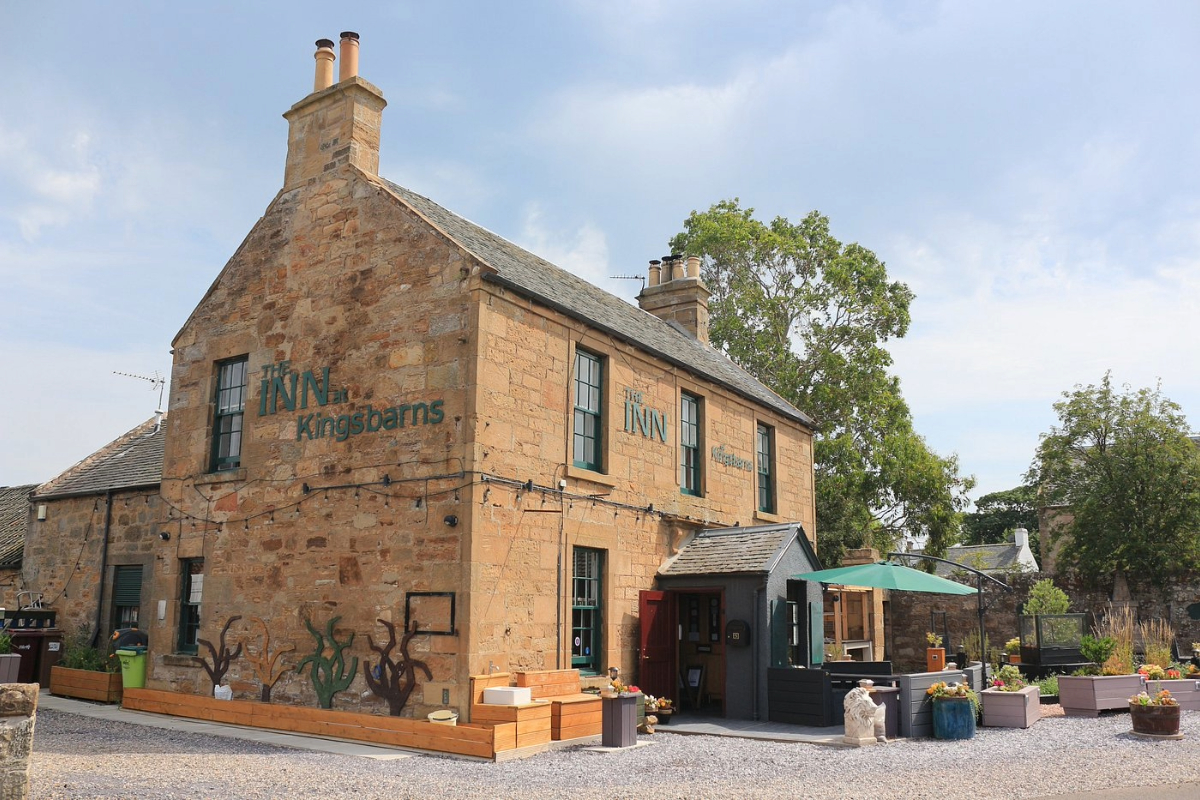
Image of an old stone Inn

This exchange gave us the opportunity to learn more about the steps and calculations necessary to develop and implement a viable business plan. We benefitted from the insight acquired by the Kingsbarns team in the course of all aspects of their journey from thinking about acquiring the inn as a community asset through to running it as a new business. Being previously set up as a Development Trust who own the asset of the Inn and the Community Benefit Society running operations is a model we were very interested in.  We now know that the Co-op Bank is a good place to set up our new business account, that a building conditions report is a must and not to underestimate our staff costs when looking at due diligence.

Learning Outcomes

  • What would the Kingsbarns team do differently if they were starting the process of acquiring the Inn tomorrow. Do they have suggestions as to the critical issues that the Catterline group should give significant attention.
  • What has determined the positioning of the menu vis-a-vis ‘pub grub’ versus ‘gastro pub’ versus ‘restaurant quality’.
  • How has Kingsbarns managed to blend volunteer input with paid staff to achieve a viable business plan.

"Being able to experience first hand how the Inn at Kingsbarns navigated their asset transfer has informed our direction of travel in our set up as Catterline Community Benefit Society with an aim to re-open the Creel Inn as a community owned asset. Most importantly we now have connections with experienced people who are willing to chat to us as we go on our journey."

News

Shining a light on local stories of change

January 30, 2025

The Scottish Beacon’s mission to empower community-based media
By Rhiannon J Davis, founder of The Scottish Beacon


Just like our climate, local news is in crisis. Old models based on commercial advertising are no longer viable in today’s digital age. News publishers compete with sophisticated algorithms for the attention of their audiences. Polarising rhetoric dominates the conversation, driving wedges into communities. ‘News deserts’ expand as local titles dissolve or get swallowed up by media conglomerates. All but one of Scotland’s national newspapers are owned by companies based in other countries. The gulf between the people who produce the news and those who consume it is growing.

Yet, journalism remains a cornerstone of democracy. Locally produced, public-interest journalism is more vital than ever. Across Scotland, independent, community-based media outlets serve as beacons of hope – run by people who are deeply invested in the stories they tell.

The Birth of The Scottish Beacon

In response to these challenges, we launched The Scottish Beacon in 2023 – a collaborative network of 24 independent, community-driven local news publishers. No two outlets are alike. Some operate as for-profits, others as non profits or sole traders. Some are digital-only, while others maintain print editions. They cover everything from small villages to major cities. What unites them is a shared commitment to impact and community engagement rather than profit.

Our mission is twofold:

  1. Strengthening independent local media – Through collective ad sales, funding partnerships, and collaborative reporting projects, The Beacon helps sustain and amplify its member organisations.
  2. Amplifying community storiesThe Beacon serves as both a network and a platform, elevating stories from across Scotland, facilitating collaborative journalism, and fostering cross-community learning.

Collaborative Reporting: The Green Transition

Since launching, we’ve led several collaborative reporting projects including about the loss of community spaces, increased food bank use and the visitor levy. Ahead of the last General Election, we asked our readers to tell us which issues mattered most. The results were clear: climate change and green energy topped the list. It became evident that the green transition needed to be at the heart of our reporting.

These findings led us to partner with the Local Storytelling Exchange, a non profit dedicated to uncovering and sharing stories of the green transition across the UK,  for 100 Days of the Green Transition: a project exploring community-driven climate action from September to November last year.

Insights from the Field

Local Storytelling Exchange Scotland Lead, Clare Harris, reflects on the experience:

“Working with the Beacon members – everywhere from the Glenkens in Dumfries and Galloway to north Lewis – has been a brilliant insight into the range and diversity of independent news publications, as well as how important they are to represent and report on communities.

“It’s fair to say that there’s activity happening just about everywhere to help tackle the climate crisis; whether that’s from families ditching the car and cycling to school instead, or groups of local people banding together to grow their own food and nurture green spaces.

“Whether these efforts are led by a concern for the climate, or simply are a way to come together, save money, and improve health – the end result is the same. It’s a sense of getting things done and making lives better for our neighbours.

“That’s not to say that the move towards a more sustainable future doesn’t present challenges. There are major questions in most, if not all the communities represented by Beacon members around how we ensure people are at the heart of our renewables boom, for example. And it is clear that those in power must do a whole lot more to support people who are already working for a better future.”

Stories That Inspire Action

Many standout articles emerged from this partnership. I invite you to take a look through them either here on the Scottish Beacon website, or over on Local Storytelling Exchange’s story map.

Perhaps this piece from Ryan Nicolson writing for the Shetland News sums it up – highlighting ordinary people taking meaningful action in the face of government inaction. It’s a testament to the power of local journalism in amplifying voices that might otherwise go unheard.

By continuing to spotlight these stories, we hope to inspire more people to take action in their own communities. After all, real change often begins at the local level.

Case Studies

Greener Kirkcaldy Active Travel exchange visit to Forth Environment Link

Finding out about the operation of e-bike library schemes and active travel projects.

A group of people using a range of e bikes.

We learned a lot about the trackers they use for their bikes (Power Unity Bike Trax modules) which we had hands on experience of how easy they are to fit and how useful the app is for accessing usage data for the e-bikes . This will be invaluable for monitoring and evaluation of our own scheme as well as being able to more accurately plan servicing and repair of the e-bikes in future.

We also had the added benefit of finding out more about FEL’s wider Active Travel Projects, in particular their work is anchored in various secondary schools in the Forth valley area which are bases for a whole range of community engagement, not just active travel.

Of special interest to us was their Bike Buddies, Community Skills Academy and Healthy Minds projects which engage with and support children and families in the communities around each secondary school to have access to active travel opportunities and resources as well as engaging with wider environmental, health and wellbeing opportunities through food, growing, walks, bushcraft and many other outdoor activities. This kind of cross organisation work is a great example and would be a great fit for Greener Kirkcaldy to bring together our Food, Community Engagement, Outdoor and Active Travel work in a more joined up way.

Learning Outcomes

  • Be better positioned to secure funding to expand our own e-bikes for NHS scheme- find out how their e-bike hire management for NHS system works
  • Better understand the materials, knowledge and staffing required to run a larger scheme- find out the costings for running a scheme of similar scale.
  •  Share learning to understand which e-bike systems work well in long term and which to avoid
  • Find out how their e-bike delivery and maintenance processes work and are staffed

"Our main aim was to find out more about the operation and background of their e-bike library scheme. We learned a huge amount, especially the behind-the-scene admin of the various parts of the scheme and how they have found their booking system (Hub Tiger) to be better than the system they previously used (Bike Rental Manager) and which we are also currently using with our own Fife Easy E-Bike subscription scheme. This has helped us make a more informed decision to switch to Hub Tiger for our own purposes following the upcoming end of our current contract with Bike Rental Manager."

Case Studies

SCOTO and Community Led Tourism

SCA network to network digital exchange

Dumfries town centre showing a row of shops and cafes with two women in conversation on a bench.

SCOTO is a rapidly growing network seeking to grow, develop and raise awareness of community led tourism and secure added value from tourism for Scotland’s people and places. Community Led Tourism in the 3rd sector is a about visitor facing experiences which are delivered by the local community via social or other enterprise models which are not for profit and deliver social, economic and/or environmental benefits for the community.

This learning exchange offered networks the opportunity to identify which communities they are working with who are providing visitor services, facilities and experience and how those communities can develop, manage and promote their community as a destination.

The outcome was increased partnership opportunities between SCOTO and Traditional Arts and Culture Scotland to measure impacts of events and festivals on local tourism and with Scottish Island Federation to share expertise on the impact of cruise ships in Orkney – how the community are shaping tourism around this on their terms.

Learning Outcomes

  • To deliver positive impacts for people, places and planet: measuring impact – what difference is tourism making in communities?
  • To prioritise the common and shared interests of visitors, businesses and residents – send of place and place branding for locals and the host community.
  • To deliver enduring benefits for the whole community beyond the more limited short term interests of the tourism and hospitality industry – things that matter to our communities in place planning and action planning to recalibrate tourism.

"Responsible tourism is a collaborative approach which places an onus on all tourism players to take responsibility for their actions. It seeks to protect our people, places and the planet by reducing negative impacts and ensuring as an absolute minimum they are no worse off. COMMUNITY LED TOURISM goes further. CLT seeks added value from all tourism players and activity ensuring our people and our places are better off as a consequence of tourism – and in a way that matters to that specific community."