
Glenbarr Community Development Association exchange
How multi-use rural hubs can be designed, programmed, managed and sustained.
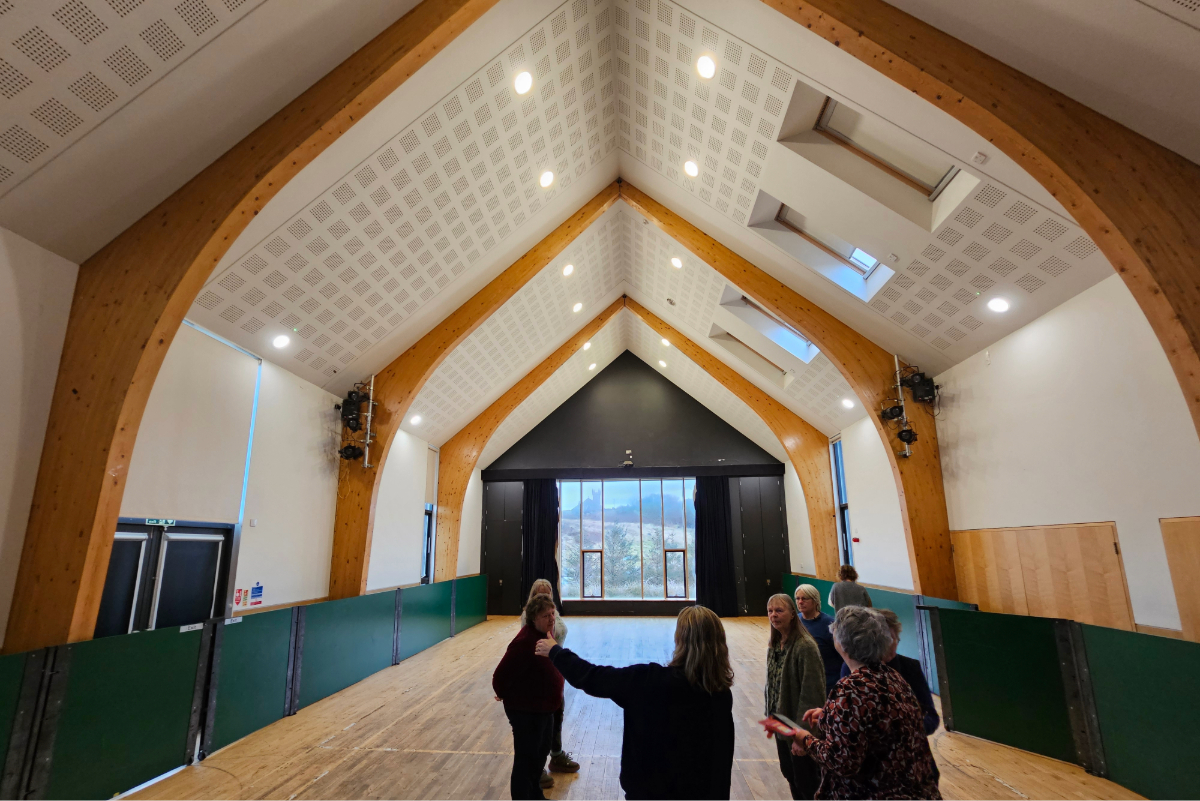
The learning exchange delivered practical, evidence-led insight from three established community organisations operating in rural and island contexts. Across the visits we tested our early assumptions about what makes a hub financially viable and operationally workable, and we captured the findings in structured site reports for internal board review and wider membership sharing.
The exchange directly supported our next development stage by strengthening the realism of our Phase 1 thinking: how a hub actually operates day to day, what the true cost drivers are (energy, maintenance, staffing time, finance overheads), and what income lines consistently underpin affordability. The visits reinforced that community use alone rarely sustains a hub, and that one or more revenue anchors are typically required to carry fixed costs while keeping community access affordable. We also saw how event delivery and trading activity succeeds when it is packaged and costed properly, with the right supporting infrastructure and procedures.
For our wider membership, the site reports provide a shared evidence base and common language. They help move discussion away from abstract ‘nice to haves’ and towards operationally grounded choices – how spaces are used, what staffing is required, and what income streams typically carry viability. This will strengthen future community engagement, as we can explain trade-offs and priorities using real examples from comparable settings.
The exchange also helped to surface early risk issues that are often missed until late – such as the administrative burden created by manual booking, the impact of energy exposure, and the importance of procedures that control access, handback standards, and the hidden time around events. Capturing these now will help us avoid costly design and operating mistakes later.
Learning Outcomes
- To understand how three different hubs manage daily operations — including staffing, governance, volunteer engagement, booking systems and the balance between community and commercial activity. Comparing the Rockfield Centre, An Roth and An Cridhe will help GCDA identify operational approaches suited to Glenbarr’s scale and local needs.
- To learn how the internal spaces of each hub—such as halls, meeting rooms, social areas, kitchens and exhibition spaces—have been designed and adapted for multiple uses. This includes understanding what has proved successful, what limitations each hub has encountered, and how demand is managed throughout the year. These insights will support GCDA in refining the functional layout and design brief for our own hub.
- To gain a realistic understanding of how rural hubs achieve financial sustainability, including approaches to income generation, cost management, partnerships and seasonal variation. Learning across these three distinct hubs will enable GCDA to strengthen its business planning and ensure long-term viability of the Glenbarr Community Hub.