
Greener Kirkcaldy visit to Granton Community Gardeners
Practical solutions to barriers in community-led food initiatives
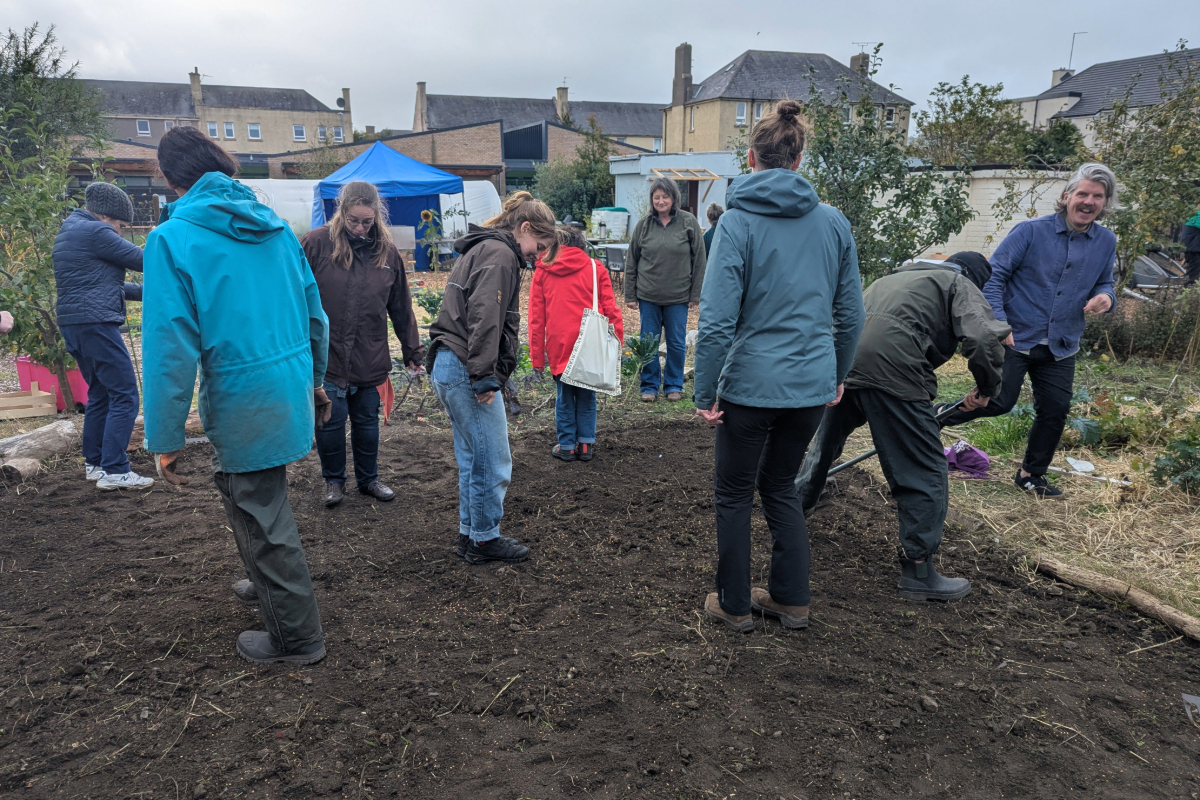
The community meal brought people from diverse backgrounds together, with volunteers involved in every stage, sowing seeds, preparing food, and sharing the meal. This model helped us to see how shared activity and social connection can be embedded in volunteer roles rather than treated as separate elements.
Through open conversations with staff and volunteers, we learned that independence and responsibility are built into their approach, that volunteers manage their own plots, and that they are empowered to shape activities. The team described how the project evolved organically, with participants moving between roles in gardening, cooking, and the bakery. This offered practical examples of progression routes that sustain engagement and build confidence, as well as transferable skills linked to employability and further education.
Their community-owned land and bakery provided inspiring models for asset transfer and income generation. We also noted small but effective operational details: visual posters rather than reliance on digital communication; integrated scheduling so cooking sessions overlap with gardening; and an emphasis on inclusivity, people of all ages and backgrounds contributing in visible ways.
Learning Outcomes
- Learning new approaches to volunteer engagement across growing and cooking activities.
- Exploring how to nurture volunteer strengths and sustain the participation of volunteers with a view to further education or employability.
- Understanding and sharing practical solutions to barriers when delivering community-led food initiatives.