Case Studies

Community Land Scotland member exchange

Strengthening ongoing community engagement and succession planning
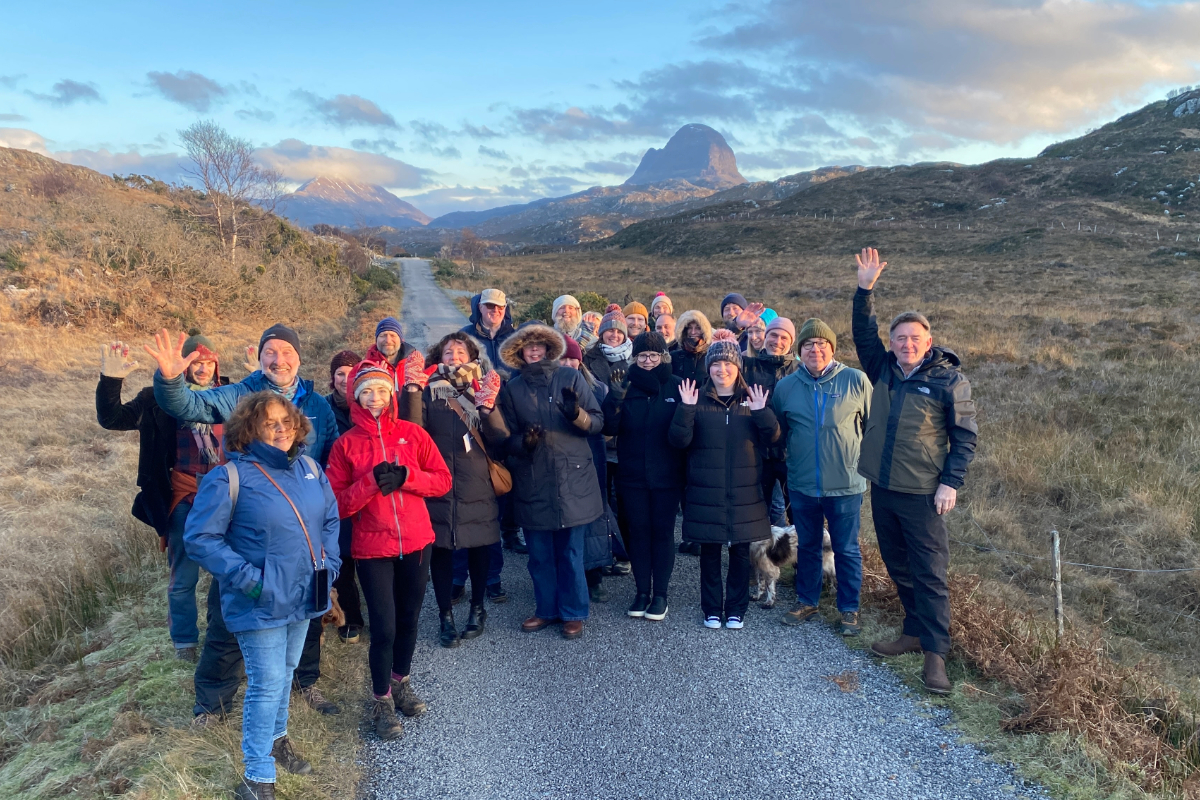
A group of people standing on a country road in Assynt with hills and mountains behind them.

This event was the second in our series of residential Gatherings. While the CLE funding formed part of the overall event budget, it was particularly important in enabling the study visit hosting and covering most delegate travel costs. The study visit to Assynt Development Trust in Lochinver acted as the central anchor for the two-day programme.

Delegates consistently highlighted the value of visiting Assynt Development Trust projects in action, including housing, enterprise activity and environmental initiatives. Seeing completed and evolving projects provided tangible examples of long-term community engagement and resilience.

Participants reflected on shared challenges in volunteer capacity, leadership transition, and engaging younger generations. Hearing from groups across the Highlands and Islands helped normalise these challenges while surfacing practical responses.

The study visit provided concrete insight into how communities overcome practical barriers, including long development timescales, funding complexity, and governance pressures. Seeing projects such as housing developments, environmental initiatives and enterprise activity operating in challenging circumstances helped translate abstract policy discussions into real-world application.

Learning Outcomes

  • Delegates will deepen their understanding of effective, ongoing community engagement, drawing on practical examples from the study visit and peer discussion, and identify approaches they can adapt within their own organisations.
  • Delegates will strengthen their thinking and planning around succession, including how to encourage new people into leadership roles, support volunteer development, and build long-term organisational resilience.
  • Delegates will build meaningful peer connections with other community groups, with dedicated time together — including shared travel — helping to form relationships that support continued learning, collaboration, and problem-solving beyond the event.
"The exchanges helped surface broader sector reflections- such as environmental sustainability, estate-scale engagement, crofting land management, and the implications of emerging land legislation. We noted the value of connecting with people we had previously only known remotely, which strengthened our existing professional relationships."

Case Studies

Maryburgh Men’s Shed- Cromarty Firth Men’s Shed

Sustainability through reuse & repair for local impacts and partnership development

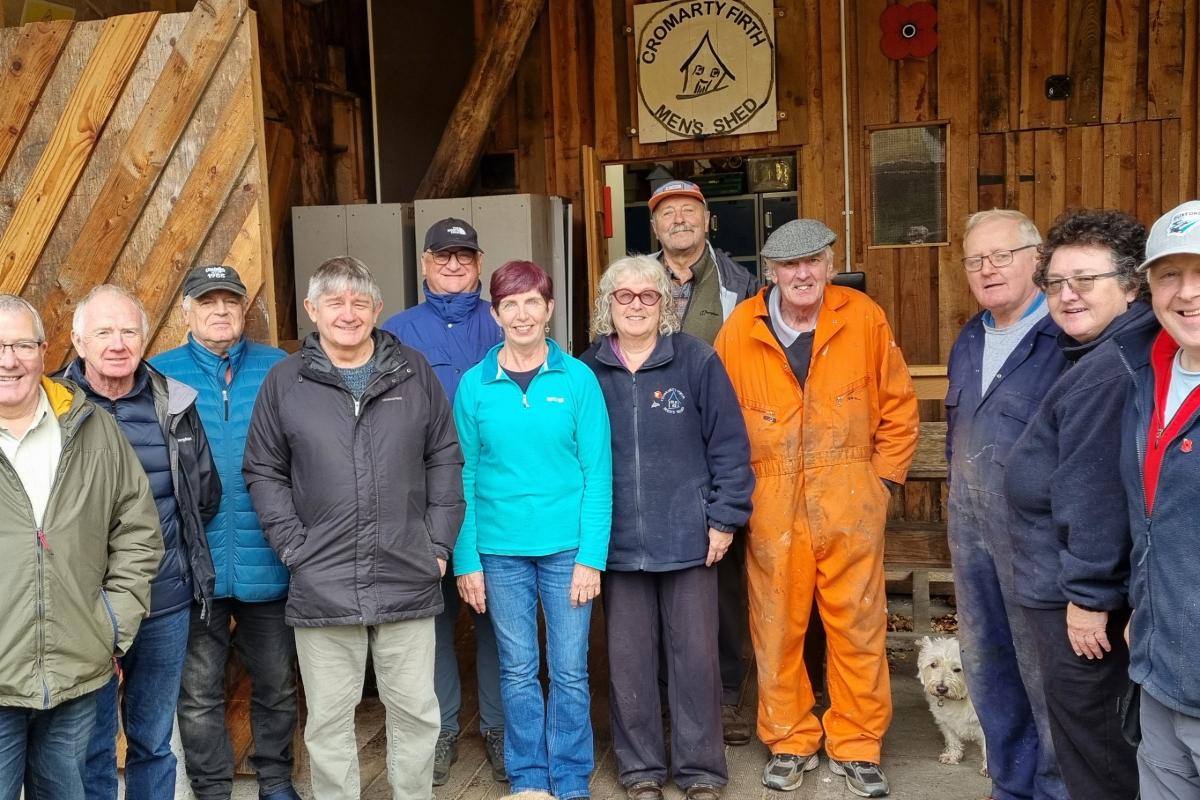
A group of people standing outside a large wooden cabin with a sign for Cromarty Firth men's Shed

The exchange fostered stronger ties between our group and Cromarty Firth Men’s Shed members. It created opportunities for intergenerational and cross-community dialogue, ensuring inclusivity and reducing social isolation. Shed members demonstrated practical skills (woodworking, repair, crafting, ) and shared knowledge with our group. The exchange encouraged peer-to-peer learning, enhancing confidence and competence in hands-on activities, which aligned with our application’s outcome of increasing participants’ skills and furthering their ability to share this knowledge with others.

Learning Outcomes

  •  Community Engagement & Inclusion.
  • Skills Sharing & Capacity Building.
  • Health & Wellbeing

"The Shed’s ethos of reusing materials and repairing items resonated with our project’s sustainability goals. Our exchange highlighted shared local resourcefulness and reduced waste, meeting environmental outcomes in our application. Overall we were able strengthen relationships between Maryburgh Men’s Shed and Cromarty Firth Men’s Shed, opening doors for future joint initiatives to support emphasis on building long-term partnerships and networks."

Case Studies

Spirit of Springburn exchange with Cranhill Development Trust

Opportunities for locally owned food in community employed shops

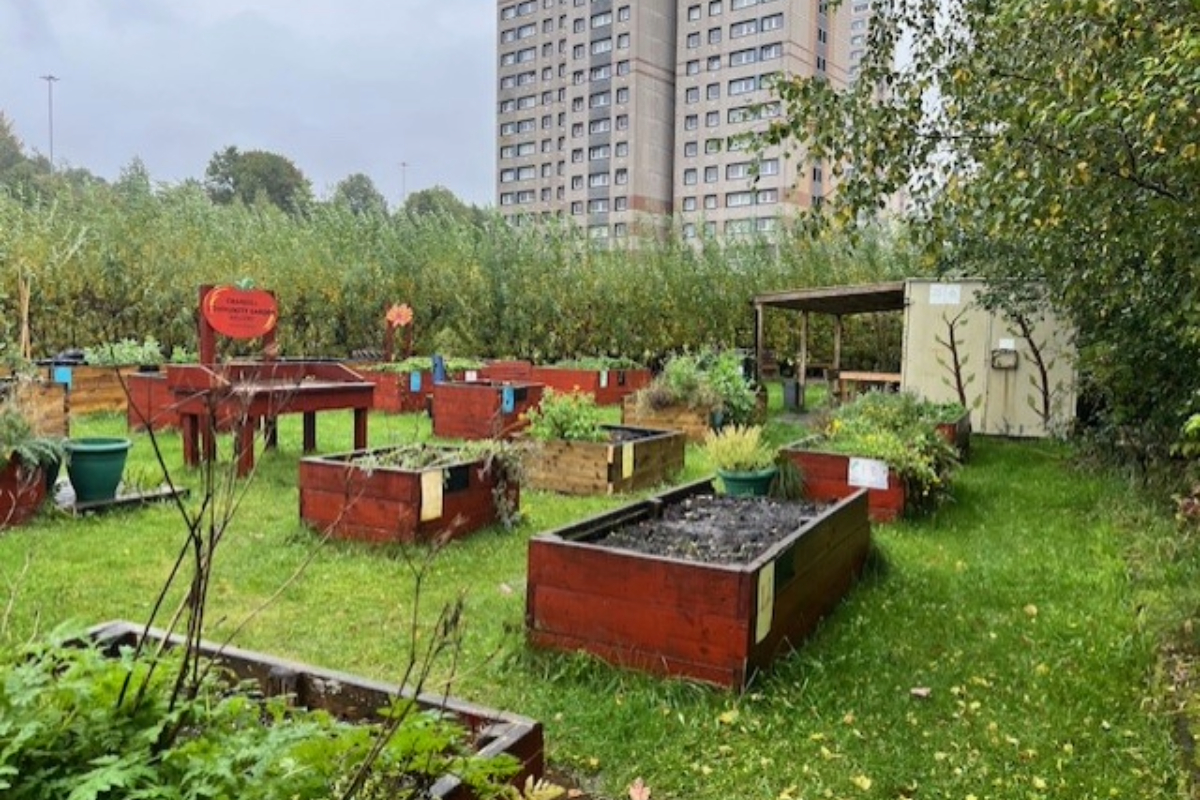
Food growing planters in Cranhill DT Community Garden

A fantastic visit and came away with brilliant ideas on moving forward. Their community shop is up and running and of great value to local folk. Very professionally run, with a post office in place too. A ‘village shop’ idea, the wee shop is a labour of love and provides a lot of items very cheaply. Also gave us ideas of type of products to provide and how to supply (many products come in multiple packs and can be very expense – or just not needed in that amount – they provide one or two of each which saves a lot of money and is achievable). Provision of food bags with small recipes that are tried, tested and popular. We’re taking this idea on board too.

We run a community fridge however we were looking at becoming a stand-alone pantry however, after discussion with the team at CDT, we’ve decided to go with the shop idea. There’s a more dignity in practice involved here which clients having a basket and deciding their own shopping needs, with a ‘checkout’ at the end. At this stage there’s an opportunity to share information, to find out a bit more about the family/individual needs and create an ongoing relationship through time,


Learning Outcomes

  • The first is to see how CDT set up their shop at the beginning and the support and management involved, and to compare and discuss similarities with what we’re doing already (one of our volunteers will lead on this.
  • To discuss similarities between our communities and how they identified the need for a shop (and why a shop?). This will be an open discussion. To learn from each other, discuss stories etc.
  • How they started and the process to follow – also to plan a support strategy. Here we will also look at getting feedback from each of the volunteers from each group.

"We discussed our journeys with start-up and becoming a development trust. She shared a lot of really relevant information and our stories are very similar, right down to the pressure involved! CDT are way ahead of us in development. They provide such a lot of support right in the middle of the community and a lot of activities take place in their own building. Made me realise how 'hemmed' in we are in the shopping centre unit. Also encouraged me to initiate progress to our next steps. Prioritising how we go forward as a charity/DT and what our priorities should be according to Springburn Local Place Plan. A brilliant visit and we left feeling very positive and motivated. Lastly, what really helped overall was to hear Carnhill's journey. It's a high stress environment and the needs are great. We were reassured that we are doing the 'right things' and following the right paths. Knowing that helped a lot. Issues we face are common ones. Support and suggestions to move forward helped a lot as there wasn't anything that we've faced, that the CDT team haven't already come across. Reassuring."

Case Studies

Stonehouse Men’s Shed visit to Lanark Men’s Shed

The Men’s Shed network

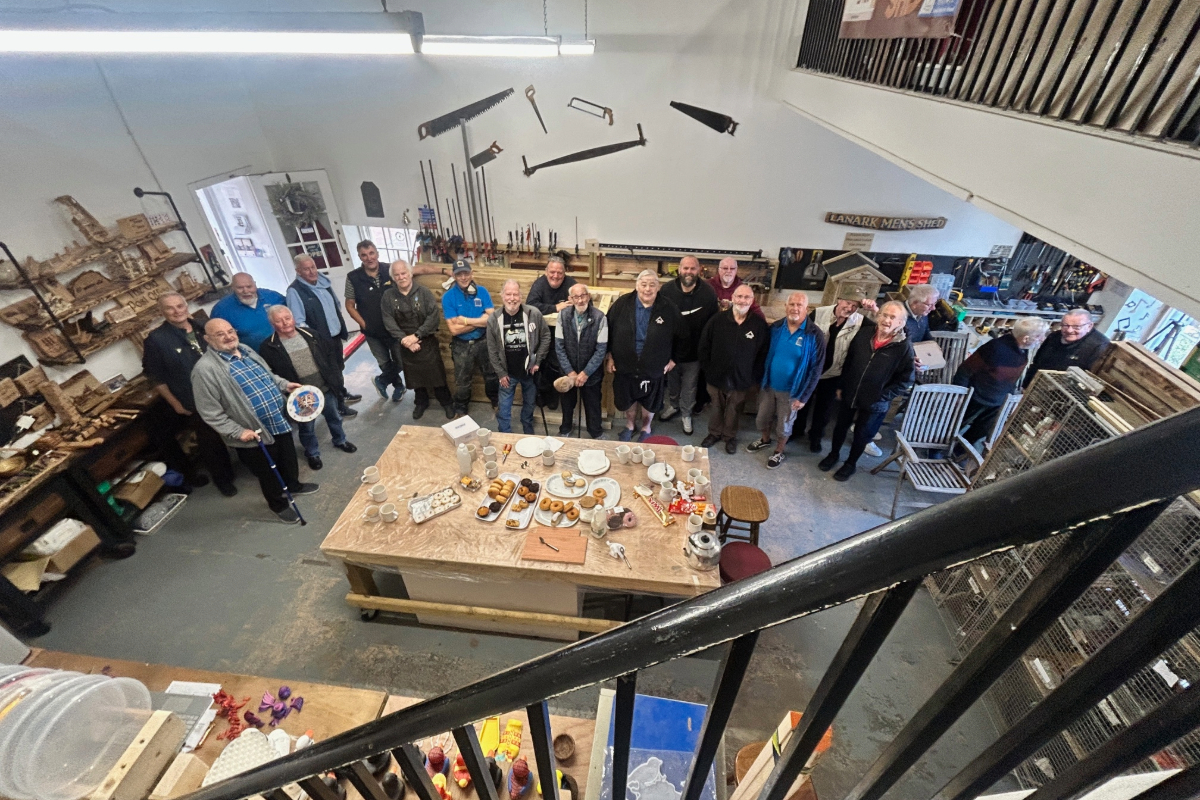
Image of Lanark Men's Shed tool station and workshop

Our members spent time with the Lanark Shed members responsible for the 3D printer. This was a great help in deciding what type of printer we need and what can be produced.
Other members visited the workshop and to view ideas of what can be produced as  sellable souvenir items.

Learning Outcomes

  • Use operation and cost of a 3D printer including the benefits of what can be made .
  • Our woodwork team are looking at ideas for manufacturing and skills involved.
  • To learn of the history of the New Lanark site.

"This type of visit will further cement relationships between the South Lanarkshire Network. We also learnt that one of their members make guitars…a particular interest to the Shed Band from Stonehouse"

Case Studies

WHALE Arts visit to The Stove network

Building creative community hub networks

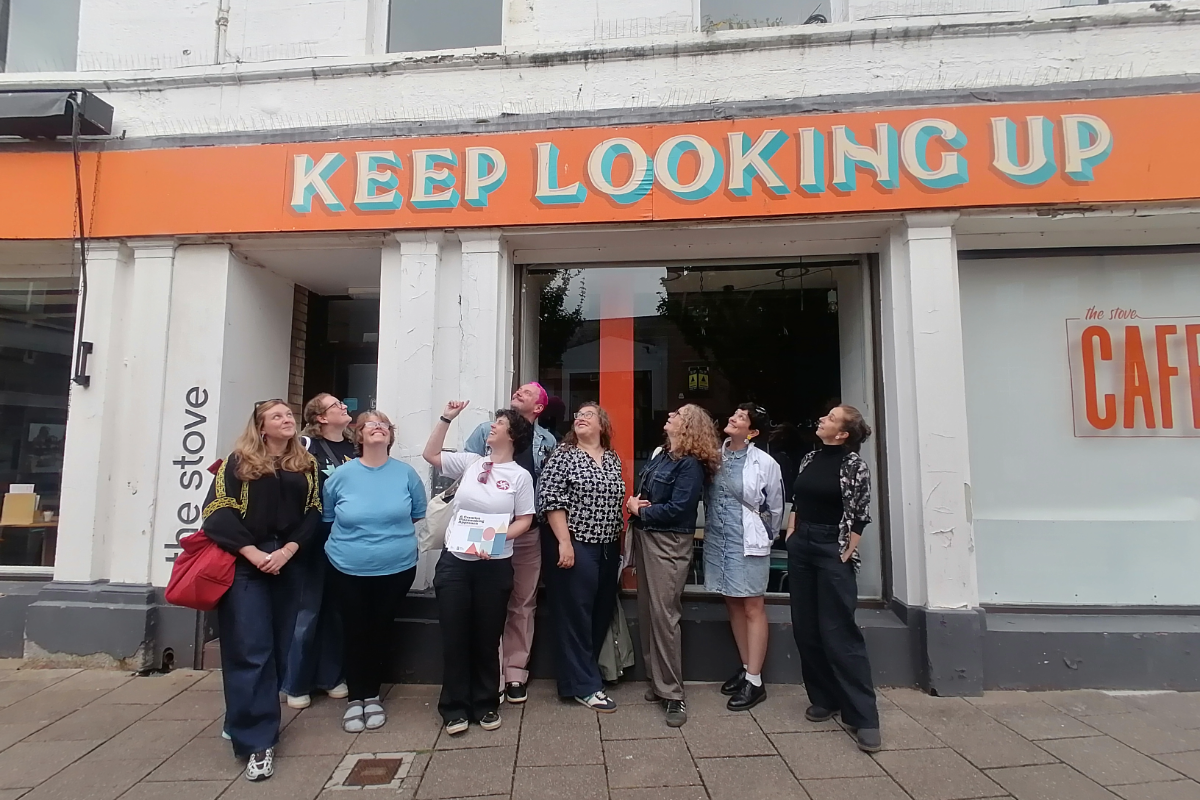
A group of people smiling looking up at a shop front sign

Our visit was split into two parts – first we had a short tour of the Midsteeple Quarter, a sister project of The Stove that seeks to reanimate the high street in Dumfries by offering studio and community space, local makers selling their wares, a risoprint studio and potentially even an artist flat for visiting artists. During and after lunch, we heard from Katharine Wheeler, Development Director and Lead on the What We Do Now Network about their work in their base and cafe space on the high street.

It was both interesting and useful learning about the origins and evolution of The Stove and the various projects they’re involved in, particularly when it came to reflecting on our own network and the challenges and opportunities we face locally. It was also helpful to think of our work in a larger political context, and of the various nuances involved in acting as a mouthpiece for a range of organisations, its drawbacks and benefits. It was also of interest to The Stove to hear about the work we have been doing over the last three years, and for them to gain insight into our developing methods of working together.

Learning Outcomes

  • To learn from other networks at different stages of development. The Creative Community Hubs Network is a relatively new entity, made up of a variety of community-based organisations in Edinburgh, some of which have been in existence for decades and some which have only been serving their local communities for a couple of years. This trip will allow us all to learn from a different sort of network which has evolved differently and which has years of experience to share with us.
  • To better advocate for our communities. All members of the Hubs Network are fierce advocates of our local communities, but we don’t always speak with a unified voice. Seeing how The Stove advocates for the work they do will inform our approach, and there is also the possibility of future work between the two networks to better articulate our collective needs and wishes.
  • To build bonds and solidarity across organisations with similar ethos and aims. We anticipate there will be a great deal of resonance between what the Hubs Network is trying to achieve, and the aims of The Stove Network. Visiting one another in each other’s place will help us better understand the successes and challenges we each face, and allow us to potentially work together better in the future.

"The addition of insight into The Midsteeple Quarter was useful, not just to stretch our legs after a long drive as well as seeing some of Dumfries city centre, but also as a standalone project of an organisation having real impact on communities locally. A number of organisations in our network have recently completed Community Asset Transfers on their buildings and/or land their buildings stand on, and work like this is inspiring in terms of how a community-based organisation can continue to have impact on their local community, outside the confines of their building. The exchange also helped fund a member of Whale Arts staff gain their MiDAS certificate in minibus driving, which will be of benefit to the organisation for years to come."

Case Studies

EATS Rosyth visit to Sunshine Kitchen

Catering for social impact

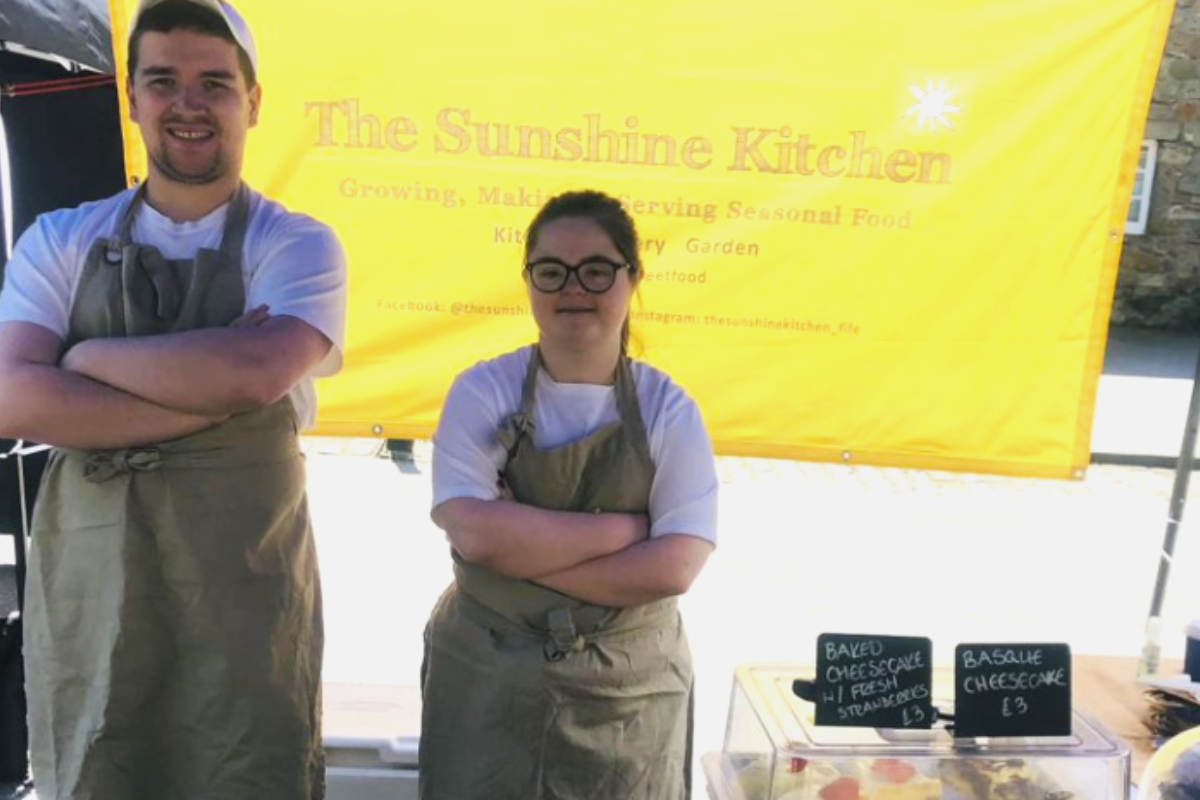
Young people standing next to a 'Sunshine Kitchen' sign with baked goods.

Building on our learnings from the exchange, we have identified the following actions for our own development:

Phased growth of income: We will explore a staged model of income diversification, beginning with modest trading activity and working gradually towards a greater proportion of self-generated revenue.
Market positioning: Our branding and marketing will prioritise the quality of our food offer, ensuring that customers buy from us first because of the product, with the added value of supporting a social cause.
Premises and facilities: Unlike Sunshine Kitchen, we already have our own premises, but to support growth we will need to furnish and equip a dedicated preparation kitchen. This will allow us to expand production capacity efficiently without the logistical challenges they faced.
Testing viability of new services: We will adopt a step-by-step approach, piloting new services carefully and
evaluating their commercial and social return before committing resources at scale.

Learning Outcomes

  • Diversified Revenue Streams – We aim to understand how a social enterprise can generate sustainable income from multiple services while maintaining its charitable mission. This includes exploring income sources, pricing strategies, and the balance between social impact and commercial viability.
  • Competition and Marketing Strategies – We will examine how the organisation positions itself in a competitive catering and market environment. This will cover approaches to branding, marketing channels, customer engagement, and strategies for standing out from competitors while securing repeat business.
  • Setting Up, Launching, and Lessons Learned – We will learn from the organisation’s experience of starting and growing its operations, including the practical steps taken, challenges encountered, solutions found, and key lessons. We will also seek advice that could guide our own expansion into new services.

"Engaging with The Sunshine Kitchen has given us valuable learning in three key areas: revenue diversification, marketing in competitive environments, and lessons from practical operational challenges. Across all areas, the central theme is maintaining social impact as the guiding principle, while exploring new pathways for sustainability and growth. Our next steps will put this learning into practice, ensuring we move towards greater financial resilience without compromising our mission."

Case Studies

The Furniture Project (Stranraer) visit to Moray Waste Busters

Re-use and repair

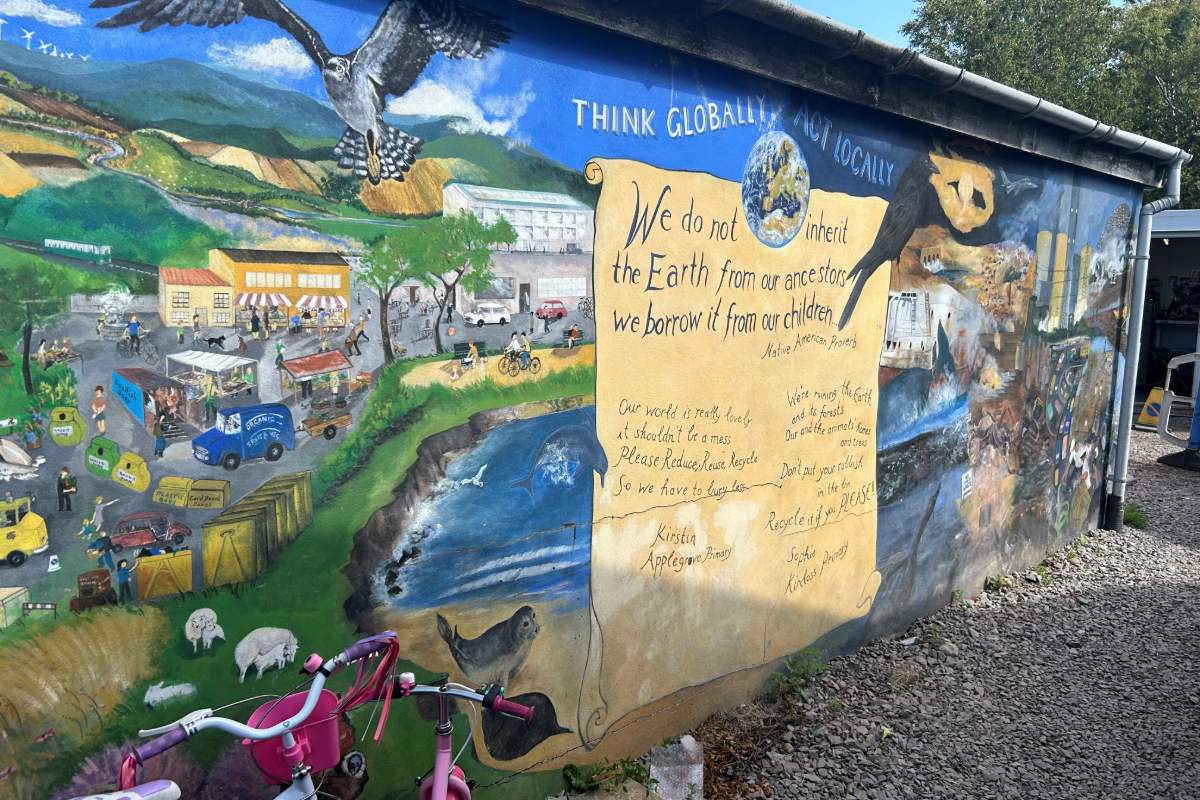
A wall mural of a circular economy

We found in general, we both attract similar customers, these can range from people purely looking for a bargain, to people on a tight budget to others who reuse for environmental reasons. We found we have a similar situation with kid’s books, these are made available free of charge to nurseries and schools as they run on very tight budgets. Moray also do discounts for local groups, this is a scheme we also run. At Moray they have a mixture of volunteers and paid staff, when they have a surplus in their income they look to employ to areas they need to grow, again this replicates what we do. Overall we found many similarities between the two sites and we are both at the same point where we need bigger premises. Moray have faced a challenge to find
a suitable premises to move to but have finally hit the jackpot with an asset transfer to a disused call centre building that is more than large enough, it also has a functioning café inside and car parking for 450. They hope to be up and running by Spring 2026 in the new building and will retain the current building to use as a warehouse.

Learning Outcomes

Insight into Business Operations:

-Observe how inventory is sourced, sorted, and priced. – Understand customer behaviour and what types of reused items are in demand. – See how marketing, display, and storytelling are used to attract eco-conscious shoppers.

Learn about Community Engagement and Social Value:

– Discover how reuse shops often support charitable goals or local employment. – Observe how businesses engage with volunteers, schools, and other groups. – Explore how social enterprises blend surplus with purpose, making positive change.

Discuss the plans for expansion:

– At what point was it clear that expansion was necessary? – Was there any community consultation? If so what did you do? – What if any hurdles have you faced so far?


"We are now looking at how we can change the layout of our sales area to allow people to explore the items more rather than for example coming in to look for a teapot, going to that section, getting one, paying and leaving. We also felt reassured that the way we work and the plans we have for our new build mean we are heading in the right direction and are in line with our peers."

Case Studies

Banff, Macduff & District Men’s Shed

Specialist machinery for community projects

A group of people in a tool/ 3D printing workshop

We had a very enjoyable and informative trip. We had demonstrations of 3D Printing, Laser Engraving and CNC Routing. We were shown different uses of the machines and advised on suitable machines for our requirements. We were also shown products which had proven popular and were relatively easy for beginners. We were also advised of suitable locations and environments within our premises. We are now looking to identify suitable locations to site the machines and will then be purchasing machines for our Shed. The trip proved to be very beneficial and we are now looking forward to a new and rewarding activity for our Members.

Learning Outcomes

  • Demonstration of 3D Printers: Tuition of the 3D printing process and the safe operating procedures of the machines. Learning which machine will suit our needs, Things to consider when buying a machine and what we need to look for.
  • Demonstration of Laser Printers: Tuition of the laser printing process and safe operation of the machines. Learning which machine will suit our needs. Things to consider when buying a machine and what we need to look for.
  • Demonstration of a CNC router. Tuition of a CNC router and the safe operation of the machine. Learning which machine will suit our needs, Things to consider when buying a machine and what we need to look for.

"We were shown a variety of activities and products which can be achieved from the various pieces of equipment that was demonstrated, quite a lot of which we didn't know about and therefore hadn't considered. We definitely returned with a lot to think about and with added enthusiasm."

Case Studies

Linlithgow Community Development Trust visit to Edinburgh Tool Library

Working with established networks for better engagement

A tool workshop

We discussed all points around the learning outcomes. The main takeaways for both outcomes 1 and 2 are that working with established community groups who are already embedded in the geographical/related subject areas are a great way to gain buy in from communities and also to act as an intermediary when gathering requirements and assessing if a location is suitable for expansion. Information on workshops was useful in terms of practical/logistical arrangements, and made us think about how we could offer a range of workshops to our members as well as to the general public.

Learning Outcomes

  • Understand the benefits and best practice around running projects that are inclusive of adults with learning disabilities/additional support needs.
  • Explore the ‘Hub and Spoke’ model for expanding sharing services – what are the obstacles and considerations for identifying suitable locations.
  • Understand the success ETL have enjoyed around providing workshops – both the financial benefits and the knock-on effects this may have on TL membership and community engagement.

"We were impressed by the logical and organised layout of the TL space, and by the positive signs and the code of conduct for the members. Chris' knowledge is excellent and I know that the volunteers that accompanied me on the exchange have several ideas they can incorporate in Linlithgow. I am going to be following up with Chris about some work the ETL do on demographic surveys, in order to better understand how we engage with a wider audience."

Case Studies

Community Woodlands visit to Dunnet Community Forest

Sharing Community Woodland practices

A group of people standing in Dunnet Community Forest

The visit allowed us to speak with staff and volunteers, young and old and to recognise what an important asset Dunnet Community Forest is to a fairly wide community. It has prompted me to follow up on certain specifics, such as the Volunteer Friendly and Scottish Ranger awards and to look into ways of engaging young people in the management and study of our own community wood. It was good that one of our younger volunteers, who is making his way as a forestry professional, was able to make the trip and pick up lots of information that will serve him well in his career.

Although the woods are very different in terms of location and landscape there were lots of great ideas that are transferable to our woodland. This includes using brash as a deterrent for deer when planting trees instead of plastic tree guards, working with young people and volunteers, improving grasslands and learning about long term woodland management. Although our woodland is not as large we have the same challenges and it was great to discuss ways of meeting them.

Learning Outcomes

  • Learn some of the methods Dunnet Community Forest has used to sustain engagement with different community demographics and about their small enterprise by joining for Saturday morning log sale to learn more.
  • Learn about the results achieved and the plans created for the future.
  • Learn about some of the extensive collaborations that support this community woodland group.

"Dunnet CF is a very different forest from our own and has required a huge effort to even start to get it into shape. I applaud the effort of the team of volunteers and staff over the years. I do not see us running a similar log scale operation but I picked up some tips about log extraction and storage which may be useful to us. It was good to learn about the youth volunteering sessions and to meet some of the keen participants. Also good to learn about the butterfly bank and what is involved. I will look into the Volunteer Friendly Award and the SCRA Scottish Junior Ranger Award. "