
Glenbarr Community Development association – Craignish & Ardrishaig Village Hall
Business planning, governance structuring and delivery for a future Community Hub.
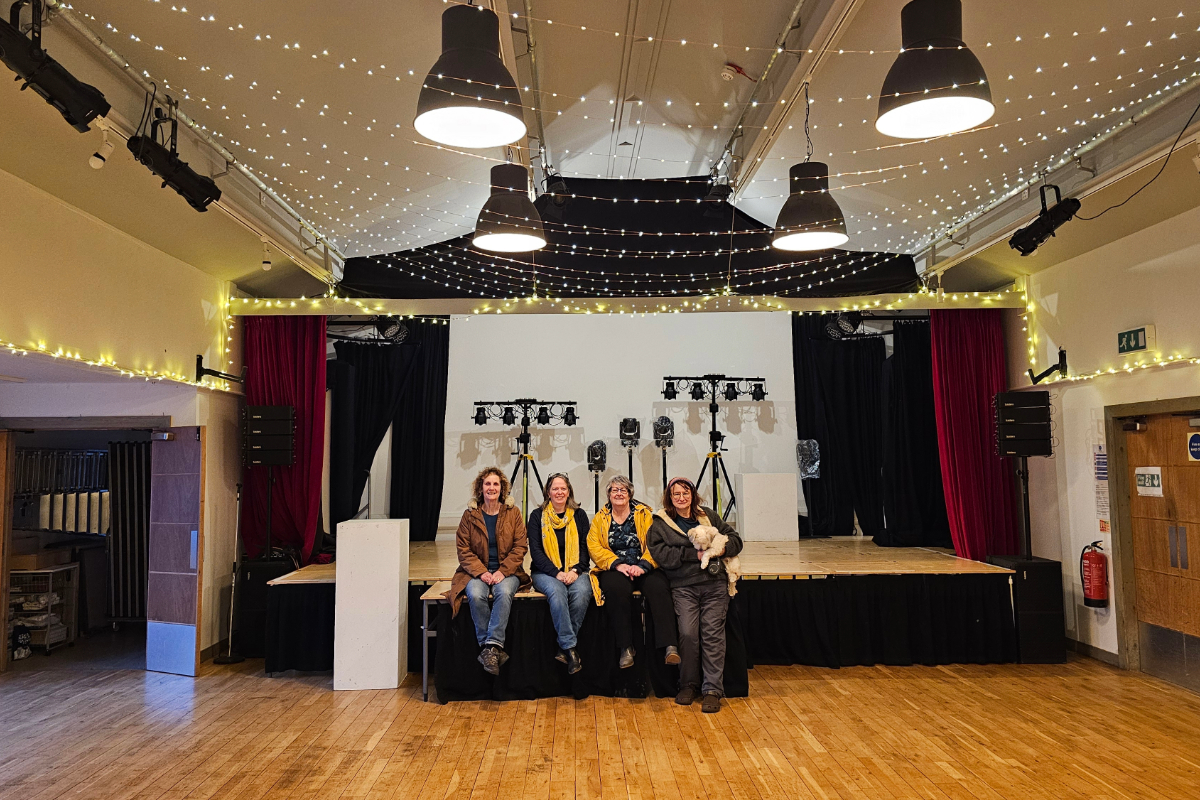
The exchange met its intended outcomes by giving our group first-hand, evidence-based learning from two highly active rural halls operating at different scales and under different financial structures. At both locations we were able to interrogate what successful looks like after refurbishment or years of operation, and understand the practical realities that sit behind headline utilisation.
At Ardrishaig, the visit confirmed what happens when a hall becomes genuinely busy: professionalisation becomes unavoidable. We explored how booking systems help but do not remove workload, why cleaning and changeover must be priced and recovered, and how event packaging protects capacity. The hosts were open about energy pressures and the importance of active energy system management. Crucially, we were able to understand the structural role that renewables-linked income plays in underpinning staffing and capital investment, giving a clear benchmark of what a financial cushion can enable.
At Craignish, the visit provided a mature example of high utilisation supported by strong procedures, paid management, and diversified income. The evidence from the hall’s latest accounts reinforced what was stated in discussion: grant-backed programming, particularly arts funding, is structurally significant and would be difficult to replace through hall hire alone. This helped us stress-test assumptions about sustainability and confirm that even well-used halls can remain reliant on grant relationships in the absence of a separate revenue anchor beyond hall operations.
In both visits we gathered learning that will directly inform our next-stage work: Phase 1 brief refinement, options appraisal focused on real operational use, and business planning assumptions around staffing, income mix, cost recovery and energy management.
Learning Outcomes
- To gain a clear understanding of how mainland rural community hubs structure governance, staffing, and operational responsibilities as they transition from volunteer-led initiatives into more complex multi-use facilities. This includes learning how responsibilities are divided between boards, staff, contractors, and partner organisations, and how governance models evolve as hubs grow in scale and activity.
- To understand how established hubs balance community access with commercial activity, including cafés, room hire, events, and shared workspace, without undermining local businesses or community cohesion. This learning will directly inform GCDA’s business planning, particularly around appropriate scale, pricing, opening hours, and programming for a hub serving a small rural population with seasonal demand.
- To understand how established hubs balance community access with commercial activity, including cafés, room hire, events, and shared workspace, without undermining local businesses or community cohesion. This learning will directly inform GCDA’s business planning, particularly around appropriate scale, pricing, opening hours, and programming for a hub serving a small rural population with seasonal demand.