
The GRAB Trust visit to Stitch the Gap
Reducing textile waste through practical repair skills
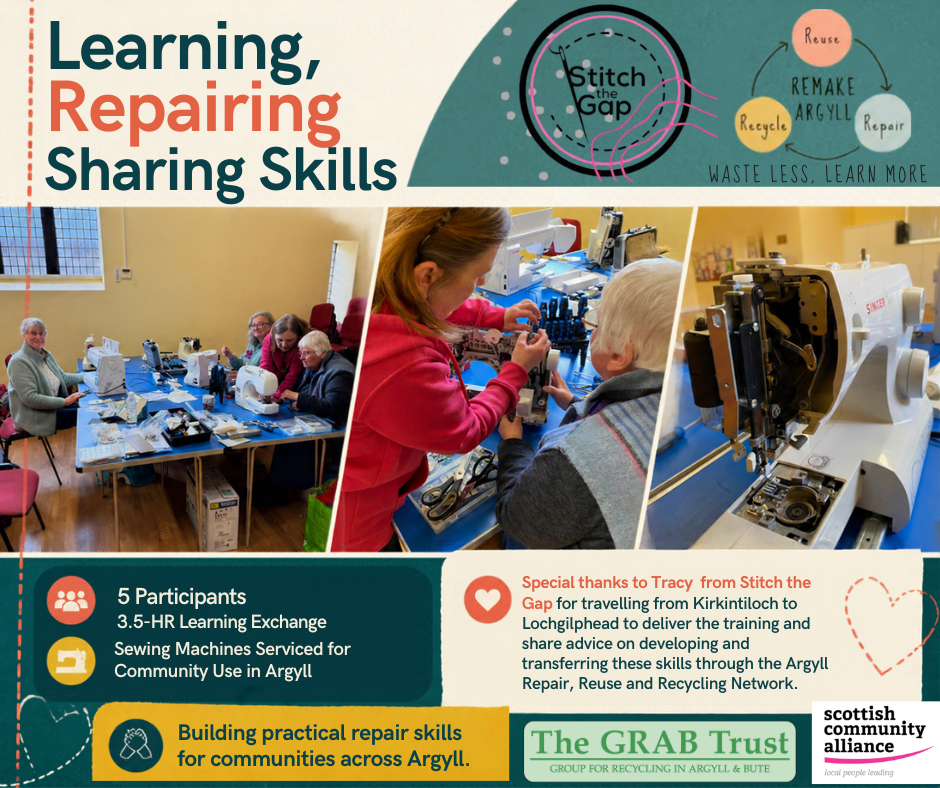
The exchange provided a valuable opportunity to see first hand how Stitch the Gap CIC delivers community repair, machine maintenance, reuse and upcycling activities. We were able to learn about the maintenance and servicing requirements for sewing machines and related equipment, including common faults, preventative maintenance and practical approaches to extending the lifespan of equipment. This has increased our confidence in supporting future repair and reuse activities and will help us reduce barriers for participants by ensuring equipment remains in good working order.
The exchange also highlighted effective ways of engaging new groups of people and wider community members through accessible learning opportunities, volunteering roles and skill sharing activities. We explored how Stitch the Gap has built community involvement around textile skills and sustainability and identified several approaches that could be adapted and delivered in Argyll.
Learning Outcomes
- To learn how Stitch the Gap CIC delivers community based textile and sewing machine repair, reuse and upcycling programmes that promote sustainability, reduce waste and increase multigenerational participation in circular economy activities.
- To gain practical knowledge and skills in the maintenance, servicing and repair of sewing machines and related equipment, enabling GRAB Trust to support local repair and reuse initiatives, extend the life of equipment and remove barriers to participation in community sewing activities.
- To explore how Stitch the Gap has developed accessible learning opportunities (especially for young people), volunteering pathways and community engagement around sewing skills and identify approaches that can be adapted within Argyll and Bute to build skills, confidence and environmental awareness.